Ruy Guerra
22-08-1931
Birthday
Leo
Zodiac Sign
-
Genres
27
Total Films
Also known as (male)
Maputo, Moçambique
Place of Birth
22-08-1931
Birthday
Leo
Zodiac Sign
-
Genres
27
Total Films
-
Also Known As (male)
Maputo, Moçambique
Place of Birth

22-08-1931
Birthday
Leo
Zodiac Sign
-
Genres
27
Total Films
Also known as (male)
Maputo, Moçambique
Place of Birth
22-08-1931
Birthday
Leo
Zodiac Sign
-
Genres
27
Total Films
-
Also Known As (male)
Maputo, Moçambique
Place of Birth
actor
27 Works
producer
2 Works
director
47 Works
writer
11 Works
other
14 Works

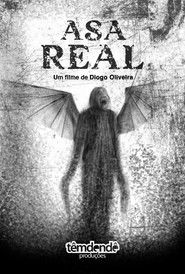
Asa Real
A woman with a dream: to fly. During a frenetic search for the final widget for her gadget, pursuers will try to stop her.Year:
2024

Peréio, Eu Te Odeio!
23 years in the making, “Pereio, Eu Te Odeio!” is a documentary on legendary Brazilian actor Paulo Cesar Pereio, an irreverent and controversial artist and public figure, as told by the testimonies of friends, family, and society members who hate him.Year:
2023

Quando a Coisa Vira Outra
Vladimir Carvalho's Cinema of Inequality marked the documentary filmmaker's trajectory over decades of activity. Considered one of the most important Brazilian documentary filmmakers in activity, his images influenced the emergence of Cinema Novo and the new Brazilian documentary years later. Quando a Coisa Vira Outra covers the most important films made by Vladimir, revealing where ideas come from to show the true reality of a country.Year:
2022

Já que Ninguém me Tira Para Dançar
Conducted from interviews with personalities who lived with Leila Diniz (1945-1972), the documentary is a record of an era and, above all, it rescues the participation in Brazilian culture of the actress who opened the way for the sexual revolution during the dark years of the dictatorship.Year:
2021

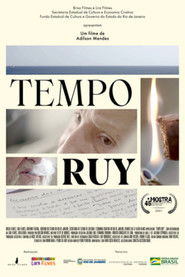
Tempo Ruy
A documentary about the work of filmmaker, screenwriter, actor and film director Ruy Guerra. The audiovisual collage presents the director's trajectory, from his first experience with cinema up to his most recent thoughts on his work.Year:
2021

Candango: Memoirs from a Festival
In 1965, a year after the military coup in Brazil, an oasis of freedom opened in the country's capital. The Brasília Film Festival: a landmark of cultural and political resistance. Its story is that of Brazilian cinema itself.Year:
2020

Saudade
Year:
2017

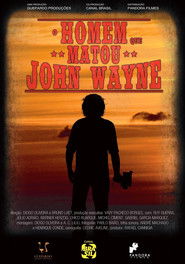
The Man Who Killed John Wayne
Year:
2017

Cinema Novo
A deep investigation, in the way of a poetic essay, on one of the main Latin American movements in cinema, analyzed via the thoughts of its main authors, who invented, in the early 1960s, a new way of making movies in Brazil, with a political attitude, always near to people's problems, that combined art and revolution.Year:
2016

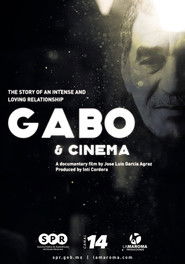
Gabo & Cinema
It is said that Nobel Prize winner Gabriel Garcia Marquez never allowed for a film adaptation of his singular masterpiece 'One Hundred Years of Solitude', arguably the most influential novel in any language of the second half of the twentieth century, to be produced. However, the prolific Colombian writer had strong ties to the movies.Year:
2016

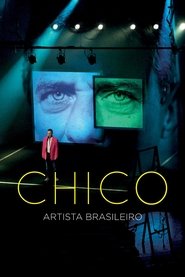
Chico: Brazilian Artist
Chico Buarque is a constant presence in Brazil's art scene and makes up its citizen's popular culture. This wealth in music, poems, theater and novels has been created over the last 50 years and in this film Chico Buarque converses about his memories, shows, daily life, work methods, creative process, in summary all his trajectory. The musician’s search for his German brother, whom he never got to meet, serves as one of the axis for the narrative.Year:
2015

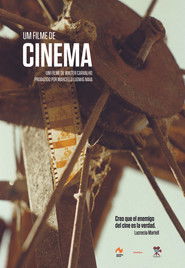
About Cinema
An abandoned tumbledown theater in the outback of Paraíba state is the initial setting of a film about cinema, which explores the testimonials of the novelist and playwright Ariano Suassuna and other filmmakers such as Ruy Guerra, Julio Bressane, Ken Loach, Andrzej Wajda, Karim Ainouz, José Padilha, Hector Babenco, Vilmos Zsigmond, Béla Tarr, Gus Van Sant and Jia Zhangke. They all respond to two basic questions: why do they make movies and why do they serve the seventh art. The filmmakers share their thoughts about time, narrative, rhythm, light, movement, the meaning of tragedy, the audience‘s desires and the boundaries with other forms of art.Year:
2015

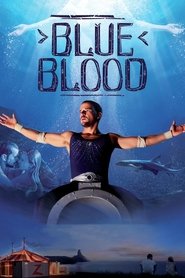
Blue Blood
When the Netuno Circus returns to Fernando de Noronha, it brings back a young man with a turbulent past. Pedro is now Zolah, the human cannonball. When secrets surface, bizarre family reunions rival the circus performances.Year:
2014

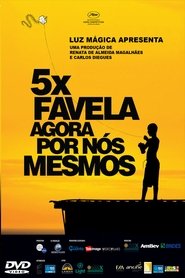
5x Favela, Now by Ourselves
The project '5 x slum, now by ourselves' gathered over 80 young people from Rio's favelas (slums), selected through workshops, script and filmmaking techniques to create a feature film consisting of five stories that reflect different facets of the daily lives of residents of these communities - with the promise of escape stereotypical representations.Year:
2010

Breathless
French girl lost in Rio de Janeiro has a peculiar meeting with the nacional cinema maphia. Who can save her?Year:
2006

The House of Sand
A woman is taken along with her mother in 1910 to a far-away desert by her husband, and after his passing, is forced to spend the next 59 years of her life hopelessly trying to escape it.Year:
2005

A Linguagem do Cinema
Year:
2001

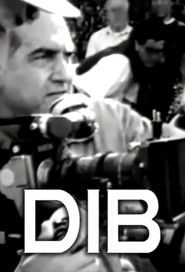
Dib
Documentary that addresses, through the testimony of directors and actors, the work of Dib Lutfi, considered one of the greatest photographers of Brazilian cinema.Year:
1997

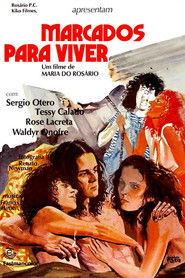
Branded For Life
A true friendship develops between Jojô, a prostitute Rosa, and the young Eduardo, who survive on the streets of Rio de Janeiro. Everything goes well until ambition takes over the trio, causing friends to aim for bigger goals, planning a big assault that could cost them their lives.Year:
1977

Aguirre, the Wrath of God
A few decades after the destruction of the Inca Empire, a Spanish expedition led by the infamous Aguirre leaves the mountains of Peru and goes down the Amazon River in search of the lost city of El Dorado. When great difficulties arise, Aguirre’s men start to wonder whether their quest will lead them to prosperity or certain death.Year:
1972

Brazil in Cannes
The importance of the Cannes Film Festival in world terms and what it represented for Brazil in 1971. For Brazilian cinema, Cannes 71 represented the transition from film to industrialized production. It is the meeting of producers, technicians, critics , celebrities in general, offering opportunities for greater knowledge and renewal of valuesYear:
1971

Retrato Do Artista Com Um 38 Na Mão
Year:
-

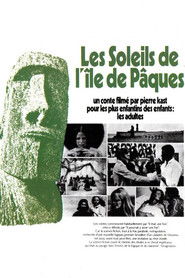
The Suns of Easter Island
Six people find a mysterious mark in the center of their left hand and all independently go to Easter Island in hopes to uncover the mystery.Year:
1972

Le Maître du temps
An alien, with the ability to travel through time, visits our planet at various eras.Year:
1971

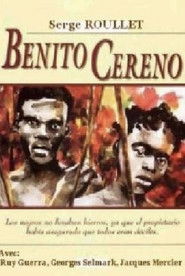
Benito Cereno
When Captain Amaso Delano approaches a three-masted ship in distress to offer his assistance, he discovers a most unusual situation: its captain, Don Benito Cereno, seems to command a very scant crew, moreover composed only of Africans. Cereno is in very bad condition and apparently survives only thanks to the affectionate care of his faithful body-servant slave Atimbo. When Delano leaves the dilapidated ship to seek relief, Cereno jumps in the boat and explains to the Americans that he has been the victim of a revolt of the slaves. The ship is now in their hands.Year:
1971

The Beggars
Year:
1963

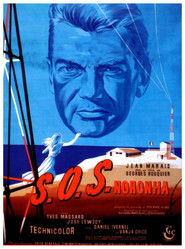
S.O.S. Noronha
In 1930, on the island of Noronha in Brazil, the inmates of the penitentiary revolt. Frédéric Coulibaud, head of the aeropostale radio station, and his team-mates Mastic and Froment, try to prevent them from entering the concession where the island's governor and his daughter have taken refuge. They manage to repair the radio so as to follow and guide Mermoz as he attempts to cross the South Atlantic for the 53rd time. The aviator is forced to ditch and is picked up by a boat. Their mission accomplished, Coulibaud and his team boarded a British ship that had come to their rescue.Year:
1957