Sachiko Hidari
29-06-1930
Birthday
Cancer
Zodiac Sign
-
Genres
61
Total Films
Also known as (female)
Toyama, Japan
Place of Birth
29-06-1930
Birthday
Cancer
Zodiac Sign
-
Genres
61
Total Films
-
Also Known As (female)
Toyama, Japan
Place of Birth
29-06-1930
Birthday
Cancer
Zodiac Sign
-
Genres
61
Total Films
Also known as (female)
Toyama, Japan
Place of Birth
29-06-1930
Birthday
Cancer
Zodiac Sign
-
Genres
61
Total Films
-
Also Known As (female)
Toyama, Japan
Place of Birth
actor
61 Works
producer
1 Works
director
2 Works
writer
0 Works
other
0 Works

Sukiyaki
Sukiyaki can be viewed two ways, a popular Japanese cuisine or a gathering of a family. This heart-warming comedy takes place in Yokohama, where the Mihara family owns a restaurant called “Boston Grill”. Experience the ups and downs of this family and learn how they deal with the everyday problems they are faced with during difficult times.Year:
1995

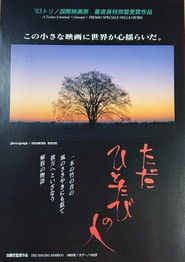
Just One Time
Won Jury's Special Award at the Turin International Film Festival of Young Cinema 1993Year:
1995

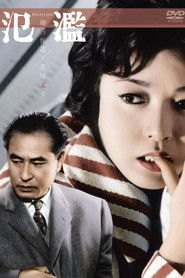
The Tomb & the Divorce
Yoshinori sells plots of land in a cemetery, and is involved in a stale ten-year-old marriage with bored housewife Atsuko. When Atsuko makes a male friend at her leather-working class, Yoshinori has a fit. This is on top of the myriad of odd clients that he must appease.Year:
1993

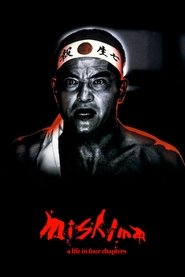
Mishima: A Life in Four Chapters
A fictional account of the life of Japanese author Yukio Mishima, combining dramatizations of three of his novels and a depiction of the events of November 25th, 1970.Year:
1985
Song of the Spring Pony
Hoshino Bunzo raises up his orphan grandson, Keiji whose right leg gets paralyzed when he was an infant. Bunzo loves Keiji so much that he does every thing to protect his grandson. Sonoda Keiko, a new young teacher comes to the school when a new term starts. She wants Keiji to go back to school. After two years absence from school, Keiji tries to attend the class but he cannot continue. All pupils hold an exhibition of Keiji’s paintings in the village shrine to make him happy. He is very pleased and gives his paintings to them and to Keiko, he gives a painting entitled "Spring Pony". When this picture is awarded a prize in the National Friendship Painting Compettition, it is like a new beginning for Keiji’s family.Year:
1985

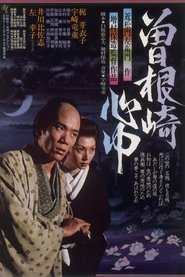
Double Suicide of Sonezaki
Suicide has long been used as a form of social protest in Japan. In this film, set in 1703, samurai culture is being transformed by the emergence of a new merchant class. Elements of the social contract are beginning to unravel, and some unscrupulous people took undue advantage of these changes before the social order was re-created. In this story, a rich merchant gives his clerk an I.O.U. instead of wages. When the impoverished clerk presents the paper to the merchant at the agreed upon time asking for payment, the man flies into a rage and pretends he never wrote it and claims the clerk is trying to defraud him. Then he sets his henchmen on the clerk to administer a beating.Year:
1978

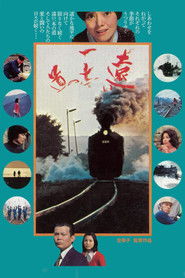
The Far Road
Set in the time of steam locomotives and covering a period of almost 30 years, this sensitive film tells the story of the wife of a railroad worker in the northern part of Japan. The ferocious local class restrictions work to keep her husband in his place, as does his lack of education.Year:
1977
Barefoot Gen
First live action adaptation of Keiji Nakazawa's manga.Year:
1976

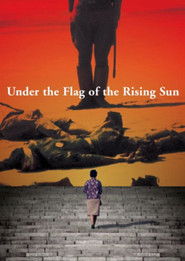
Under the Flag of the Rising Sun
A war widow determined to clear the name of her disgraced husband, who was court-martialed for desertion and executed. Official records have been destroyed, and the ministry that distributes benefits continues to deny her a pension. Twenty-six years after the war, she seeks out four survivors of her husband's garrison. Each tells a dramatically different story about her husband's conduct, but she is determined to learn the truth.Year:
1972

Kigeki: Onna ikitemasu
Comedy centered on a stripper agencyYear:
1971

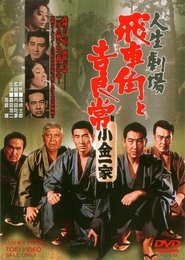
Hishakaku and Kiratsune: A Tale of Two Yakuza
With his penultimate film, Uchida revisited one of his popular prewar titles, 1936’s Theatre of Life, an adaptation of Shiro Ozaki’s eponymous novel. Three-time Seijun Suzuki collaborator Goro Tanada wrote a gangsterized adaptation of Ozaki’s story for Uchida at a time when the yakuza had eclipsed the samurai genre as Toei's main cash crop. Protagonist Hishakaku murders a man in a quarrel over a barmaid and goes to jail. In his temporary absence, his girlfriend Otoyo, a former geisha, falls for Hishakaku’s brother, inciting a dangerous love triangle that, in typical yakuza fashion, ends tragically.Year:
1968

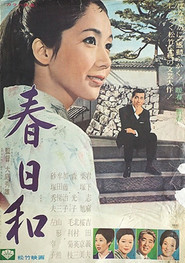
春日和
Year:
1967

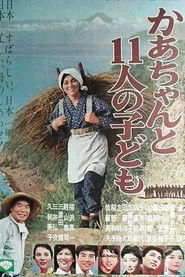
Our Wonderful Years
The story of a selfless mother and her family throughout the decades, from th 1920's to the 1960's.Year:
1966

Bride of the Andes
A young Japanese woman comes to Peru to marry a man she has never seen in this somber drama highlighted by cultural differences. Her husband is a first-generation Japanese and both are bound to the time-honored tradition of arranged marriages. Bringing her child from a previous marriage, she finds her new husband living with Andes Mountain Indians and working for an archaeological expedition. The man and her boy take to each other, and the woman begins to study and understand the lives of the Indians. When her husband is killed mining for Incan treasure, she uses the money sent by the state to stay and help the villagers whom she has come to love.Year:
1966

A Fugitive from the Past
Three robbers escape with loot from a heist before one of them kills the others. Their corpses wash up near the aftermath of a maritime calamity, provoking a policeman's interest.Year:
1965

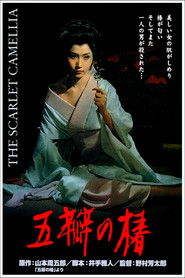
The Scarlet Camellia
A young woman begins murdering all those responsible for her ailing father's condition. Because the girl is so outwardly sweet and innocent, the detective looking into the deaths does not suspect her.Year:
1964

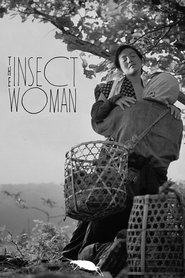
The Insect Woman
A woman, Tome, is born to a lower class family in Japan in 1918. The title refers to an insect, repeating its mistakes, as in an infinite circle. Imamura, with this metaphor, introduces the life of Tome, who keeps trying to change her poor life.Year:
1963

She and He
As her husband Eiichi becomes more entangled in his life as businessman, Naoko looks for ways to expand her own life even as her husband's life shrinks in scope and intimacy. She finds new interests, new love, and a greater sense of her place in the world.Year:
1963

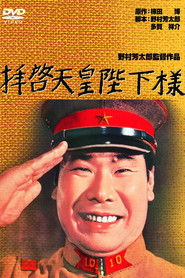
To Your Majesty, The Emperor
A conscript from a poor background writes the Emperor asking if he can stay in the army when his service is up.Year:
1963

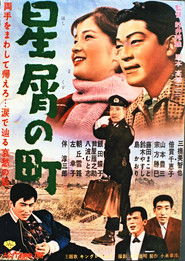
Hoshikuzu no Machi
Year:
1963

Escape from Hell
This suspense drama set in the mid 1700's depicts the plan of the Tokugawa rulers to send a number of homeless men to a remote island Sado to perform forced labor. Living conditions on the island are terrible and the men soon become rebellious. Based on a short story by Seichō Matsumoto.Year:
1963

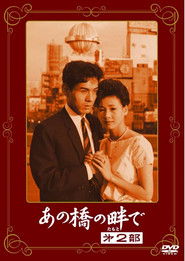
At the Side of the Bridge 2
1962 Japanese movieYear:
1962

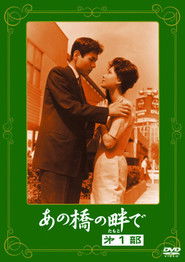
At the Side of the Bridge
1962 Japanese movieYear:
1962

This Madding Crowd
Year:
1962

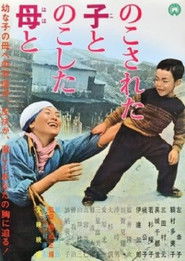
Nokosa reta ko tonoko shita haha to
1962 Japanese movieYear:
1962

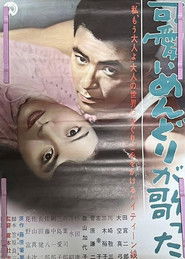
Kawaii mendori ga utatta
Year:
1961
Dare yori mo kimi o aisu
Japanese "kayo" film centered around the song "Dare yori mo kimi wo aisu" by Kazuko Matsuo.Year:
1960

The Demon of Mount Oe
A demon-faced monster seeking revenge appears in the forms of a gigantic ox and a huge spider! The young Genji warrior protects the Fujiwara Clan and the beautiful lady in tragic love! A grand visual epic told with mesmerizing extravagance!Year:
1960

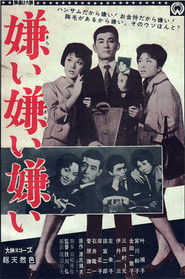
Kirai Kirai Kirai
Year:
1960

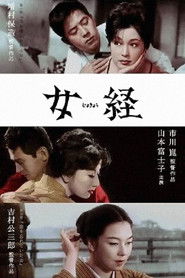
A Woman's Testament
The first story concerns an attractive young woman who works in a Tokyo nightclub. Her plan for a solid financial future has a double whammy. In the second story, a beautiful young woman is employed by an unscrupulous real estate agent to convince male clients to invest in worthless property. The last story is about a widowed geisha who has no real financial worries and who falls in love with a forger.Year:
1960

The Princess Says No
Year:
1959

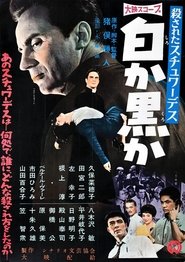
A Killed Stewardess: White or Black
Year:
1959

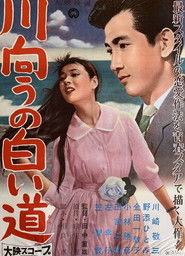
The White Road Across the River
Year:
1959

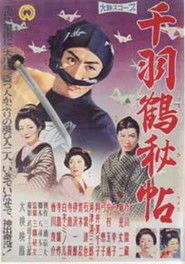
A Thousand Flying Cranes
Year:
1959

The Cast-Off
The inventor of a ground-breaking glue, Sanada, becomes rich thanks to his discovery a high executive in his company. Because of this promotion, his world is changing completely : his wife behaves like never before, considering she's now rich and has the right to do whatever she wants, even having an affair. (Also occasionally known in English as “Overflow”)Year:
1959

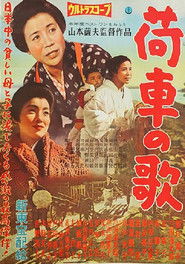
The Song of the Cart
A lifetime story of a woman who stubbornly lives in a poor mountain village in post-war Japan.Year:
1959

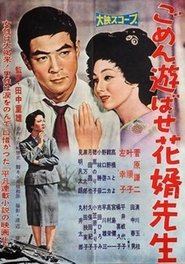
Gomen asobase Hanamuko sensei
1958 Japanese movieYear:
1958

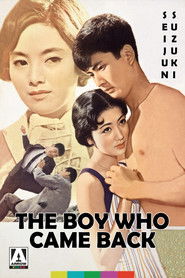
The Boy Who Came Back
Nobuo is a hot-headed hoodlum fresh out of reform school who struggles to make a clean break with his tearaway past.Year:
1958

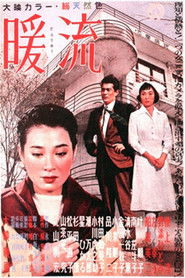
Warm Current
The story revolves around a young man appointed to rescue a troubled hospital who must choose between two women, a dedicated nurse or a spoiled rich girl.Year:
1957

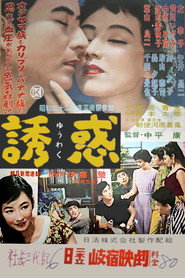
Temptation
Shokichi, the owner of the clothing store, lives with his daughter Hideko and plans to open an art gallery. One day, Hideko led a handsome art student, Shohei and a poor painter, Sohei. Sohei’s painting was praised by a great printer at the completion ceremony of the art gallery. Since he became successful as a painter, but he looked quite indifferent. Around the same time, Shohei’s sister brought Sohei’s pictures to the gallery and Shokichi noticed that she was a daughter of his first love.Year:
1957

A Sun-Tribe Myth from the Bakumatsu Era
Saheji, a man-about-town, gets stuck at a high-class brothel when he can’t pay the bill. He makes the best of his situation by performing various tasks amidst the tumult of the end of the shogunate—but always by making sure to get a “commission” for his troubles.Year:
1957
Madam
Japanese drama film.Year:
1957

Mehyō to Narazu Mono
A poignant entertainment epic about a righteous mountain man, a young company director with new ideals, and a beautiful woman with wild charm, whose love and action unfold against the backdrop of a rice field in the middle of a vast forest.Year:
1957

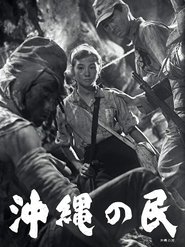
Okinawa no Tami
With the background of the Battle of Okinawa, he draws a semi-documentary image of each individual person under an unusual psychological state of war. Furukawa Takumi of “Backlight” is adapted and directed by Daiichi Ishino. Filmed by Yoshio Mamiya, “Smuggling of the body”. The main performers are Sachiko Sakai since the “Zoi Family”, Hiroyuki Nagato of the “Next door bride”, Shoji Yasui of the “Sentimental wife”, Takatoko of “Crying, the last Japanese fighter”, “Blue angry” Noriko Katsura, Shinzo three of "actress (1956)", Masao Oda, Nobuo Kaneko, Toru Abe, Hiroshi Nihonyanagi, Misako Tsubouchi.Year:
1956
Family of Sorrow
Japanese drama film, originally released in two parts.Year:
1956

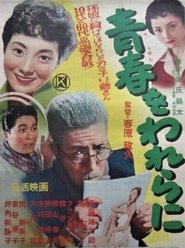
Seishun wo warera ni
Year:
1956

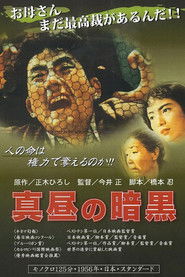
Darkness at Noon
Police beat a murder confession out of four innocent men who are then sentenced to death. Based on a true story.Year:
1956
Called to the Stand
Chief editor Shirou Kanzaka (Hisaya Morishige) of Sankei Publishing Inc. is being tried for embezzlement and the staging of Chiyo Umehara's suicide. The victim is a woman who's said to have had sexual relations with the defendant. Four intertwined witnesses; a critic, Shirou's employee, a singer, and his wife, are all called to the stand. His destiny now lies in their hands.Year:
1956

The Balloon
Haruki Murakami is a successful family man and the head of a camera company. Unbeknownst to Murakami, his arrogant son oscillates between a mistress and a new lover who sings at a nightclub. When Murakami’s daughter befriends the mistress, the affair throws the family into turmoil.Year:
1956
I'm Not the Criminal
Japanese crime film.Year:
1956
Such is Life
Japanese drama film.Year:
1955

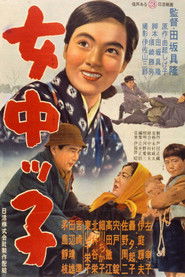
The Maid's Kid
In order to pay back Mrs. Kajiki for her good deed in the past, Hatsu moves from her village in Akita to Tokyo to start working as a maid for her family. She grows close to their youngest son Katsumi, experiencing things that will change her view on life.Year:
1955

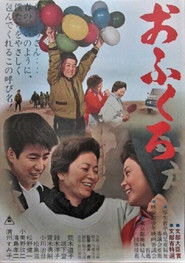
Ofukuro
Shizuka, Eiichiro, and Mineko, their father and son, live modestly in a certain suburb, leading a dreary but happy life. Eiichiro is troubled by Shizuka's desire to live together in familiar Tokyo. Mineko is the exact opposite of Eiichiro. A literary masterpiece depicting the fateful sorrow and humor of a mother and childYear:
1955

The Cock Crows Twice
Three young women make a suicide pact, but they grow to have a better understanding of themselves.Year:
1954

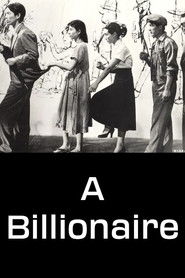
A Billionaire
An ethical, young tax collector new to his area encounters increasingly absurd individuals and groups coping with their post-war woes.Year:
1954

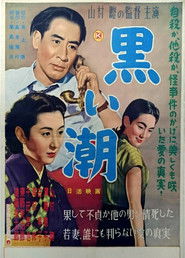
The Black Current
A reporter Takuo, who is sleeping in the newspaper room of the Maichō newspaper company, receives a sudden report from a reporter that the missing Akiyama JNR president was found dead.Year:
1954

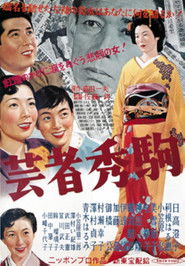
Geisha Hidekoma
As a bid to win contacts, ship building companies wine and dine political leaders, inviting the geisha Hidekoma and Hidechiyo to entertain the politicians.Year:
1954

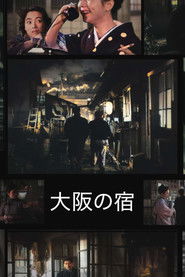
An Inn at Osaka
An Inn at Osaka, rarely seen outside Japan, follows the story of an insurance company executive from Tokyo, Mr. Mito, who is demoted to the Osaka office. He takes a room at a small inn and tries to rebuild his life. Notable for its exquisite framing and cinematography, An Inn at Osaka allows its complicated plotlines to disappear behind the minutiae of penury and humiliation that Mito and others suffer during the post-war economic and social reconstruction.Year:
1954

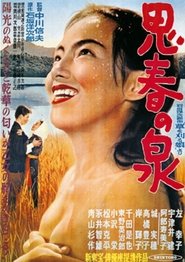
Shishun no izumi
Year:
1953
親馬鹿花合戦
Kingoro Yanagiya's 100th film.Year:
1953

Muntinlupa no yo wa fukete
Year:
1952