Аватар персоны Sergei Urusevsky

Sergei Urusevsky

DirectorWriter
Sergei Urusevsky (23 December 1908 - 12 November 1974) was a Soviet cinematographer and film director, renowned for his work with Grigoriy Chukhray, Mikhail Kalatozov and Yuli Raizman. His subjective camera style in I Am Cuba and The Cranes Are Flying is regarded as one of the best of all time, winning him several awards throughout his career. Urusevsky's work draws influence from Eduard Tisse, the cinematographer known for his work with Sergei Eisenstein on the film Strike. He was very candid in his admiration for Pablo Picasso and was even sent ceramic paintings from the esteemed artist. In 1946, Urusevsky became a member of the Communist Party of the Soviet Union and continued to be pro-communism for the entirety of his life.

10-12-1908

Birthday

Sagittarius

Zodiac Sign

-

Genres

0

Total Films

С. Урусевский, Сергей Павлович Урусевский

Also known as (male)

Saint Petersburg, Russian Empire

Place of Birth

Popular works

Creative career

actor

0 Works

producer

0 Works

director

22 Works

writer

2 Works

other

18 Works

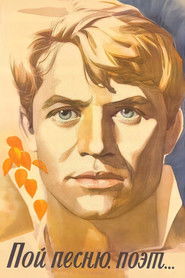
Sing a Song, Poet

Sing a Song, Poet

About the life and work of the poet Sergei Yesenin, his connection with his native country, its people and nature. Childhood, love, painful searches for his place in the new, revolutionary Russia — everything found a place in Yesenin's lyrics. Frames illustrating Yesenin's poetry and poems are side by side in the film with episodes of the poet's biography: the film reflects the days of his stay in America, World War I, revolution and village round dances, a daring uncle, a wise mother...
3.7

Year:

1973

Sing a Song, Poet

Sing a Song, Poet

About the life and work of the poet Sergei Yesenin, his connection with his native country, its people and nature. Childhood, love, painful searches for his place in the new, revolutionary Russia — everything found a place in Yesenin's lyrics. Frames illustrating Yesenin's poetry and poems are side by side in the film with episodes of the poet's biography: the film reflects the days of his stay in America, World War I, revolution and village round dances, a daring uncle, a wise mother...
3.7

Year:

1973

Sing a Song, Poet

Sing a Song, Poet

About the life and work of the poet Sergei Yesenin, his connection with his native country, its people and nature. Childhood, love, painful searches for his place in the new, revolutionary Russia — everything found a place in Yesenin's lyrics. Frames illustrating Yesenin's poetry and poems are side by side in the film with episodes of the poet's biography: the film reflects the days of his stay in America, World War I, revolution and village round dances, a daring uncle, a wise mother...
3.7

Year:

1973

Goodbye, Gyulsary!

Goodbye, Gyulsary!

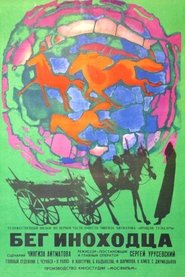
Based on Chingiz Aitmatov’s novel "Farewell, Gyulsary!" The story of Tanabai the blacksmith, father of three children, who upon his return from war became a herdsman, and his tragic love for the soldier’s widow Byubyudzhan. The lyrical poem has an additional storyline concerning the horse Gyulsary and his master Tanabai.
6.1

Year:

1969

Goodbye, Gyulsary!

Goodbye, Gyulsary!

Based on Chingiz Aitmatov’s novel "Farewell, Gyulsary!" The story of Tanabai the blacksmith, father of three children, who upon his return from war became a herdsman, and his tragic love for the soldier’s widow Byubyudzhan. The lyrical poem has an additional storyline concerning the horse Gyulsary and his master Tanabai.
6.1

Year:

1969

Goodbye, Gyulsary!

Goodbye, Gyulsary!

Based on Chingiz Aitmatov’s novel "Farewell, Gyulsary!" The story of Tanabai the blacksmith, father of three children, who upon his return from war became a herdsman, and his tragic love for the soldier’s widow Byubyudzhan. The lyrical poem has an additional storyline concerning the horse Gyulsary and his master Tanabai.
6.1

Year:

1969

I Am Cuba

I Am Cuba

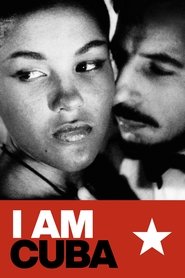
Four vignettes on the lives of the Cuban people in the pre-revolutionary era. In Havana, Maria is ashamed when a man she loves discovers how she makes a living. Pedro, an old farmer, discovers that the land he cultivates is being sold to an American company. A student sees his friends attacked by the police while they distribute leaflets supporting Fidel Castro. Finally, a peasant family is threatened by Batista's army.
7.9

Year:

1964

I Am Cuba

I Am Cuba

Four vignettes on the lives of the Cuban people in the pre-revolutionary era. In Havana, Maria is ashamed when a man she loves discovers how she makes a living. Pedro, an old farmer, discovers that the land he cultivates is being sold to an American company. A student sees his friends attacked by the police while they distribute leaflets supporting Fidel Castro. Finally, a peasant family is threatened by Batista's army.
7.9

Year:

1964

Letter Never Sent

Letter Never Sent

Four geologists are searching for diamonds in the wilderness of Siberia. After a long and tiresome journey they manage to find their luck and put the diamond mine on the map. The map must be delivered back to Moscow. But on the day of their departure a terrible forest fire wreaks havoc, and the geologists get trapped in the woods.
7.2

Year:

1960

The Cranes Are Flying

The Cranes Are Flying

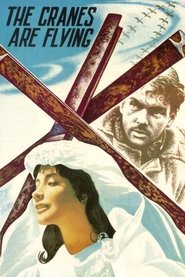
Veronika and Boris come together in Moscow shortly before World War II. Walking along the river, they watch cranes fly overhead, and promise to rendezvous before Boris leaves to fight. Boris misses the meeting and is off to the front lines, while Veronika waits patiently, sending letters faithfully. After her house is bombed, Veronika moves in with Boris' family, into the company of a cousin with his own intentions.
7.9

Year:

1957

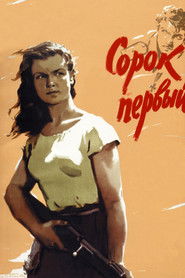
The Forty-First

The Forty-First

An unexpected romance occurs for a female Red Army sniper and a White Army officer.
6.8

Year:

1956

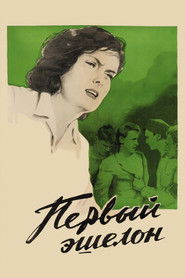
The First Echelon

The First Echelon

In one of the steppe regions of Kazakhstan arrives on Komsomol youth squad. Severe frosts, spring mud flows, exhausting work than their specialty - the development of virgin land does not come easy. But the young are young - they work, enjoy life, fall in love. In the center of the story - the touching romance secretary of the Komsomol organization and tractor driver Anne.
4.6

Year:

1955

The First Echelon

The First Echelon

In one of the steppe regions of Kazakhstan arrives on Komsomol youth squad. Severe frosts, spring mud flows, exhausting work than their specialty - the development of virgin land does not come easy. But the young are young - they work, enjoy life, fall in love. In the center of the story - the touching romance secretary of the Komsomol organization and tractor driver Anne.
4.6

Year:

1955

The Lesson of Life

The Lesson of Life

On falling in love with Sergey, Natasha gives up studies at a pedagogical institute and accompanies him to a construction site. In a course of time she realizes that her husband is interested only in his work. She leaves him, graduates from the institute and works as a teacher. But Sergey is fired for authoritative style of work and Natasha realizes that she must be near to him in his hour of need.
5.4

Year:

1955

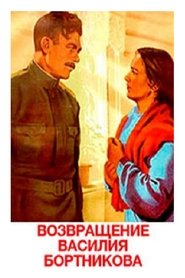
The Return of Vasili Bortnikov

The Return of Vasili Bortnikov

A veteran of World War II returns to civil life and the collective farm he once led, only to find his wife has re-married. Based on the novel "The Harvest," by Galina Nikolayeva.
4.4

Year:

1953

Dream of a Cossack

Dream of a Cossack

Soviet filmmaker Yuri Raisman once more combines political dogma with solid entertainment values in Dream of a Cossack (aka Cavalier of the Golden Star). The title character, played by future director Sergei Bondarchuk (and billed for obscure reasons as Semyon Bondarchuk), is an ex-soldier who returns home to the Kuban region, there to take up life as a farmer. Instead, he galvanizes the local citizenry into participating in a massive construction project, which will result in a new power station and canal. Thus does Raisman offer an prime example of Russian collectivism while making it seem as though it had sprung from individual initiative. Dream of a Cossack is based on a popular novel by S. Babayefsky.
5.4

Year:

1951

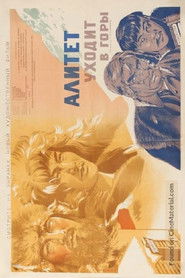
Alitet Leaves for the Hills

Alitet Leaves for the Hills

Mark Donskoy went to the wilds of Siberia to film this Soviet movie about a community that resists the temptations of a wicked American capitalist who wants to exploit their lands.
5.6

Year:

1950

The Village Teacher

The Village Teacher

A life-long story of a romantic school teacher who left imperial St. Petersburg for teaching country children. Driven by noble intentions to enlighten people and examples by 1880s revolutionary "People's Will" member teachers, a young woman spent her life in a village and evidenced the changes a Russian village has undergone from pre-revolutionary tsarist times to late 1940s.
5.4

Year:

1947

Duel

Duel

The Second World War. A new L-2 heavy duty gun is being supplied to the Soviet Army. German intelligence needs to seize a new secret weapon.
7.5

Year:

1945

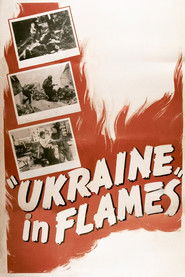
Ukraine in Flames

Ukraine in Flames

A 1943 Soviet documentary war film by Ukrainian director Alexander Dovzhenko and Yuliya Solntseva. It is Dovzhenko's second World War II documentary, and dealt with the Battle of Kharkov. The film incorporates German footage of the invasion of Ukraine, which was later captured by the Soviets.
5.2

Year:

1943

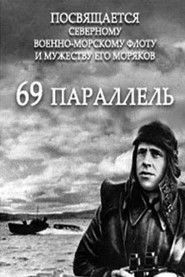
The 69th Parallel

The 69th Parallel

The Arctic operation linking up with the Allies through the Barents Sea and Murmansk.
0.0

Year:

1942