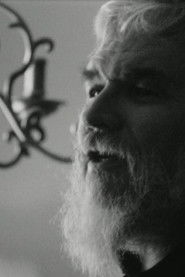
Аватар персоны Stan Brakhage

Stan Brakhage

DirectorActorProducerWriter
Stan Brakhage is one of the most influential filmmakers in American avant-garde cinema, noted for his unflinching social commentaries and technical innovations. Over his nearly 40-year career, he has made over 200 films of varying length. He made his first film, Interim (1952) at age 18 after dropping out of college. Brakhage films seek to change the way we see. They encourage viewers to eschew traditional narrative structure in favor of pure visual perception that is not reliant on naming what is seen; rather his goal is to create a more visceral visual experience, for he believes that a "stream-of visual-consciousness could be nothing less than the pathway of the soul." To this end, his films are shot in highly sensual colors and utilize minimal soundtracks. His work can be divided into distinct periods. His first short films explored the properties and possibilities of light. In many of his experimental ventures, Brakhage has forgone traditional cinematography in favor of working directly with the film stock itself. He has occasionally painted, inked, scratched and dyed images onto it; he has also tried pasting organic objects on the film. His most famous example is the 1963 short Mothlight in which he glued moth wings onto the stock. Some of his early films were based on his most intimate experiences that included making love to his new bride--depicted on negative film--in Wedlock House: An Intercourse (1959), and an attempt to bring his dead dog back to life with a camera in Sirius Remembered (1959). During the 1960s, Brakhage's iconoclastic views were celebrated for their poetry, but during the '70s, his focus changed to social issues and he alienated many supporters with such disturbing film series as the "Pittsburgh documents" in which he presented many gruesome views of inner city life with films such as Act of Seeing with One's Own Eyes (1971) which was shot in a morgue. He also continued with autobiographical material with the "Sincerity/Duplicity series. During the 1980s, Brakhage's focus again changed--this time he became intrigued with creating truly "abstract" films such as Arabics (1982) which consists of brilliant bursts of colored light which he claims, represent "envisioned music." In addition to filmmaking, Brakhage also wrote books about films and filmmaking and also served as a teacher.

14-01-1933

Birthday

Capricorn

Zodiac Sign

-

Genres

58

Total Films

스탠 브래키지, スタン・ブラッケージ, 斯坦·布拉哈格, Стэн Брэкидж

Also known as (male)

Kansas City, Missouri, USA

Place of Birth

Popular works

Creative career

actor

58 Works

producer

2 Works

director

452 Works

writer

12 Works

other

53 Works

Please Leave a Message: Anthology Film Archives Voicemails Through the Ages

Please Leave a Message: Anthology Film Archives Voicemails Through the Ages

This very special film features a carefully curated selection of some of the priceless messages that have graced Anthology’s voicemail system over the years. From the historically important to the utterly (and sublimely) absurd, they feature a cast of characters ranging from legendary avant-garde filmmakers, scholars, and other cultural figures to civilians whose legend has (until now) been confined to the offices of Anthology, thanks precisely to their witty, eloquent, eccentric – or in some cases unforgettably psychotic – voicemails. We’ve toyed with the idea of sharing these messages in some form for years, and the “Imageless Films” series provides a perfect pretext.
0.0

Year:

2022

Diaries, Notes, and Sketches

Diaries, Notes, and Sketches

An epic portrait of the New York avant-garde art scene of the 60s.
7.4

Year:

2013

Free Radicals: A History of Experimental Film

Free Radicals: A History of Experimental Film

Experimental filmmaker Pip Chodorov traces the course of experimental film in America, taking the very personal point of view of someone who grew up as part of the experimental film community.
6.7

Year:

2011

For Stan

For Stan

For Stan is a tribute film shot by Marilyn Brakhage of her husband at work with his camera in the late 1980s and early 90s – illuminating their close relationship.
7.0

Year:

2009

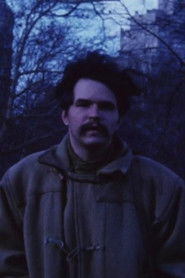
Brakhage Crosses Central Park

Brakhage Crosses Central Park

Clip from Walden.
4.0

Year:

2006

A Visit to Stan Brakhage

A Visit to Stan Brakhage

In late 1966 I visited Stan Brakhage in Rollinsville, Colorado. This is a portrait of Stan at home, with his family, his animals, and the surroundings, 9000 feet high.
0.0

Year:

2006

Notes on Marie Menken

Notes on Marie Menken

A look at avant-garde filmmaker Marie Menken.
5.4

Year:

2006

A Visit to Stan Brakhage

A Visit to Stan Brakhage

A portrait of Brakhage shot in Victoria, British Columbia, just a few months before his death. Filmmaker Pip Chodorov illustrates Brakhage's reflections on his art with short passages from his hand-painted films.
0.0

Year:

2003

Sonic Youth: Koncertas Stan Brakhage Prisiminimui (April 12, 2003)

Sonic Youth: Koncertas Stan Brakhage Prisiminimui (April 12, 2003)

Filmed April 12, 2003 at a benefit concert held at and for The Anthology Film Archives, the international center for the preservation, study, and exhibition of avant-garde and independent cinema. In addition to screening films for the public, AFA houses a film museum, research library and art gallery. The event, which raised money for the Archives and celebrated the life and work of avant-garde film maker Stan Brakhage, featured Sonic Youth providing an improvised instrumental collaboration with silent Brakhage’s films. The band performed with drummer/percussionist Tim Barnes (Essex Green, Jukeboxer, Silver Jews).
0.0

Year:

2003

Keeping an Eye on Stan

Keeping an Eye on Stan

The late, legendary experimental filmmaker Stan Brakhage is the subject of this video portrait by his friends Ken Jacobs and Nisi Jacobs.The video closely documents Brakhage's last visit to New York, and captures scenes of his family life in Boulder, Colorado, affording a view of the artist that is at once candid and casual.
0.0

Year:

2003

Encomium

Encomium

I shot this roll of film at a party Bard College threw when it awarded Stan Brakhage an honorary degree. A few days after he died, I dug it out and watched it again. I had meant to make Brakhage a gift of the roll, but instead it became a farewell.
0.0

Year:

2003

Life with Stan #4: Stan Painting

Life with Stan #4: Stan Painting

This afternoon summer scene is very much how he worked (when painting directly on film) in the last several years – at various cafes and sports bars (usually indoors) on Pearl Street in Boulder (Boulder Blues and Pearls and…), amidst his taco salads, root beer floats, or Irish coffees…
0.0

Year:

2002

Stan Brakhage Exits the Cinema and Enters the Light of Day

Stan Brakhage Exits the Cinema and Enters the Light of Day

A brief short of Phil Solomon and Stan Brakhage going to the movies in the spring of 2002.
7.6

Year:

2002

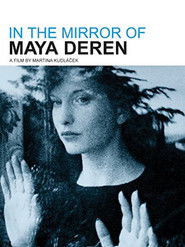
In the Mirror of Maya Deren

In the Mirror of Maya Deren

Documentary about the life of avant-garde filmmaker Maya Deren, who led the independent film movement of the 1940s.
7.4

Year:

2002

Vakvagany

Vakvagany

Hungarian home movies are examined by the likes of James Ellroy and Stan Brakhage for evidence of family problems.
10.0

Year:

2002

Garden Path

Garden Path

A depiction of the creative process of hand-painting film giant, Stan Brakhage. Inspired by Monet's paintings from Giverny, Brakhage's luminous abstract painting transforms the screen into an oneiric botanical landscape. Brakhage's painted loops leap out of black and white footage of the master at work, painting and printing.
5.3

Year:

2001

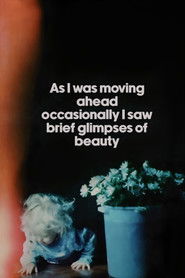
As I Was Moving Ahead, Occasionally I Saw Brief Glimpses of Beauty

As I Was Moving Ahead, Occasionally I Saw Brief Glimpses of Beauty

A compilation of over 30 years of private home movie footage shot by Lithuanian-American avant-garde director Jonas Mekas, assembled by Mekas "purely by chance", without concern for chronological order.
7.8

Year:

2000

Looking at Forest of Bliss

Looking at Forest of Bliss

Director Robert Gardner and legendary filmmaker Stan Brakhage share an in-depth viewing of Gardner's ethnographic masterwork, Forest of Bliss. The film is shown in its entirety, with Gardner occasionally pausing to elucidate, and Brakhage brilliantly observing tonality, poetic imagery, life, death, the unconscious, and, well, just being damned insightful. - dred
0.0

Year:

2000

Keepers of the Frame

Keepers of the Frame

An exploration of film preservation and restoration in the United States.
10.0

Year:

1999

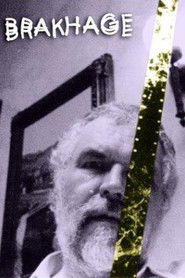
Brakhage

Brakhage

BRAKHAGE explores the depth and breadth of the filmmaker’s genius, the exquisite splendor of his films, his magic personal charm, his aesthetic fellow travelers, and the influence his work has had on generations of other creators. While touching on significant moments in Brakhage’s biography, the film celebrates Brakhage’s visionary genius, and explores the extraordinary artistic possibilities of cinema, a medium mostly known only for its commercial applications in the form of narratives, cartoons, documentaries, and advertising. BRAKHAGE combines excerpts from Brakhage’s films and films of other avant-garde filmmakers (eg, George Kuchar, Jonas Mekas, Willie Varela, Bruce Elder, and others); interviews with Brakhage, his friends, family, colleagues, and critics; archival footage of Brakhage spanning the past thirty-five years; and location shooting in Boulder, Colorado and New York.
7.0

Year:

1998

I Met Stan Brakhage (At Moma, N.Y.C)

I Met Stan Brakhage (At Moma, N.Y.C)

Stan Brakhage shows his new films at MoMA in New York. Before that, he said hello to me, Jonas Mekas, Birgit, the Anthology team and others. Later, we return home by metro.
0.0

Year:

1998

Birth of a Nation
Birth of a Nation
Filmmaker Jonas Mekas films 160 underground film people over four decades.
6.3

Year:

1997

Stan Brakhage on Gregory Markopoulos

Stan Brakhage on Gregory Markopoulos

Brakhage's lecture at the Whitney Museum is a thoughtful meditation on another friend and fellow filmmaker Gregory Markopoulos.
0.0

Year:

1997

Stan Brakhage on Jim Davis

Stan Brakhage on Jim Davis

A very personal lecture on filmmaker and friend Jim Davis.
0.0

Year:

1997

Cannibal! The Musical

Cannibal! The Musical

Heading through Colorado Territory in search of gold and women, Alferd Packer and his group of bemused companions find themselves lost, starving and musically inspired by the obstacles they confront along the way, including a die-hard Confederate cyclops, a trio of surly trappers, a tribe of Japanese-speaking "Indians," and ultimately, each other.
6.3

Year:

1996

BRAKHAGE ON BRAKHAGE

BRAKHAGE ON BRAKHAGE

Working outside the mainstream, the wildly prolific, visionary Stan Brakhage made more than 350 films over a half century. Challenging all taboos in his exploration of “birth, sex, death, and the search for God,” he turned his camera on explicit lovemaking, childbirth, even autopsy.
0.0

Year:

1996

As Is Was

As Is Was

This film was shot the same weekend as Z (Zee Not Zed), when Stan Brakhage was visiting University of Rhode Island, where Marjorie Keller was teaching at the time. They get some coffee, then go for a walk on a beach in an old whaling harbor.
0.0

Year:

1995

Jonas in the Desert

Jonas in the Desert

Not a documentary in the strictest sense of the word. Rather, it is a journey through the world of the artist Jonas Mekas - one of the exponents of independent U.S. movies; founder and director of the New York Anthology Film Archive.
5.5

Year:

1994

Abstract Cinema

Abstract Cinema

Several well-known and pioneering abstract filmmakers discuss the history of non-objective cinema, the works of those that came before them and their own experiments in the field of visionary filmmaking.
8.0

Year:

1993

Z (Zee Not Zed)

Z (Zee Not Zed)

Stan Brakhage with a movie camera. Winter seascapes.
0.0

Year:

1993

Joseph Cornell: Worlds in a Box

Joseph Cornell: Worlds in a Box

This is a 1991 documentary film about the legendary artist and filmmaker, Joseph Cornell, who made those magnificent and strange collage boxes. He was also one of our great experimental filmmakers and once apparently made Salvador Dali extremely jealous at a screening of his masterpiece, Rose Hobart. In this film we get to hear people like Susan Sontag, Stan Brakhage, and Tony Curtis talk about their friendships with the artist. It turns out that Curtis was quite a collector and he seemed to have a very deep understanding of what Cornell was doing in his work.
0.0

Year:

1991

Watunna

Watunna

The creation myths of the Yekuana Indians of the Orinoco region of Venezuela provide a transparent look at the poetic process by which human beings construct meaning from their experience. Narrated by Stan Brakhage. Music and sound by Bruce Odland.
0.0

Year:

1989

I... Dreaming

I... Dreaming

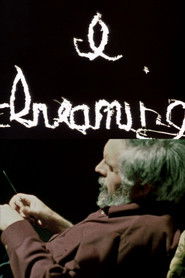
Phrases of Stephen Foster, set to music by Joel Heartling, are set to film in this autobiographical piece: a solitary female voice, occasionally joined by a chorus, sings phrases of sorrow as we watch a solitary man in shadows in an unadorned house: he stretches out, he picks his feet, he walks across a room, he rocks in a chair. Occasionally he watches two young children at play; the film sometimes speeds up. Handwritten words, like "dark void" and "waiting longing," cross the screen. Film and phrases often come in short bursts. Outdoor it looks gray and cold.
5.8

Year:

1988

Faust's Other: An Idyll

Faust's Other: An Idyll

“Faust Part 2” reveals the modern Faust in a romantic interlude, an idyll (from the Greek idein, "to see"); also, a journey of the id. A sense of story is inferred through the complex interweaving of human gesture, expression, and bodily movement within vibrantly shifting colours and rhythmic development, creating multiple levels of metaphorical meaning. A collaborative work with paintings by Emily Ripley and soundtrack by Joel Haertling.
5.0

Year:

1988

Doodlin': Impressions Of Len Lye

Doodlin': Impressions Of Len Lye

This documentary, made seven years after the death of legendary filmmaker and kinetic artist Len Lye, tells Lye's story: from being a young boy staring at the sun, to travels around the Pacific and life in New York. It includes excerpts from many of his films, and interviews with second wife Ann and biographer Roger Horrocks. Len Lye himself is often heard, outlining his ideas of the ‘old brain’ and how Māori and Aboriginal art influenced his work. The grandeur of his ideas are only matched by their scale, with steel sculptures designed to be "at least 20 foot high".
0.0

Year:

1987

Invocation: Maya Deren

Invocation: Maya Deren

Maya Deren is a legend of avant-garde cinema. This authoritative biography of the charismatic filmmaker, poet and anthropologist features excerpts from her pioneering Meshes of the Afternoon and her unfinished documentary on Haiti, interviews with Stan Brakhage and Jonas Mekas, and recordings of her lectures. Narrated by actress Helen Mirren, this definitive documentary offers startling insights into one of the most intriguing, accomplished figures in cinema history.
5.0

Year:

1986

Reflecting Thought: Stan Brakhage

Reflecting Thought: Stan Brakhage

Stan Brakhage is a film maker whose work is shown mainly at film festivals. His work has been likened to poetry. Brakhage explains his techniques and his motivation.
0.0

Year:

1985

Tortured Dust

Tortured Dust

The culmination of a series of autobiographical films that Brakhage made about his family (collectively known as The Book of Family), Tortured Dust was shot as the filmmaker's children from his first marriage were beginning to leave the house, and edited during Brakhage and his first wife Jane's impending separation. The first half concentrates on Brakhage's teenage sons as they move around the cabin that has been their home for almost 20 years, and the second half turns towards the filmmaker's three daughters.
7.0

Year:

1984

Stan & Jane Brakhage

Stan & Jane Brakhage

A poignant portrait of Stan and Jane Brakhage visiting Juarez.
6.0

Year:

1981

Grand Opera: An Historical Romance

Grand Opera: An Historical Romance

Grand Opera marks a stock-taking of Benning's work and his life, presenting a personal and artistic autobiography woven together with a series of events dealing with the historical development of the number pi, Benning's travels, and homages to Michael Snow, Hollis Frampton, George Landow (Owen Land), and Yvonne Rainer.
8.0

Year:

1978

The Stars Are Beautiful

The Stars Are Beautiful

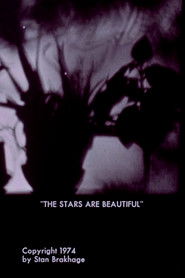
We move back and forth between scenes of a family at home and thoughts about the stars and creation. Children hold chickens while an adult clips their wings; we see a forest; a narrator talks about stars and light and eternity. A dog joins the hens and the family, while the narrator explains the heavens. We see a bee up close. The narrator suggests metaphors for heavenly bodies. Scenes fade into a black screen or dim purple; close-ups of family life may be blurry. The words about the heavens, such as "The stars are a flock of hummingbirds," contrast with images and sounds of real children.
5.0

Year:

1974

Reality's Invisible

Reality's Invisible

Fulton made the film during his brief time at Harvard, where he had been invited to teach by Robert Gardner, his friend and collaborator (Fulton would later serve as a cinematographer on Gardner’s 1981 documentary Deep Hearts, among others). Reality’s Invisible could be described as a portrait of the Carpenter Center, yet it is a portrait of an extremely idiosyncratic and distinctive sort. Fulton moves us through the concrete space of the Center’s Le Corbusier-designed building—the only structure by the architect in North America—but, more centrally, presents us footage of students making and discussing their work alongside figures like Gardner, theorist Rudolf Arnheim, artist Stan Vanderbeek, filmmaker Stan Brakhage, and graphic designer Toshi Katayama.
5.9

Year:

1972

Filmmakers

Filmmakers

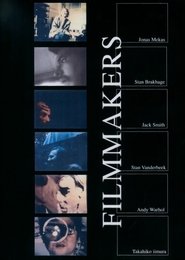
Iimura creates a short self-portrait as well as brief portraits of five of his peers: Brakhage, Vanderbeek, Smith, Mekas and Warhol. In each portrait, Iimura attempts to copy the styles and traits of each artist (Vanderbeek's constantly moving camera; Mekas' experiments with film speed; Warhol's use of flashes of white against a black background), while briefly commenting on the images being shown. The film serves effectively as an introduction to the film styles of these artists.
0.0

Year:

1969

The Art of Vision

The Art of Vision

A deconstruction of Dog Star Man that takes the four rolls and shows them first combined, then each combination of three rolls, then each combination of two rolls, then each individual roll. The plot is of a man who goes up a mountain with a dog to chop down a tree but has some unspecified transcendental experience while he is there.
7.0

Year:

1965

Dog Star Man

Dog Star Man

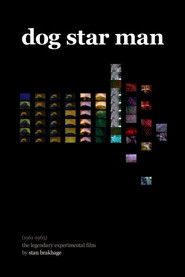
Experimental film following a cycle of seasons as well as the stretch of a single day as a man and his dog slowly ascend a mountain.
6.6

Year:

1965

Dog Star Man: Part IV

Dog Star Man: Part IV

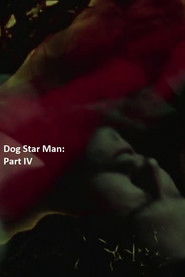
A man is supine on a mountain side. Images rush past of nature and a stained glass saint. An infant is born. We see a lactating nipple. Images include a mountain peak, farm buildings, a tree stump, a fire, a crawling baby, and the sun. The man falls and rolls. Then, later, he swings his ax.
6.2

Year:

1964

Dog Star Man: Part III

Dog Star Man: Part III

Sexual intimacy. Three kinds of images race past, superimposed on each other sometimes: two bodies, a man and a woman's, close up, nude - patches of skin, wisps of hair, glimpses of a face and genitalia; strips of celluloid with lines and squiggles scratched on them; and, close-up shots of what appear to be the insides of living bodies - a heart beating, muscle and sinew and tissue wet with fluids. The exterior and interior of desire.
6.2

Year:

1964

Song 1

Song 1

SONG 1: Portrait of a lady (the Songs are a cycle of silent color 8mm films by the American experimental filmmaker Stan Brakhage produced from 1964 to 1969).
4.4

Year:

1964

Dog Star Man: Part I

Dog Star Man: Part I

From a murky landscape, a wooded mountain emerges. We watch the sun. We see a bearded man climbing up the mountain through the snow. He carries an ax, and he's accompanied by a dog. His labors continue. There is no soundtrack. Images rush past - water, trees, and surfaces too close up to distinguish. He struggles. A fire burns. Nature, in long shots and magnified, is formidable and silent. It's tough going; he carries on. In a capillary, blood flows.
6.2

Year:

1963

Dog Star Man: Part II

Dog Star Man: Part II

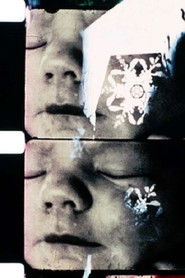
A man, accompanied by a dog, struggles through snow on a mountain side. We see film stock blister; drawn square shapes appear. Then, we see an infant's face. The images of struggling climber, baby, blurred film stock, large snow flakes, and what may be microscopic details of matter are superimposed on each other, one dominating the frame briefly to be replaced by another. As the man falls in the snow and tries to regain his feet, the baby continues to appear, first with eyes closed. Alternately, images rush by - montages of paper cutouts and life under a microscope.
6.5

Year:

1963

Prelude: Dog Star Man

Prelude: Dog Star Man

A creation myth realized in light, patterns, images superimposed, rapid cutting, and silence. A black screen, then streaks of light, then an explosion of color and squiggles and happenstance. Next, images of small circles emerge then of the Sun. Images of our Earth appear, woods, a part of a body, a nude woman perhaps giving birth. Imagery evokes movement across time. Part of the Dog Star Man series of experimental films.
6.2

Year:

1962

Window Water Baby Moving

Window Water Baby Moving

On a winter's day, a woman stretches near a window then sits in a bathtub of water. She's happy. Her lover is nearby; there are close ups of her face, her pregnant belly, and his hands caressing her. She gives birth: we see the crowning of the baby's head, then the birth itself; we watch a pair of hands tie off and cut the umbilical cord. With the help of the attending hands, the mother expels the placenta. The infant, a baby girl, nurses. We return from time to time to the bath scene. By the end, dad's excited; mother and daughter rest. Preserved by the Academy Film Archive in 2013.
6.9

Year:

1959

Wedlock House: An Intercourse

Wedlock House: An Intercourse

We see a film negative of a nude couple embracing in bed. Then, back in regular black and white images, we see them alone and together, clothed, at home. It's night, she sees his reflection in the window, she closes the drapes. After sex, again in a black and white negative, they sit, smoke, have coffee. They kiss, she smiles. They light candles. The images are often quick, the camera angles occasionally are off kilter; the room is sometimes dark and sometimes lit, as if lit by the rotating of a searchlight. The images again appear in negative when they return to bed.
5.6

Year:

1959

Cat's Cradle

Cat's Cradle

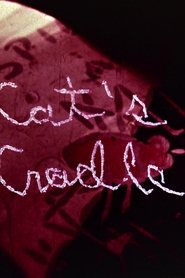
Images of two women, two men, and a gray cat form a montage of rapid bits of movement. A woman is in a bedroom, another wears an apron: they work with their hands, occasionally looking up. A man enters a room, a woman smiles. He sits, another man sits and smokes. The cat stretches. There are close-ups of each. The light is dim; a filter accentuates red. A bare foot stands on a satin sheet. A woman disrobes. She pets the cat. Preserved by the Academy Film Archive in 2006.
5.8

Year:

1959

Flesh of Morning

Flesh of Morning

Short B/W film about the textures of the human skin and household objects, showing Brakhage in the morning as reality distorts around him. Revised in 1986.
4.3

Year:

1956

The One Romantic Venture of Edward

The One Romantic Venture of Edward

The young man, played by Stan Brakhage, gets himself into a seriously comic mix-up by indulging in semi-sexual fantasies, and allowing the fantasies to take over. This is the best of my very early films and includes my first footage.
6.0

Year:

1956

Trumpit

Trumpit

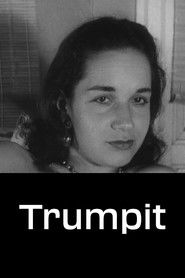
Featuring a card game played on the body of a naked woman, Lawrence Jordan portrays male sexual frustration while slyly satirizing Hollywood reaction shots.
4.4

Year:

1956

The Extraordinary Child

The Extraordinary Child

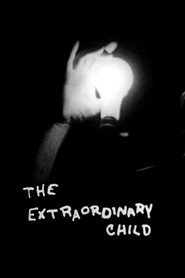
The Extraordinary Child applies his developing style to broad slapstick. His friends from the previous films and the director himself play out a riotous farce about an overgrown baby who steals his father’s cigars. Everyone mugs hilariously. The movie could be taken as another example of the Romantic notion of the artist as a monstrous child or misfit, or a parody of the same rather than the personal confessional statement seen so often in these film movements.
5.4

Year:

1954