

Stefan Herheim
Director
-
Birthday
-
Zodiac Sign
-
Genres
0
Total Films
Also known as (female)
Place of Birth
-
Birthday
-
Zodiac Sign
-
Genres
0
Total Films
-
Also Known As (female)
-
Place of Birth
-
Birthday
-
Zodiac Sign
-
Genres
0
Total Films
Also known as (female)
Place of Birth
-
Birthday
-
Zodiac Sign
-
Genres
0
Total Films
-
Also Known As (female)
-
Place of Birth
actor
0 Works
producer
0 Works
director
13 Works
writer
0 Works
other
5 Works
Wagner - Das Rheingold (Deutsche Oper Berlin)
The tetralogy of four operas that form Der Ring des Nibelungen (The Ring of the Nibelung) explores the conjunction of love and power in a mythic landscape in which true power resides in possession of the Ring. Composed over more than a quarter of a century, monumental in scale, and structured after the precedent of Greek drama, the cycle was first performed in 1876. Staged by the award-winning director Stefan Herheim, this innovative new production from Deutsche Oper Berlin features a leading international cast conducted by Sir Donald Runnicles.Year:
2021
Wagner - Das Rheingold (Deutsche Oper Berlin)
The tetralogy of four operas that form Der Ring des Nibelungen (The Ring of the Nibelung) explores the conjunction of love and power in a mythic landscape in which true power resides in possession of the Ring. Composed over more than a quarter of a century, monumental in scale, and structured after the precedent of Greek drama, the cycle was first performed in 1876. Staged by the award-winning director Stefan Herheim, this innovative new production from Deutsche Oper Berlin features a leading international cast conducted by Sir Donald Runnicles.Year:
2021
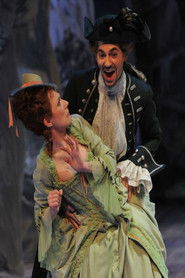
Xerxes - Berlin
On his military campaign abroad, an eccentric king is more concerned with conquering women than land. He always gets his way, until one day he falls for his brother’s secret lover. Xerxes’ tactics, which he changes as often as his opulent costumes, allow his opponents little time to rest. This results in a ‘baroque Muppet Show,’ as the celebrated Norwegian director Stefan Herheim describes his spectacular stage production. After a bewildering series of games of love and intrigue, Handel’s opera ends with the insight that life is a theatre in which one cannot always choose one’s own role.Year:
2019
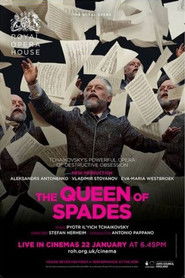
The ROH Live: The Queen of Spades
The dark world of Tchaikovsky’s penultimate operatic masterpiece Queen of Spades hinges on obsession, greed, and a secret in winning at cards… In 2005, the Opéra Bastille mounted a compelling production featuring Vladimir Galouzine as the mad lover Hermann, Hasmik Papian as the doomed Lisa, and Irina Bogatcheva as the mysterious Comtesse.Year:
2019

Offenbach: The Tales of Hoffmann (Bregenz Festival)
Bregenzs Tales of Hoffmann is different from everything you saw before. The New York Times praised the thoughtfulness and creativity of Stefan Herheims new production, devised by the director as a search for ones own self in a sparkling drag show. A shining-toned (NYT) Hoffmann is embodied by tenor Daniel Johansson in the title role. He is supported by a fantastic cast: Rachel Frenkel is positively ideal as Muse and Niklausse (Kurier), Kerstin Avemo as Olympia is endowed with brilliant, cheekily extemporized coloraturas (Neue Zürcher Zeitung), Michael Volle sings the parts of Lindorf, Coppelius, Dr. Miracle and Dappertutto, the works four villains, with warmth and intensity (NYT) and Mandy Fredrich is a finelyphrased Antonia (Kurier).Year:
2015
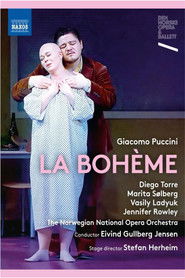
La Bohème
Set in the artistic but impoverished milieu of early 19th-century Paris, the tragic love of the poet Rodolfo and seamstress Mimì is one of the most affecting in all opera. La Bohème’s arias are also some of the most intensely passionate Puccini ever wrote, making it is one of the best-loved of all his works. In what Opera News called a ‘thorough rethinking and brilliant re-creation’ this exceptional Oslo production, strongly cast and conducted, and staged by internationally acclaimed director Stefan Herheim, explores the work as never before to create what The New York Times called an ‘ultimately haunting’ experience.Year:
2015
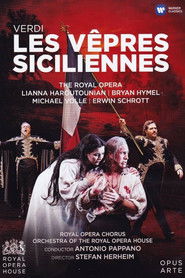
Les Vêpres siciliennes
The French have occupied Sicily, and Hélène is held hostage by Montfort, the French governor, who has had her brother executed. She turns to the partisan Jean Procida and the rebellious patriot Henri in her bid for vengeance. Les Vêpres siciliennes is one of Verdi’s lesser-known mature operas, but was vital to his development as a composer. It was created for the Paris Opéra in 1855, providing Verdi with an opportunity to embrace the elaborate style and traditions of French grand opera. First seen at the Royal Opera House in 2013, this staging of Verdi's rarely-performed opera Les Vêpres siciliennes – directed by Stefan Herheim and conducted by The Royal Opera’s Music Director, Verdi specialist Sir Antonio Pappano – went on to win the prestigious Olivier Award for Best New Opera Production.Year:
2013
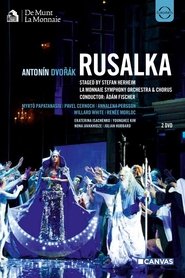
Rusalka
Antonin Dvorak’s next to last opera draws its substance from the underwater wonderland of little mermaids, Undines and Melusines: the water nymph Rusalka falls hopelessly in love with a prince and, although she is willing to sacrifice her voice to acquire the human form she needs in order to stay with him, the disparity between them proves to be too great. Jaroslav Kvapil’s libretto inspired Dvorak to compose a masterpiece, a compelling opera full of poignant lyricism and dramatic twists. Ádám Fisher and Stefan Herheim masterfully presented this ‘lyrical fairytale’ at La Monnaie in 2008. In this widely acclaimed interpretation, the fairytale elements sometimes assume frighteningly realistic dimensions so that one might see this enchanting production as a psychoanalytical study of male fantasies and female archetypes.Year:
2012
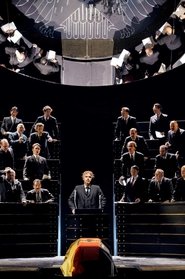
Parsifal
Parsifal in Bayreuth, directed by Stefan Herheim and conducted by Daniele Gatti.Year:
2011
Parsifal
Parsifal in Bayreuth, directed by Stefan Herheim and conducted by Daniele Gatti.Year:
2011
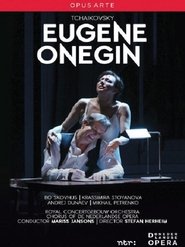
Tchaikovsky: Eugene Onegin (Dutch National Opera)
Described by Tchaikovsky as ‘lyric scenes’, Eugene Onegin receives a spectacular reinterpretation from the Norwegian director Stefan Herheim. His productions create controversy and excitement around Europe, and here he takes Pushkin’s story of illusion, disaffection and frustrated love, and places the protagonists – world-weary Onegin and naïve, passionate Tatyana – in a triple temporal perspective, referencing the theatrical present, the period of the work’s composition, and the pageant of Russia’s history. Mariss Jansons, renowned for his mastery of Tchaikovsky’s symphonies, conducts this performance from Amsterdam’s Muziektheater.Year:
2011
Tchaikovsky: Eugene Onegin (Dutch National Opera)
Described by Tchaikovsky as ‘lyric scenes’, Eugene Onegin receives a spectacular reinterpretation from the Norwegian director Stefan Herheim. His productions create controversy and excitement around Europe, and here he takes Pushkin’s story of illusion, disaffection and frustrated love, and places the protagonists – world-weary Onegin and naïve, passionate Tatyana – in a triple temporal perspective, referencing the theatrical present, the period of the work’s composition, and the pageant of Russia’s history. Mariss Jansons, renowned for his mastery of Tchaikovsky’s symphonies, conducts this performance from Amsterdam’s Muziektheater.Year:
2011
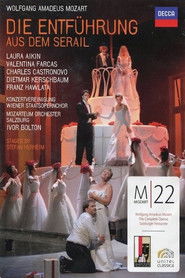
The Abduction from the Seraglio
Without question, this is an incredibly bizarre production. The revised storyline makes little sense, and there is a surprising amount of violence and sexual innuendo. However, the singers are superb, both vocally and in regard to their stage presence and acting, the orchestra plays beautifully, the chorus is wonderful, and the set is as clever as it is strange. It's definitely not for purists, or for someone new to this particular opera. But for someone who's seen Die Entfuhrung before, and is familiar enough with the original story to not miss it, watching Belmonte, Constanze, Blonde, Pedrillo, and Osmin embark on an entirely new adventure -- and push the boundaries of good taste -- is rather enjoyable.Year:
2006