

Steina Vasulka
DirectorActor
-
Birthday
-
Zodiac Sign
-
Genres
13
Total Films
Also known as (female)
Place of Birth
-
Birthday
-
Zodiac Sign
-
Genres
13
Total Films
-
Also Known As (female)
-
Place of Birth
-
Birthday
-
Zodiac Sign
-
Genres
13
Total Films
Also known as (female)
Place of Birth
-
Birthday
-
Zodiac Sign
-
Genres
13
Total Films
-
Also Known As (female)
-
Place of Birth
actor
13 Works
producer
0 Works
director
43 Works
writer
0 Works
other
2 Works

The Vasulka Effect
The opening of The Vasulka Effect couldn’t be more apt: Steina Vasulka addresses her husband Woody through various TV screens. He does the same and replies. A perfect image of the relationship between the free-spirited, groundbreaking pioneers of video art. After meeting in Prague in the early 1960s, they relocated from Czechoslovakia to New York, where they later founded The Kitchen, their legendary art and performance gallery.Year:
2020
Funtime at the Vasulkas
A recording of a meeting in the studio where Jeffrey Schier and Woody show colleagues and teachers a new tool. Between 1976 and 1980, Woody and Schier designed a prototype device, the Vasulka Imaging System, or Digital Image Articulator. It was one of the first digital audiovisual tools to generate image algorithms and convert them to an analog signal. In the 1970s and 1980s, the Department of Media Study at the State University of New York at Buffalo became one of these places of, teaching and mediating, in the area of Media Art, developing into what was perhaps to the most influential school for media in the twentieth century. Teaching there under the leadership of the founder Gerald O’Grady were the (meanwhile canonized) structuralist, avantgarde filmmakers Hollis Frampton, Tony Conrad, and Paul Sharits, documentary filmmaker James Blue, video artists Steina and Woody Vasulka, and Peter Weibel.Year:
2006
Music in the Afternoon
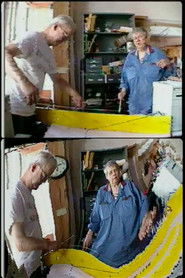
Fellow violinist and artist Tony Conrad, in collaboration with software engineer Tom Demeyer, made for Steina the instrument seen in this title. Conrad and the Vasulkas all taught at the University at Buffalo in the Media Study Department from 1976 to 1979.Year:
2002
Binary Lives
A short documentary on the life and art of Steina and Woody Vasulka, produced in 1996. The Vasulkas speak candidly about their work and worldviews, and the piece features excerpts from their early works and a glimpse into their '90s output.Year:
1996
Somersault
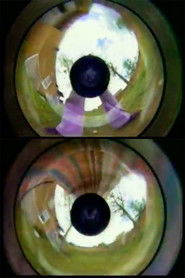
Using one half of a convex mirror mounted within a glass cylinder, Steina trains the video camera eye dead center as she records the space immediately around her. “Steina playfully does gymnastics with her camera and its mirrored lens attachment as a means of producing a 360-degree image of a torso wrapped around the camera lens . . . an exercise in an immersive space” for both maker and viewer. —Yvonne SpielmannYear:
1982
Group Portrait: Six Artists in Video
This is a documentary about video artists Bill & Louise Etra, Woody & Steina Vasulka, and Kit Fitzgerald & John Sanborn.Year:
1978
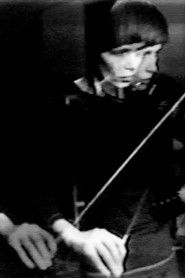
Violin Power
Steina trained as a classical violinist, pushing her experience as a professional musician into the electronic realm with this seminal work. Originally performed in the late 1970s as a live recital with monitors, "Violin Power" began with the idea of generating a video image solely through the sound and movement of the bow. This signal switch, from audio to visual, grew in possibilities and variances as technology continued to expand in the ensuing decades. The most recent iteration of this performance involved Steina working with a MIDI violin and laptop.Year:
1978
Vasulka Video
In 1977 the Vasulkas were commissioned by public television to create six half-hour programs (Steina, Objects, Digital Images, Transformations, Vocabulary, Matrix) for broadcast on WNED in Buffalo, New York. The resulting series, entitled Vasulka Video, is innovative and informative television. The Vasulkas introduce and contextualize their works and discuss their processing techniques, providing invaluable insights into their groundbreaking experiments with electronic image and sound manipulation.Year:
1978
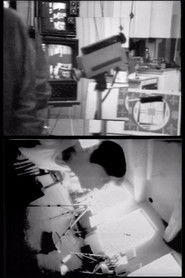
Orbital Obsessions
Documentation and experimentation in real time, "Orbital Obsessions" is an example of early video self-portraiture, eerie and calm in its radical implications for the medium. The Vasulkas were interested in the building of control systems for the manipulation of electronic signals, resulting in their collaborations with several designers and engineers. One such example was the Multi-Level Keyer, a tool designed in 1973 by George Brown at the request of the Vasulkas, who were interested in expanding their range of source imagery. Steina’s manipulation of the image through keying, layering, and the manual control of luminance is seen here.Year:
1977
Switch! Monitor! Drift!
B&W Vasulka project with a rotating camera, keyed and alternating directions. This experiment is excerpted in their 1977 work Orbital Obsessions.Year:
1976

Video: The New Wave
The New Wave is the seminal compendium of independent video work in the early 1970s. Written and narrated by Brian O'Doherty, this overview of the emerging video field includes examples of guerrilla television and "street" documentaries, early explorations with image-processing and synthesis, and performance video. This historical anthology includes excerpts of tapes by the following video pioneers: Stephen Beck and Warner Jepson, Peter Campus, Douglas Davis, Ed Emshwiller, Bill Etra, Frank Gillette, Don Hallock, Joan Jonas, Richard Serra, Paul Kos, Nam June Paik, Otto Piene, Willard Rosenquist, Dan Sandin, James Seawright, Steina Vasulka, TVTV, Stan Vanderbeek and William Wegman.Year:
1975
Homemade TV: Vasulkas II
Description from Portable Channel catalog: "This Program is a unique broadcast presentation of the Vasulka's recent experiments with the electronic image. It is not "video on TV" but a "videobroadcast" direct from the Vasulkas' loft in Buffalo, New York." The broadcast does in fact feature 3 Vasulka projects in their entirety: The Matter, Soundgated Images, and C-Trend.Year:
1975
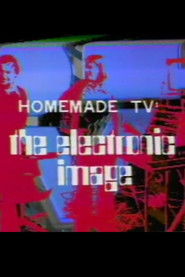
Homemade TV: The Electronic Image
A broadcast presentation of Steina and Woody Vasulka's experiments with the electronic image. Featuring a 15-minute "jam session" of improvised video feedback art.Year:
1975