

Susan Bellows
Executive ProducerDirectorWriterProducer
-
Birthday
-
Zodiac Sign
-
Genres
0
Total Films
Also known as (female)
Place of Birth
-
Birthday
-
Zodiac Sign
-
Genres
0
Total Films
-
Also Known As (female)
-
Place of Birth
-
Birthday
-
Zodiac Sign
-
Genres
0
Total Films
Also known as (female)
Place of Birth
-
Birthday
-
Zodiac Sign
-
Genres
0
Total Films
-
Also Known As (female)
-
Place of Birth
actor
0 Works
producer
27 Works
director
31 Works
writer
1 Works
other
1 Works
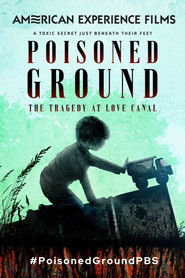
Poisoned Ground: The Tragedy at Love Canal
Poisoned Ground: The Tragedy at Love Canal tells the dramatic and inspiring story of the ordinary women who fought against overwhelming odds for the health and safety of their families. In the late 1970s, residents of Love Canal, a working-class neighborhood in Niagara Falls, New York, discovered that their homes, schools and playgrounds were built on top of a former chemical waste dump, which was now leaking toxic substances and wreaking havoc on their health. Through interviews with many of the extraordinary housewives turned activists, the film shows how they effectively challenged those in power, forced America to reckon with the human cost of unregulated industry, and created a grassroots movement that galvanized the landmark Superfund Bill.Year:
2024
The Cancer Detectives
The story of how the life-saving cervical cancer test became an ordinary part of women’s lives is as unusual and remarkable as the coalition of people who ultimately made it possible: a Greek immigrant, Dr. George Papanicolau; his intrepid wife, Mary; Japanese-born artist Hashime Murayama; Dr. Helen Dickens, an African American OBGYN in Philadelphia; and an entirely new class of female scientists known as cyto-screeners. But the test was just the beginning. Once the test proved effective, the campaign to make pap smears available to millions of women required nothing short of a total national mobilization. The Cancer Detectives tells the untold story of the first-ever war on cancer and the people who fought tirelessly to save women from what was once the number one cancer killer of women.Year:
2024
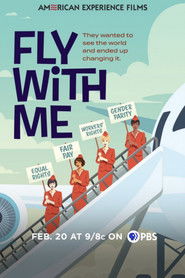
Fly With Me
Fly With Me tells the story of the pioneering young women who became flight attendants at a time when single women were unable to order a drink, eat alone in a restaurant, own a credit card or get a prescription for birth control. Becoming a “stewardess,” as they were called, offered unheard-of opportunities for travel, glamour, adventure and independence. Although often maligned as feminist sellouts, these women were on the frontlines of the battle to assert gender equality and transform the workplace. Featuring firsthand accounts, personal stories and a rich archival record, the film tells the lively and important but neglected history of the women who changed the world while flying it.Year:
2024
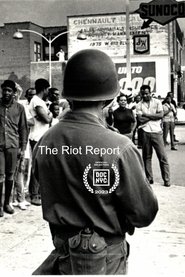
The Riot Report
In 1967, President Lyndon B. Johnson appointed the Kerner Commission to investigate why Black neighborhoods all over the country were “rioting” in protest. He was blindsided by the findings, which blamed the government for race-exclusive policies that fomented poverty, housing crises, unemployment, and discrimination. The film commemorates the landmark report and hints at lessons for a world where racism continues to be a divisive, damaging force.Year:
2023
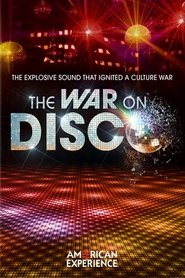
The War on Disco
The War on Disco explores the culture war that erupted over the spectacular rise of disco music. Originating in underground Black and gay clubs, disco had unseated rock as America’s most popular music by the late 1970s. But many diehard rock fans viewed disco, with its repetitive beat and culture that emphasized pleasure, as shallow and superficial. A story that’s about much more than music, The War on Disco explores how the powerful anti-disco backlash revealed a cultural divide that to some seemed to be driven by racism and homophobia. The hostility came to a head on July 12, 1979, when a riot broke out at “Disco Demolition Night” during a baseball game in Chicago.Year:
2023
The Harvest: Integrating Mississippi's Schools
In The Harvest, Pulitzer Prize-winning author Douglas A. Blackmon looks back at how school integration transformed his hometown of Leland, Mississippi. After the 1954 Supreme Court ruled that racial segregation in public schools was unconstitutional, little more than token efforts were made to desegregate Southern schools. That changed dramatically on October 29, 1969, when the high court ordered that Mississippi schools to fully — and immediately — desegregate. As a result, a group of children, including six-year-old Blackmon, became part of the first class of Black and white children who would attend all 12 grades together in Leland.Year:
2023
The Busing Battleground
The Busing Battleground pulls back the curtain on the volatile effort to end school segregation, detailing the decades-long struggle for educational equity that preceded the crisis. It illustrates how civil rights battles had to be fought across the North as well as the South and reckons with the class dimensions of the desegregation saga, exploring how the neighborhoods most impacted by the court’s order were the poorest in the city.Year:
2023

The Sun Queen
Chemical engineer and inventor Maria Telkes worked for nearly 50 years to harness the power of the sun, designing and building the world's first successful solar-heated modern residence and identifying a new chemical that could store solar heat like a battery. Telkes was undercut and thwarted by her (male) boss and colleagues at MIT, but she persevered. Upon her death in 1995 Telkes held more than 20 patents, and now she is recognized as a visionary pioneer in the field of sustainable energy whose work continues to shape how we power our lives today.Year:
2023

Ruthless: Monopoly's Secret History
America’s favorite board game, Monopoly, is a love letter to unbridled capitalism and the impulses that make our free-market society tick. Contrary to the folksy legend spread by Parker Brothers, Monopoly’s origin involves a radical feminist and a community of Quakers in Atlantic City. If not for the determination of an economics professor and impassioned anti-monopolist, the real story behind the creation of the game might never have come to light.Year:
2023
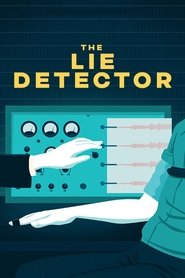
The Lie Detector
In the first decades of the 20th century, when life was being transformed by scientific innovations, researchers made a thrilling new claim: they could tell whether someone was lying by using a machine. Popularly known as the “lie detector,” the device transformed police work, seized headlines and was extolled in movies, TV and comics as an infallible crime-fighting tool. Husbands and wives tested each other’s fidelity. Corporations routinely tested employees’ honesty and government workers were tested for loyalty and “morals.” But the promise of the polygraph turned dark, and the lie detector too often became an apparatus of fear and intimidation. Written and directed by Rob Rapley and executive produced by Cameo George, The Lie Detector is a tale of good intentions, twisted morals and unintended consequences.Year:
2023
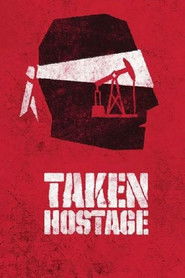
Taken Hostage
Unfolding like a political thriller, Taken Hostage tells the story of the Iran hostage crisis, when 52 American diplomats, Marines and civilians were held hostage at the American Embassy in Tehran on November 4, 1979. For the next 444 days, the world watched as the United States received a daily barrage of humiliation, vitriol and hatred from a country that had long been one of our closest allies. Told through the candid, personal testimony of those whose lives were upended by the action, the crisis would transform both the U.S. and Iran and forever upend the focus and direction of American foreign policy.Year:
2022
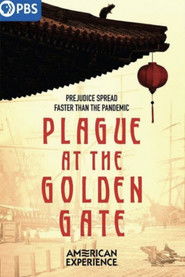
Plague at the Golden Gate
Discover how the 1900 outbreak of bubonic plague set off feat and anti-Asian sentiment in San Francisco. A fascinating medical mystery and timely examination of the relationship between the medical community, city powerbrokers and the Chinese-American community, Plague at the Golden Gate tells the gripping story of the race against time to save San Francisco and the nation from the deadly plague.Year:
2022

Citizen Hearst
Explore the life of William Randolph Hearst, the pioneering media mogul and inspiration for Orson Welles’ "Citizen Kane." Wielding unprecedented power, Hearst forever transformed the media’s role in American life and politics.Year:
2021
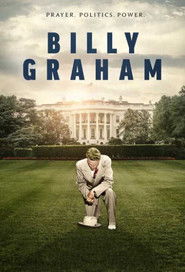
Billy Graham
Explore the life of one of the best-known and most influential religious leaders of the 20th century. An international celebrity by age 30, he built a media empire, preached to millions worldwide, and had the ear of tycoons, presidents and royalty.Year:
2021
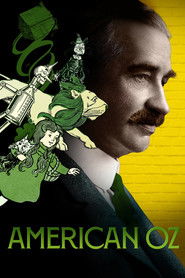
American Oz
Explore the life and times of author L. Frank Baum, the creator of one of the most beloved, enduring and classic American narratives. By 1900, when The Wonderful Wizard of Oz was published, Baum was 44 years old and had spent much of his life in restless pursuit of success.Year:
2021
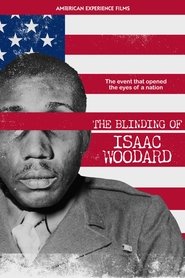
The Blinding of Isaac Woodard
In 1946, Isaac Woodard, a Black army sergeant on his way home to South Carolina after serving in WWII, was pulled from a bus for arguing with the driver. The local chief of police savagely beat him, leaving him unconscious and permanently blind. The shocking incident made national headlines and, when the police chief was acquitted by an all-white jury, the blatant injustice would change the course of American history. Based on Richard Gergel’s book Unexampled Courage, the film details how the crime led to the racial awakening of President Harry Truman, who desegregated federal offices and the military two years later. The event also ultimately set the stage for the Supreme Court’s landmark 1954 Brown v. Board of Education decision, which finally outlawed segregation in public schools and jumpstarted the modern civil rights movement.Year:
2021
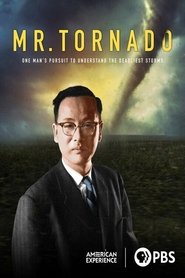
Mr. Tornado
Meteorologist Tetsuya Theodore "Ted" Fujita spent ten months studying The Super Outbreak of 1974, which was the most intense tornado outbreak on record. Mr. Tornado is the remarkable story of the man whose groundbreaking work in research and applied science saved thousands of lives and helped Americans prepare for and respond to dangerous weather phenomena.Year:
2020
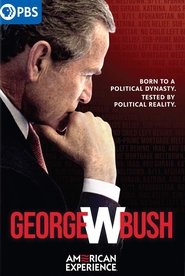
George W. Bush
This two-part, four-hour look at the life and presidency of George W. Bush features interviews with historians, journalists and several members of the president’s inner circle. Part One chronicles Bush’s unorthodox road to the White House. The once wild son of a political dynasty, few expected Bush to ascend to the presidency. Yet 36 days after the November 2000 election, Bush emerged the victor of the most hotly contested race in the nation's history. Little in the new president’s past could have prepared him for the events that unfolded on September 11, 2001. Thrust into the role of war president, Bush's response to the deadly terrorist attack would come to define a new era in American foreign policy. Part Two opens with the ensuing war in Iraq and continues through Bush’s second term, as the president confronts the devastating impact of Hurricane Katrina and the most serious financial crisis since the Great Depression.Year:
2020
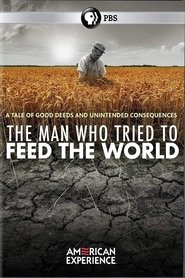
The Man Who Tried to Feed the World
The Man Who Tried to Feed the World recounts the story of Norman Borlaug, a man who not only solved India's famine problem but would go on to lead a "Green Revolution" of worldwide agriculture programs estimated to have saved one billion lives. He was awarded the 1970 Nobel Peace Prize for his work but spent the rest of his life watching his methods and achievements come under increasing fire.Year:
2020
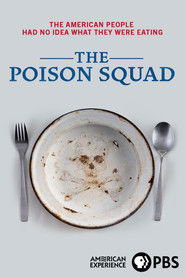
The Poison Squad
The story of government chemist Dr. Harvey Wiley who, determined to banish dangerous substances from dinner tables, took on the powerful food manufacturers and their allies.Year:
2020
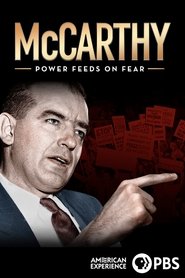
McCarthy
"McCarthy" chronicles the rise and fall of Joseph McCarthy, the Wisconsin senator who came to power after a stunning victory in an election no one thought he could win. Once in office, he declared that there was a vast conspiracy threatening America — emanating not from a rival superpower, but from within. Free of restraint or oversight, he conducted a crusade against those he accused of being enemies of the state, a chilling campaign marked by groundless accusations, bullying intimidation, grandiose showmanship and cruel victimization. With lawyer Roy Cohn at his side, he belittled critics, spinning a web of lies and distortions while spreading fear and confusion. After years in the headlines, he was brought down by his own excesses and overreach. But his name lives on linked to the modern-day witch hunt we call “McCarthyism.”Year:
2020
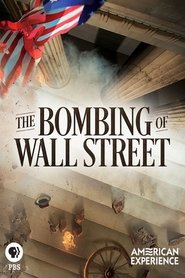
The Bombing of Wall Street
On September 16, 1920, as hundreds of Wall Street workers headed out for lunch, a horse-drawn cart packed with dynamite exploded in front of Morgan Bank — the world’s most powerful banking institution. The blast turned the nation’s financial center into a bloody war zone and left 38 dead and hundreds more seriously injured. As financial institutions around the country went on high alert, many wondered if this was the strike against American capitalism that radical agitators had threatened for so long.Year:
2018
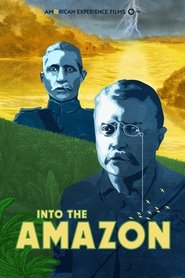
Into the Amazon
A documentary re-telling of the remarkable and dangerous journey taken by President Theodore Roosevelt and legendary Brazilian explorer Cândido Rondon into the heart of the South American rainforest to chart an unexplored tributary of the Amazon.Year:
2018
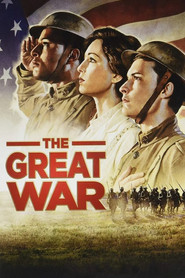
The Great War
Drawing on unpublished diaries, memoirs and letters, The Great War tells the rich and complex story of World War I through the voices of nurses, journalists, aviators and the American troops who came to be known as “doughboys".Year:
2017
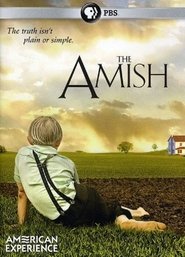
The Amish
Lyrical and meditative, The Amish answers many questions Americans have about this insistently insular religious community, whose intense faith and adherence to five hundred year-old traditions have by turns captivated and repelled, awed and irritated, inspired and confused for more than a century. With unprecedented access to the Amish built on patience and hard-won trust, the film is the first to deeply penetrate and explore this profoundly attention-averse group. In doing so, it paints an extraordinarily intimate portrait of contemporary Amish faith and life. It questions why and how the Amish, an insistently closed and communal culture, have thrived within one of the most open, individualistic societies on earth.Year:
2012
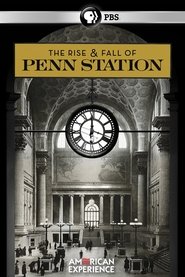
The Rise & Fall of Penn Station
In 1910, the Pennsylvania Railroad successfully accomplished the enormous engineering feat of building tunnels under New York City's Hudson and East Rivers, connecting the railroad to New York and New England, knitting together the entire eastern half of the United States. The tunnels terminated in what was one of the greatest architectural achievements of its time, Pennsylvania Station. Penn Station covered nearly eight acres, extended two city blocks, and housed one of the largest public spaces in the world. But just 53 years after the station’s opening, the monumental building that was supposed to last forever, to herald and represent the American Empire, was slated to be destroyed.Year:
2004
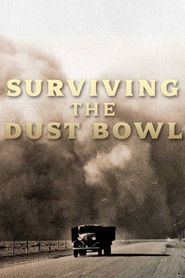
Surviving the Dust Bowl
In 1931 the rains stopped and the "black blizzards" began. Powerful dust storms carrying millions of tons of stinging, blinding black dirt swept across the Southern Plains — the panhandles of Texas and Oklahoma, western Kansas, and the eastern portions of Colorado and New Mexico. Topsoil that had taken a thousand years per inch to build suddenly blew away in only minutes. One journalist traveling through the devastated region dubbed it the "Dust Bowl." This American Experience film presents the remarkable story of the determined people who clung to their homes and way of life, enduring drought, dust, disease — even death — for nearly a decade. Less well-known than those who sought refuge in California, typified by the Joad family in John Steinbeck's "The Grapes of Wrath," the Dust Bowlers who stayed overcame an almost unbelievable series of calamities and disasters.Year:
1998