

Teizo Oguchi
Producer
-
Birthday
-
Zodiac Sign
-
Genres
0
Total Films
Also known as (female)
Place of Birth
-
Birthday
-
Zodiac Sign
-
Genres
0
Total Films
-
Also Known As (female)
-
Place of Birth
-
Birthday
-
Zodiac Sign
-
Genres
0
Total Films
Also known as (female)
Place of Birth
-
Birthday
-
Zodiac Sign
-
Genres
0
Total Films
-
Also Known As (female)
-
Place of Birth
actor
0 Works
producer
9 Works
director
9 Works
writer
0 Works
other
0 Works
或る出版社 五十年
Japanese documentary film.Year:
1963
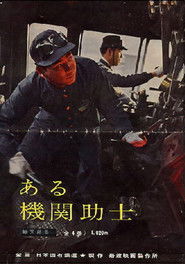
An Engineer's Assistant
"In my filmography, An Engineer’s Assistant (1963) is called my “first film.” This PR film on the safety of the Japanese National Railways was designed to be “self-criticism” after the big accident on the Joban line at Mikawashima Station, which had occurred in 1962. Right after the events back then, the responsibility for the accident was considered to be negligence of the engineer and the engineer’s assistant. The topic of this project was the promotion of a new device to avoid accidents. However, I had seen that the true cause of the accident was a congested service schedule, and I consciously placed emphasis on the depiction of the actual work of the engineer and his assistant, and of those who had chosen the route and were responsible for safety on the line on which the accident took place."Year:
1963
Story of Iron
One day, Kandume's can boy, who lived happily with his friends in the kitchen, becomes an empty can and is thrown away. Eventually, the can boy has a dream about the history of iron and humanity. Iron that melted and flowed out in a forest fire was discovered by humans when it had cooled and solidified. Iron transforms into knives and machines, and civilization develops... When the can boy wakes up, he is taken to a steelworks and reborn as a new steel material.Year:
1962
The Seas Are Full of Sheep in Love
Year:
1961

The Living Sea
Marine biological documentaryYear:
1958
Twin Class
An examination of a specialist school for twin siblings and the theme of heredity and environment on human developmentYear:
1956

Children Who Draw
Children Who Draw explores the delicate chemistry of school children interacting in an art class through a constant juxtaposition of observational black-and-white portraits of the young children with lyrical passages shot in vivid color exploring their imaginative and expressive paintings. Experimenting with color as an intimate expression of the children’s inner worlds, a tool for deeper psychological investigation, Hani allows his camera to roam freely across the drawings, “de-framing’” and enagaging the artwork in a manner reminiscent of Alain Resnais.Year:
1956
A Farmer's Wife
Year:
1955
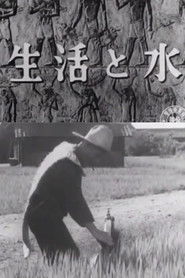
Our Life and Water
An educative film about the water supply and watersystems in small towns and villages in Japan. It captures the unsanitary and inconvenient lifestyles without water supply through examples from various places, and shows how life can be brighter if a small but managed water supply is installed. The first film directed by Susumu Hani, produced under the auspices of the Ministry of Health.Year:
1952