

Tetsujirô Yamagami
ProducerDirectorExecutive Producer
-
Birthday
-
Zodiac Sign
-
Genres
0
Total Films
Also known as (female)
Place of Birth
-
Birthday
-
Zodiac Sign
-
Genres
0
Total Films
-
Also Known As (female)
-
Place of Birth
-
Birthday
-
Zodiac Sign
-
Genres
0
Total Films
Also known as (female)
Place of Birth
-
Birthday
-
Zodiac Sign
-
Genres
0
Total Films
-
Also Known As (female)
-
Place of Birth
actor
0 Works
producer
42 Works
director
45 Works
writer
2 Works
other
0 Works

Goodbye Hoyaman
Set on a remote island in Ishinomaki, Miyagi Prefecture, this human drama depicts the strange shared life and family rebirth of two fisherman brothers and a manga artist from Tokyo.Year:
2023

Alone Again in Fukushima
“Alone Again is Fukushima” is the long-awaited sequel to "Alone in Fukushima" (2015), which followed Naoto Matsumura, a man who remained in the nuclear zone in Fukushima to tend animals. The film has followed Naoto for nearly a decade and portrays how Naoto and the animals survived the residents' return to the town, Tokyo Olympics, and COVID-19. In the course of 10 years, many animals and humans were born and died. But Naoto remained in the town and took care of the animals. He raised chickens and kept bees in order to survive. In 2017, Tomioka became the place where people can come back to live, however most young people didn’t return. There is no end in sight for the nuclear crisis in Fukushima. The contaminated water is overflowing and will be pumped out to the ocean soon. Meanwhile the government is trying to restart the nuclear reactors all over the country. The film will give us a chance to reflect on this situation by looking at how Naoto and animals survive in Fukushima.Year:
2023

Intimate Stranger
A psychological thriller set in the post-COVID Tokyo. The film follows a woman looking for her missing son, and a shady young man who approaches her, claiming to know her son.Year:
2022
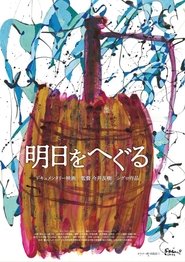
Ashita o he guru
This documentary records the lives of people in a mountain village surrounding the kozo (paper mulberry) tree, a raw material used to make Tosa washi paper.Year:
2021

Butterfly Sleep
Ryoko Matsumura is a popular writer in her 50's. She also knows that she has Alzheimer’s. Ryoko Matsumura begins to teach at a university. She meets a young Korean man in his 20's. They become attracted to each other.Year:
2018
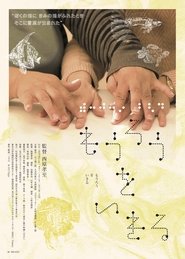
Mourou o ikiru
This documentary follows the daily lives of blind and deaf people: deaf-blind people living alone on Sado Island in Niigata Prefecture; a man in Ishinomaki City, Miyagi Prefecture, who chose to live in his community despite the earthquake and tsunami; a young man in Hiroshima who wants to be independent so that he can marry while continuing to practice judo; Professor Satoshi Fukushima of the University of Tokyo's Research Center for Advanced Science and Technology who became the first deaf-blind person to teach full-time at a university in the world.Year:
2017
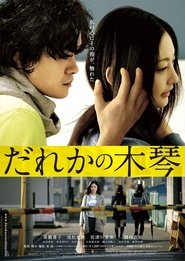
Somebody's Xylophone
A married woman obsesses over a hairstylist she becomes involved with.Year:
2016

Okinawa: The Afterburn
On April 1, 1945, the United States military launched its invasion of the main island of Okinawa, the start of a battle that was to last 12 weeks and claim the lives of some 240,000 people. This film depicts the Battle through the eyes of Japanese and American soldiers who fought each other on the same battlefield, along with Okinawa civilians who were swept up in the fighting. The film also depicts the history of discrimination and oppression forced upon Okinawa by the American and Japanese governments. Carrying up to the current controversy over the construction of a new base at Henoko, the film explores the root causes of the widespread disillusionment and anger expressed by many Okinawans. This ambitious documentary was directed by the American John Junkerman, long-term resident of Japan and Oscar-nominated documentary filmmaker. Okinawa: The Afterburn is a heartfelt plea for peace and an expression of deep respect for the unyielding spirit of the Okinawa people.Year:
2015

Journey Without End: Living in the Nuclear Age
The world after WWII is largely defined as nuclear age. The nuclear energy has been sold as “peaceful” use of atoms, while in essence it is the same as nuclear weapons. The film visits the people and land damaged by pursuit of atomic power both as weapons as well as sources of energy around the world and questions the future of nuclear age.Year:
2015
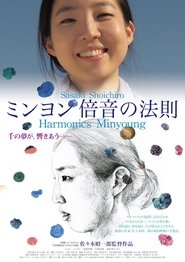
Harmonics Minyoung
Minyoung is a university co-ed living in Seoul. One photograph left to her by her late grandmother brings Minyoung all the way to Japan. And wherever she goes, she finds the enchanting melody of Mozart. The dreams of the people she meets vibrates together with harmonic beauty…Year:
2014
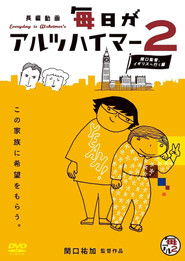
Everyday is Alzheimer's — 2
A sequel to Everyday is Alzheimer`s where the director goes to Britain to know more about Alzheimer patients and how to live with them.Year:
2014

Tsuchimoto Noriaki
Noriaki Tsuchimoto, a documentary filmmaker known for his series films on Minamata disease, travelled to Afghanistan in 1988 for the production of the film "Afghan Spiring", during which he developed alcoholism. In 1996, after several years of hospitalization and treatment, he accepted a long interview with his close friends, cameraman Koshiro Otsu and producer Tetsujiro Yamagami.Year:
2014
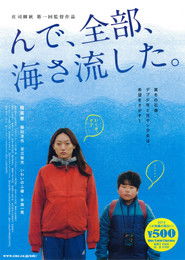
Turning Tides
Former delinquent Hiroe leads a dreary existence. She meets a boy named Tatsutoshi whose younger sister was killed in a road accident and tries to cheer him up by creating a fake ritual to bring the dead back to life. To turn her deception into reality, she takes Tatsutoshi on a journey to the seaside.Year:
2013

Everyday is Alzheimer's
A movie documenting the daily life of director Yuka Sakaguchi after her mother is diagnosed with Alzheimer's and dementia.Year:
2012
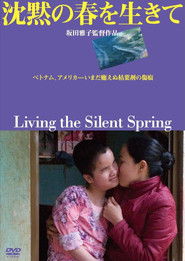
Living the Silent Spring
Fifty years ago, Rachel Carson’s Silent Spring warned of the danger of widespread use of pesticides, helping to launch the environmental movement in the US. Around the same time, the US military began to spray defoliants in Vietnam to deny cover to guerrilla forces. The defoliants, including Agent Orange, were contaminated with the deadly toxin, dioxin. Agent Orange continues to affect the children and grandchildren of those exposed in Vietnam and America to this day.Year:
2011

Barefoot Gen's Hiroshima
With the passing of Nakazawa Keiji in December 2012, Barefoot Gen’s Hiroshima now stands as the manga artist’s last message of peace to the world. Mr. Nakazawa recounts his life, from the aftermath of the atomic bombing up until the days he created his acclaimed manga series Barefoot Gen (Hadashi no Gen), by exploring sites of painful memories in Hiroshima. Through Mr. Nakazawa’s story, and his original art work, Barefoot Gen’s Hiroshima illuminates the nature of war and nuclear weapons, urging us not to repeat the past.Year:
2011

Wandering Home
War photjournalist Yasuyuki Tsukahara married popular manga artist Yuki Sonoda and had children. Because of Yasayuki's drinking problems the couple divorced. Yasuyuki is now coughing up blood, hospitalized, and violent. Even with all of these problems Yasuyuki can't give up drinking alcohol. His family gets tired. Yasuyuki is then hospitalized in an alcoholic ward. There he finds comfort living with other patients and having conversations with doctors. With the help of his family, Yasuyuki recovers mentally and physically, but his body has already paid a heavy toll.Year:
2010

Outside the Great Wall
Year:
2010

Breaking the Silence
Year:
2009
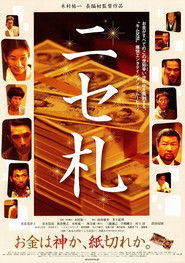
Counterfeit
Kageko, a teacher in a small mountain village with a thriving Japanese paper industry, is visited by a former student, who proposes a plan to manufacture counterfeit money. She initially refuses, but eventually decides to join the project for the sake of the poor children in the village and her own mentally handicapped child.Year:
2009
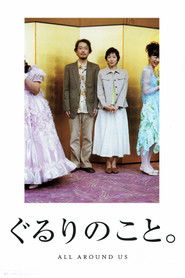
All Around Us
Kanao, a courtroom portrait artist, observes crimes, scandals and the decline of Japanese values without passing judgement. As he and his wife endure the tragedy of their first child’s death, hope slowly unfolds and their love story flickers to life once again.Year:
2008
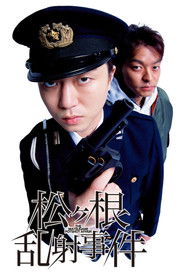
The Matsugane Potshot Affair
When a gold ingot and a severed human head are discovered in a small provincial town, the rush to solve the curious case wavers between tragic and darkly humorous.Year:
2007
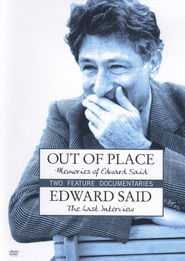
Out of Place: Memories of Edward Said
Documentary filmmaker Makoto Sato offers this reflection on the life and career of Edward Said, the deeply influential literary and cultural critic, Columbia University academic, and outspoken advocate for displaced Palestinians, of whom he was one. Exploring the landscapes of Said's childhood and how they influenced his philosophy, this film features rare footage of Said and interviews with many of his colleagues, including Noam Chomsky.Year:
2006

The Constitution of Japan
In 2005, sixty years after the end of World War II, the conservative Japanese government is pressing ahead with plans to revise the nation's constitution and jettison its no-war clause, Article 9. This documentary places the ongoing debate over the constitution in an international context:Year:
2005
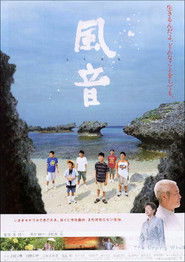
The Crying Wind
Seikichi, makes his living fishing from a small boat off the coast of Okinawa. He and his 12-year-old grandson Akira live in a small, tree-lined village in the northern part of the island which is surrounded by a white-sand beach and plots of pine and flowering bushes. On the cliff that skirts the shore sits an open-air burial ground containing the skull of a kamikaze pilot who was shot down during the last days of World War II. When the wind blows through the bullet hole in the skull, it produces a whistling sound. The locals call it the "Crying Head."Year:
2004
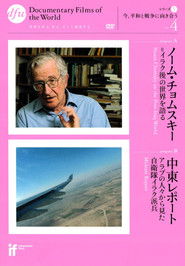
Mideast Report
Interviews about Japan's deployment of Self-Defense Forces in Iraq collected from Middle Eastern intellectuals, cultural figures, and Palestinians living in refugee camps in March 2004.Year:
2004
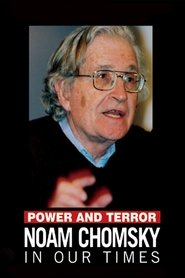
Power and Terror: Noam Chomsky in Our Times
This documentary compiles a series of Noam Chomsky's interviews and lectures that address the events of 9/11.Year:
2002
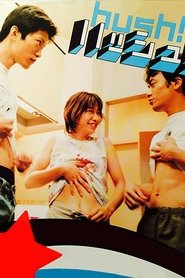
Hush!
Naoya and Katsuhiro are boyfriends, new in their relationship. Things are uneven at first—Naoya is open and free while Katsuhiro is cautious and closeted—but nothing compares to the chaos that arrives when Asako, a troubled woman with a history of psychiatric problems, abortions, and casual sex, asks Katsuhiro to conceive a child with her.Year:
2001
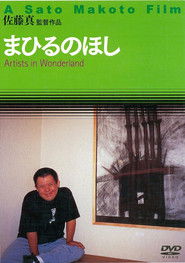
Artists in Wonderland
This is a film about seven artists. It's also a film about seven people who are mentally handicapped. In the course of this touching film, we discover how art may provide a route to the human interior.Year:
1999
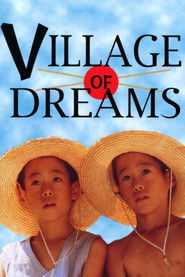
Village of Dreams
Tells of the childhood of two nine-year-old twins in a rural village in Japan after World War 2. Includes the boys relationships with their schoolteacher mother, civil servant father, elderly landlord, a rough new boy at the school, and three mysterious spirits in the form of old women.Year:
1996
Another Life
Centers on a support group for alcoholics and their familiesYear:
1996

Menda Sakae: Gokuchu no Sei
A documentary about Menda Sakae, a man who was wrongfully imprisoned for 34 years.Year:
1993
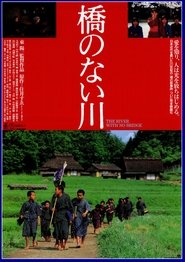
The River with No Bridge
A widow and her two sons, Seitaro and Koji, live in the small town of Komori, where Buraku people are forced to reside. The two boys are continuously harassed by their teachers and classmates through their childhood as a result of their Buraku heritage. In the midst of the 1918 Great Rice Riots in Osaka, Seitaro meets with Asako, the daughter of a rice shop owner, and falls in love with her. She too is of Buraku descent. At the same period, Hideaki, an old friend of the brothers returns to Komori, and he along with Koji and the townspeople create "Zenkoku Suiheisha", the National Levelers Association, an organization pledged to build a bridge over the river of discrimination, making all people equal in every way.Year:
1992
Shigara kikara fuite kuru kaze
Shiragaki is renowned for its ceramics. This documentary follows people who must overcome physical disabilities to work in the town.Year:
1991

The Old Man and the Sea
Year:
1990

Senso Daughters
Senso Daughters focuses on the legacy of the Japanese occupation of Papua New Guinea during the Second World War. It is a legacy that arises from rape, starvation and terror. Sekiguchi's documentary lets the residents of Papua New Guinea, especially the women, tell the story of their three years under Japanese Army rule.Year:
1990

Yuntanza Okinawa
38 years after the Pacific War, 84 victims of a mass suicide ordered by the Japanese military were uncovered in a cave in Yomitan village. This film contains the testimonies of some of the survivors, the story of a sculptor leading bereaved family members in creating a statue of peace, and the resistance of a group of girls against the raising of the Japanese flag at the high school graduation ceremony.Year:
1987
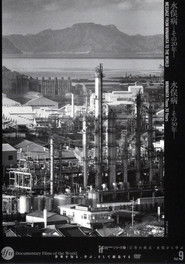
Minamata — These 30 Years
A record of the stories of patients suffering from Minamata disease, 30 years after its discoveryYear:
1987

Hiroshima no pika
Video version of the picture book 'Hiroshima no pika', based on the art pieces known as The Hiroshima Panels by Iri and Maruki ToshiYear:
1987

Ningen no machi
Interviews with Burakumin in Osaka, victims of discriminationYear:
1986
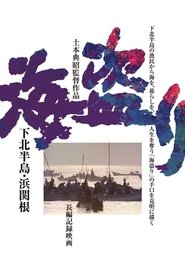
The Stolen Sea
Umitori takes place in Shimokita Peninsula on the northern edge of the mainland, which was becoming a “nuclear energy peninsula”, undergoing tremendous development and serving as the home port for Mutsu, a nuclear-powered ship. Focusing on the fishermen and their stories, Tsuchimoto and his crew made their subject matter the “theft of the sea” perpetrated by giant business conglomerates. While the fishermen of Minamata were obvious victims of the mercury-poisoning tragedy, the fishermen in Shimokita were inadvertently becoming the permanent victims of another announced tragedy. Tsuchimoto interviews the fishermen, especially focusing on a stage play actor and his boat-owner family, establishing, as it became his practice, a complex reflection about the threat brought to small communities by the forces of “progress”.Year:
1984

Nuclear Scrapbook
A film essay about nuclear energy in Japan, composed of newspaper clippings collected in scrapbooksYear:
1982