

Traute Wischnewski
-
Birthday
-
Zodiac Sign
-
Genres
0
Total Films
Also known as (female)
Place of Birth
-
Birthday
-
Zodiac Sign
-
Genres
0
Total Films
-
Also Known As (female)
-
Place of Birth
-
Birthday
-
Zodiac Sign
-
Genres
0
Total Films
Also known as (female)
Place of Birth
-
Birthday
-
Zodiac Sign
-
Genres
0
Total Films
-
Also Known As (female)
-
Place of Birth
actor
0 Works
producer
0 Works
director
69 Works
writer
0 Works
other
69 Works
City-Sleeper
Homelessness in New York. Interviews with those affected. An architect from San Francisco comes up with the idea of building the so-called "City Sleeper" - a housing container. Couldn't the City Sleeper also be used for the homeless of the Federal Republic of Germany?Year:
1991
Walter Hunger - A German Résumé
Portrait of the industrialist Walter Hunger from Frankenberg in Saxony. He left the German Democratic Republic in 1958 with his family and closest colleagues to build up one the most significant hydraulics enterprises in the Federal Republic of Germany.Year:
1991
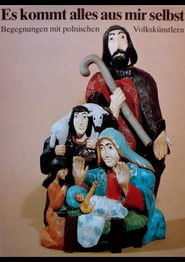
Es kommt alles aus mir selbst
Nine peasant woodcarvers from Poland, their works, their thoughts, and the unexpected elements in each personal view. They draw their themes from biblical characters, the day-to-day pleasures and labours of village life, their historical heritage, but also Auschwitz and the devil next-door. Existential difficulties pose challenges. Lending them form is a way to master them, to constrain them within an image.Year:
1990
Es kommt alles aus mir selbst
Nine peasant woodcarvers from Poland, their works, their thoughts, and the unexpected elements in each personal view. They draw their themes from biblical characters, the day-to-day pleasures and labours of village life, their historical heritage, but also Auschwitz and the devil next-door. Existential difficulties pose challenges. Lending them form is a way to master them, to constrain them within an image.Year:
1990
Großer Bahnhof
Grand Central Station, New York - the town's landmark. The camera captures impressions within 24 hours.Year:
1990
Großer Bahnhof
Grand Central Station, New York - the town's landmark. The camera captures impressions within 24 hours.Year:
1990

The Man Who Met the Trains
A top administrator in the Federal German armed forces measures the machinery of murder at Auschwitz according to the effiency principle, and deems it a triumph. Militaria dealers market all the components for a do-it-yourself SS officer. The film assembles on, piece by piece, from a price list: the complete Hauptsturmführer for 2,921 Deutschmarks, ready to meet the trains arriving at Auschwitz with the appropriate aluminium lurex armband at 45 Marks.Year:
1989
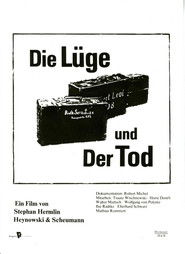
Die Lüge und der Tod
Year:
1988
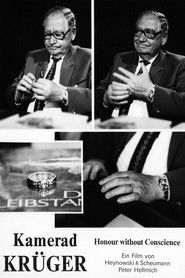
Kamerad Krüger
SS officer Walter Krüger talks about his career. Now he is Secretary of the „Kameradschaftsverband I. Panzerkorps der ehemaligen Waffen-SS e.V.” (Fellowship of Former Soldiers of Waffen SS 1st Tank Corps). During the interview it shows that Krüger still considers himself and his like-minded fellows to be the elite of the nation.Year:
1988
Kamerad Krüger
SS officer Walter Krüger talks about his career. Now he is Secretary of the „Kameradschaftsverband I. Panzerkorps der ehemaligen Waffen-SS e.V.” (Fellowship of Former Soldiers of Waffen SS 1st Tank Corps). During the interview it shows that Krüger still considers himself and his like-minded fellows to be the elite of the nation.Year:
1988
Teufelszeug
Protests in Hasselbach in the Hunsrück Mountains against the deployment of 96 Cruise Missiles.Year:
1987
Der springende Punkt
Archive footage of bomb detonations during the Second World War combined with abstract graphic elements which show the destructive potential of modern nuclear missiles. Together the images are a silent warning of armament and war.Year:
1987
Snapshots From Chile
Chile 1985, the repression of the Chilean people by the dictatorship and the resistance, accompanied by the music of the exiled composer Angel Parra.Year:
1986
Snapshots From Chile
Chile 1985, the repression of the Chilean people by the dictatorship and the resistance, accompanied by the music of the exiled composer Angel Parra.Year:
1986
Hector Cuevas
Documentary filmYear:
1985
Hector Cuevas
Documentary filmYear:
1985

Amok
The desperate private war of a Vietnam veteran of the US Army. The Film explores the biggest amok run in the history of the USA at that point of time. The story of a mass murder in San Diego on July 18 1984 is told by showing reports of a local TV station. It turns out that the amok was partly caused by traumatic experiences during the Vietnam War.Year:
1985
Amok
The desperate private war of a Vietnam veteran of the US Army. The Film explores the biggest amok run in the history of the USA at that point of time. The story of a mass murder in San Diego on July 18 1984 is told by showing reports of a local TV station. It turns out that the amok was partly caused by traumatic experiences during the Vietnam War.Year:
1985

The Comical Game
A card game is introduced: “Nuclear War". An entertaining, jolly card game for between two and six players, reads an ad for a game made in USA.Year:
1984
The Comical Game
A card game is introduced: “Nuclear War". An entertaining, jolly card game for between two and six players, reads an ad for a game made in USA.Year:
1984
For Example Regensburg
Images of the romantic city and tourist leaflets are burning – the vision of possible destruction.Year:
1983
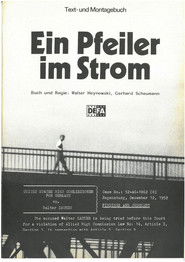
A Pillar In The Stream
The story of communist Walter Zauner who in 1952 was one of the first in the Federal Republic to be convicted of sabotage of a military installation.Year:
1983
A Pillar In The Stream
The story of communist Walter Zauner who in 1952 was one of the first in the Federal Republic to be convicted of sabotage of a military installation.Year:
1983
Aparte Bilder
Scenes of everyday life in South Africa which give an idea of the daily racism in this country.Year:
1983
Im Zeichen der Spinne
Heynowski and Scheumann infiltrate the ultra-right-wing Chilean organization Patria y LibertadYear:
1983

The Angkar
The Khmer word “angkar” signifies “organization”. The angkar of the Pol-Pot regime acted upon their own, unwritten laws. Records were discovered in the central interrogation and extermination camp “S21”, the former high school Tuol Sleng in Phnom Penh that document the death of 20.000 people.Year:
1981
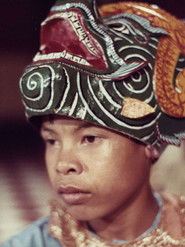
Exercises
The Pol Pot regime wanted to erase the 2000 year-old culture of Cambodia. Schools were destroyed, teachers and pupils kidnapped, tortured and killed. In September 1980, the School of Fine Arts reopens in Phnom Penh, in March 1981, there are 110 pupils, among them many orphans.Year:
1981
Fly, Red Butterfly
Dialogue between children from Kampuchea who talk about their terrible experiences during the Pol Pot regime and pupils from Erfurt, Arnstadt and Plaue who participated in the solidarity action „Fly, Red Butterfly“. They speak of their contribution to the 3 307 585.90 Marks for the children of CambodiaYear:
1980
Kampuchea: Death and Resurrection
The scenes filmed during spring 1979 in Kampuchea/Cambodia are part of history: a metropolis left to rampant nature, skull heaps, destroyed faces and cultural landscapes. The reports of the survivors – farmers, states men, teachers and former soldiers - are moving and harrowing.Year:
1980

Phoenix
The goal of the American operation "Phoenix" in Vietnam was to destroy all the bases of the liberation struggle. K. Barton Osborn, a former "Phoenix" officer, who publicly disassociated himself from it, talks about his experiences as a CIA agent. They are confirmed by the statements of General Bui Van Nhu, the last chief of the South Vietnamese policeYear:
1979

A Refugee from Vietnam
After becoming notorious world-wide for a bloody killing, Nguyen Ngoc Loan, former general and chief of the South Vietnamese police, moved to the United States and opened a restaurant outside of Washington, D.C. Contrasting images from these two phases of his life are intercut.Year:
1979
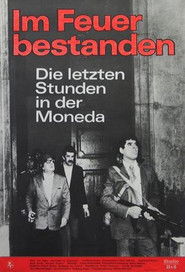
Steadfast in Fire
Reconstruction of the last hours in the presidential palace La Moneda during the coup d’état in Santiago de Chile in 1973. Salvador Allende enters his office on September 11th at 7.30 in the morning. In the early afternoon he leaves it – wrapped in a blanket, dead.Year:
1978

At the Ditch
My Lai ten years after the massacre. Reconstruction of the crime at the place where it was committed; tracing the trail of squad leader Calley in the USA; description of what happened by people who were believed to be dead.Year:
1978
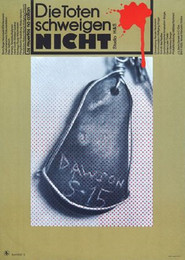
The Dead Are Not Silent
Moy de Tohá and Isabel Letelier tell their story. They are the widows of two Defence Ministers of the Unidad Popular, who knew too much.Year:
1978

The Iron Fortress
Weeks after the victory in Vietnam, first pictures of a new humanity are captured: old and sick people preparing for their future, children on their way to school.Year:
1977
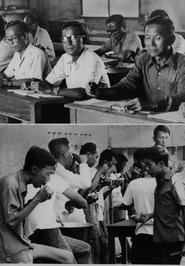
I Sincerely Repent
Interviews with former generals of the South Vietnamese Army in the Quang Trung re-education camp, shortly after the end of the Vietnam War.Year:
1977

And Then the First Rice
Stories from the first summer after the end of the war in VietnamYear:
1977
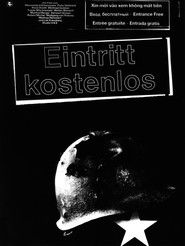
Entrance Free
Rustic weapons, centuries old traps; wreckage of U.S. bombers, a perforated “bulletproof” vest are exposed in the museums of Hanoi. “The neglected free visit to the Hanoi museums cost the American people 56,369 killed people and 146 billion dollars.”Year:
1976
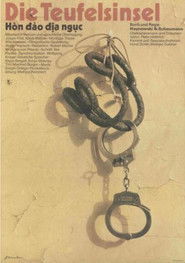
Devil's Island
Le Quang Vinh, a revolutionary student leader, was arrested in Saigon in August 1961. A show trial and death sentence followed. World-wide protests altered it to “life imprisonment” on Con Son, the Devil’s Island. The humiliating “Tiger-Cages” and the methods of torture are shown.Year:
1976

One Minute of Darkness Does Not Blind Us
This documentary deals with the coup d'état of general Pinochet in Chile 1975 and its immediate aftermath: the harsh repression of left-wing intellectuals, artist and workers.Year:
1976
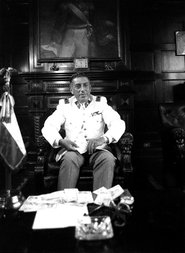
Geldsorgen
Short film about General Eduardo Cano, who after the military coup became director of the Chilean central bank in the Pinochet dictatorship. Cano withdraws money from the circulation, which were described by opposition parties with resistance piles. From the Chile cycle by Walter Heynowski and Gerhard Scheumann.Year:
1975

Meier's Legacy
An auction in Munich, 1974, old man with crockery and knick-knacks labelled "Former property of Hermann Göring": relics of Nazism sold to the benefit of the post-war state: the west criticised by the east.Year:
1975
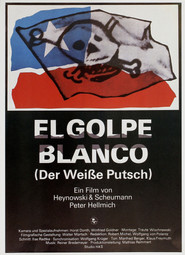
The White Coup
At the parliamentary elections that the Unidad Popular won, there were activities to overthrow Salvador Allende. By a white, supposedly clean coup, the rightwing powers of Chile tried unsuccessfully to gain a two thirds majority in the national congress. Months later, the armed, violent coup took place.Year:
1975

I Was, I Am, I Will Be
In the spring of 1974, a camera team from Studio H&S succeeded against the explicit orders of the Junta’s Chancellery, entered into two large concentration camps in the north of the country - Chacabuco and Pisagua - leaving with filmed sequences and sound recordings.Year:
1974
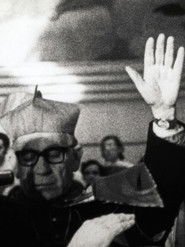
Psalm 18
A service is ordered by the Junta in praise of the Junta. The Cardinal, forced to utter Benedictions, resorts to words for all those who suffer and pray, that they may be freed and consoled. The profaners have to content themselves with psalm 18: “They cried unto the Lord, but he answered them not.”Year:
1974

The War of the Mummies
The country is portrayed before and after the storm of the military to the government palace “La Moneda” when Salvador Allende is killed and the directors discover the implications of American companies that were involved in the political developments.Year:
1974
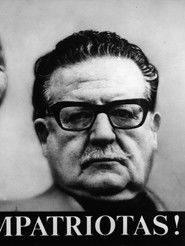
Mitbürger
Salvador Allende’s last radio speech is given in full; nothing is interposed. The translation of the speech appears in subtitles, individual passages are placed into the center of the picture. Film scenes and photos underline Allende’s call to his citizens. The film ends with a slow close-up to the face of the President.Year:
1974
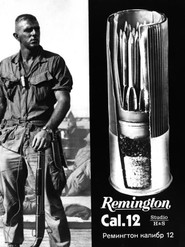
Remington Cal. 12
This bullet is stamped with the inscription 'Remington Peters 12' and yet is not mentioned in Remington's catalogue. It consists of 20 small steel arrows.Year:
1972

Bye-Bye Wheelus
Wheelus Air Base was once the largest American air base outside the USA itself. Ordered to be cleared by June 30th, 1970 by Libya’s Revolutionary Command Council.Year:
1971
The Man Without a Past
Horst Rudolf Überlacker is a young lawyer at the beginning of a promising career. At the end of the Second World War he was nine years old, but his present statements can be considered "agitation threatening peace". The Spokesman of the Sudeten German Association, Dr. Becher lauds "the young political talent" who performs the generational change from old Fascists to neo-Nazis.Year:
1970
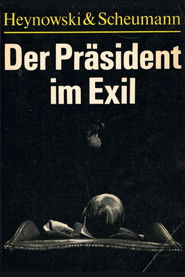
The President in Exile
The President Dr. Walter Becher, officially the spokesman for the Sudeten German Homeland Association, called out the old flags, as he does every year.Year:
1969
Mit vorzüglicher Hochachtung
At a Bach concert, a letter is read aloud in which the legation council of the Federal Republic of Germany tries to poach the musicians of the Gewandhaus Orchestra in Nicosia.Year:
1967
Der Zeuge
Documentary filmYear:
1967
Liebesbriefe
Two narrators read the letters of unknown people and tell about the fate of individuals, their work, love and life.Year:
1967
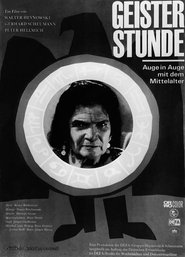
Geisterstunde
An interview with Madame Buchela, a West German clairvoyant.Year:
1967
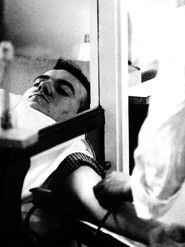
400 cm³
GDR anti-Vietnam propaganda film with footage of East Germans donating blood to be sent to the Viet Cong soldiers.Year:
1967
Heimweh nach der Zukunft. Max Steenbeck erzählt
Documentary on physicist Max SteenbeckYear:
1967
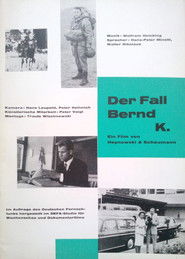
Der Fall Bernd K.
Documentary on Bernd Köhlert, a West German mercenary whose death in the Congo caused a sensationYear:
1967

P.S. to The Laughing Man
The epilogue to the film "The Laughing Man" (1966), which alternates between objectivity and anger, exposes the involvement of the West German mercenary Siegfried Müller in the war against the Congolese government Lumumba. In the sequel, new witnesses against Major Müller have their say, including a former school friend and a French paratrooper colonel. GDR lawyer Kaul reports on the status of the criminal proceedings against Müller, while the final images show the war criminal feeding the ducks in South Africa.Year:
1966
Grüße von Ost nach West
Documentary filmYear:
1966
Ehrenmänner
In two chapters the film shows men in divided Germany willing to leave their country. In the first chapter, East-Germans are shown who leave their wives and children behind in order to live in the Federal Republic of Germany. In the second chapter, unmarried West-Germans try to move to the German Democratic Republic.Year:
1966
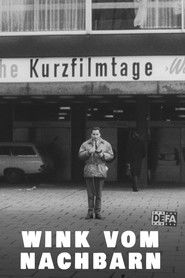
Hint from a Neighbor
A polemical report. "Way to the neighbors" is the motto of the Oberhausen Short Film Festival. In their "Remarks on the Oberhausen 66 Film Festival," the GDR documentarians Gerhard Scheumann and Walter Heynowski take the competition selection to task: They see formal experiments as "excesses on the big screen" and instead of political themes, they discover a "surge of perversity." After her own film "Kommando 52" was rejected by the festival, a criminal complaint by the GDR lawyer Friedrich-Karl Kaul against the mercenary and commander "Kongo-Müller" is the focus of a press conference. The refusal of a cinema owner to show the film was a "hint from the neighbors", the neighboring public order office, and therefore state censorship in the Federal Republic of Germany.Year:
1966
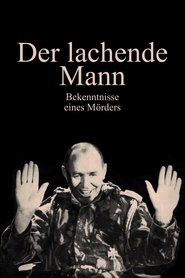
The Laughing Man
Posing as West German journalists, East German documentary filmmakers Heynowski and Scheumann pay a visit to the notorious Nazi-turned-mercenary Siegfried “Kongo” Müller, pump him with booze, and get him to talk about his life and war campaigns in Africa.Year:
1966
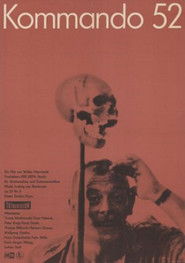
Kommando 52
The film deals with the infamous "Kommando 52", which was active in the 1960s civil war in the Congo and was recruited mainly from West German men. Among them is the former Wehrmacht officer Siegfried Müller. Based on personal accounts and original material - backed by tape recordings of interviewed mercenaries and photos of murdered Africans - it creates a hard hitting historical document.Year:
1965
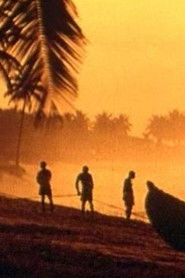
The Black Star
A cinema-verité documentary of Ghana’s five years of independence under President Kwame Nkruma. Striking color images of Africans in modern-day jobs, such as airline pilot and construction worker, predominate, with little voice-over.Year:
1965
Bild 65
Experimental filmYear:
1965

Ick und die Berliner
Year:
1957

Norbert, der Ausreißer
Year:
1957

Geschichte einer Straße
Year:
1954