Аватар персоны Werner Schroeter

Werner Schroeter

ActorDirectorWriterProducer
Werner Schroeter (7 April 1945 – 12 April 2010) was a German film director, screenwriter, and opera director known for his stylistic excess. Schroeter was cited by Rainer Werner Fassbinder as an influence both on his own work and on German cinema at large. Description above from the Wikipedia article Werner Schroeter, licensed under CC-BY-SA, full list of contributors on Wikipedia.

07-04-1945

Birthday

Aries

Zodiac Sign

-

Genres

22

Total Films

Also known as (male)

Georgenthal, Germany

Place of Birth

Popular works

Creative career

actor

22 Works

producer

8 Works

director

126 Works

writer

31 Works

other

48 Works

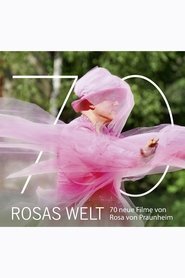
Rosas Welt – 70 neue Filme von Rosa von Praunheim

Rosas Welt – 70 neue Filme von Rosa von Praunheim

Rosa von Praunheim is an icon in the scene: gay activist, loving provocateur and a very special filmmaker from Berlin for decades. His curiosity for people and their fates runs through his extensive film work. For his 70th birthday he has now made 70 new short films. In the first part of the big project, he confronts Thilo Sarrazin with the mayor of Neukölln, Heinz Buschkowsky, and the Turkish lawyer and women's rights activist Seyran Ates; shows a homosexual hustler in Bucharest; gossip reporter Andreas Kurtz, who knows everything about Berlin's celebrities; Rosa's neighbors who live with her dependent brother; Esther Bauer, who survived Auschwitz, and the Berlin comedian Ades Zabel. High on the roofs of Berlin, the gay chimney sweep Alain Rappsilber tells him about his fetish leather meeting Folsom.
0.0

Year:

2012

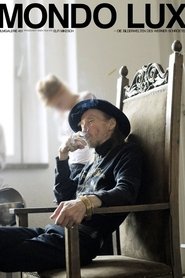
Mondo Lux: The Visual Worlds of Werner Schroeter

Mondo Lux: The Visual Worlds of Werner Schroeter

Werner Schroeter was one of the most significant proponents of New German Cinema. Schroeter was diagnosed with cancer in 2006. In her film, Elfi Mikesch, who photographed a number of Schroeter’s films and who collaborated closely with him to create his vision, provides us with an intimate insight into Schroeter’s artistic output during the remaining four years of his life.
5.5

Year:

2011

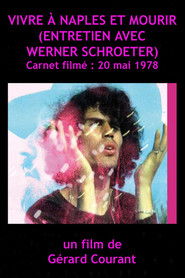
Vivre à Naples Et Mourir

Vivre à Naples Et Mourir

"On the occasion of the premiere of Nel Regno di Napoli in Cannes in 1978, Werner Schroeter gave me an audio interview about this film and about his work in general. Our meeting took place on the terrace of the Hotel Majestic, in the midst of excitement of the Cannes festival life, a few days after the screening of Nel Regno di Napoli and in the presence of the photographer Jean-Claude Moireau. Vivre à Naples et mourir is the audio capture of that informal meeting that happened on 20 May 1978 and which is, as per director's wish, more like a casual conversation than an interview in the strict sense of the term (a set of questions and answers).
0.0

Year:

2011

Vivre à Naples et Mourir (Entretien avec Werner Schroeter)

Vivre à Naples et Mourir (Entretien avec Werner Schroeter)

Vivre à Naples et Mourir (Entretien avec Werner Schroeter) is the sound recording of this informal meeting, which took place on 20 May 1978 and which, as the filmmaker wished, is closer to a casual conversation than to an interview in the strict sense of the term with its game of questions and answers. In a second phase, I put this soundtrack into images using photos, posters, programmes, extracts from Werner Schroeter's films as well as collages created for the occasion.
0.0

Year:

2011

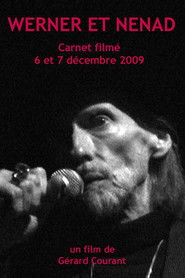
Werner et Nenad

Werner et Nenad

0.0

Year:

2010

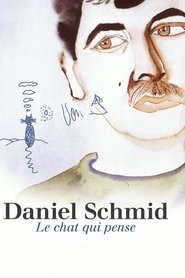
Daniel Schmid: Le Chat Qui Pense

Daniel Schmid: Le Chat Qui Pense

When director Daniel Schmid grew up, his parents ran a hotel in the Alps, and this singular setting was to influence his film. Rather by coincidence he came to Berlin in the early 1960s and became part of the new German wave. Schmid worked with, among others, Wenders and Fassbinder, for example as an actor in Wender’s The American Friend. He met Ingrid Caven, who was to play a diva in several of his films. This is a documentation of a part of modern European film history and a good analysis of artistry and how it corresponds to the individual behind the camera. A wealth of archival footage brings us close to many directors and actors in Schmid’s circle. If you’ve never seen a Daniel Schmid film, you are sure to want to after watching this portrait of his life.
5.8

Year:

2010

The Last Year

The Last Year

Klaus Wyborny's Das letzte Jahr is a take on Ovid's "Fasti" in three parts. Yet, "a character as confused as our protagonist hardly would have been able to write the first three. For that it needs a clearer head, and thus one essentially would have to be even more confused. In this respect, the fourth book would have to be about me, my humble self."
0.0

Year:

2009

The Ministries of Art

The Ministries of Art

Philippe Garrel’s documentary on France’s second wave of masterful filmmakers. Featuring Jean Eustache, Chantal Akerman, André Téchiné, Leos Carax, Jacques Doillon and Benoit Jacquot.
6.3

Year:

1989

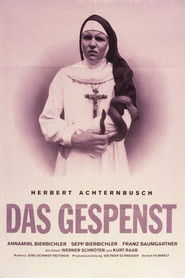
The Ghost

The Ghost

Jesus returns to present-day Bavaria, walks around Munich in a somewhat dazed manner and strikes up an affair with a nun, arguing that they are married anyway. Therefore, he refers to himself as "Ober" (waiter), obviously the male form of "Oberin" (Mother Superior). He occasionally transforms into a snake when being afraid and is finally carried up into the sky by the nun, who transforms into a bird of prey.
6.3

Year:

1982

White Journey

White Journey

One of Werner Schroeter's most important and inventive works, this threadbare evocation of Jean Genet's notorious Querelle depicts the erotic adventures of two sailors through the world's seaports in the manner of a cut-rate silent movie.
1.0

Year:

1980

Eika Katappa

Eika Katappa

Collage of dramatic scenes, some exaggerated to comic effect, with asynchronous sound from well known classic, operatic, and rock and roll music – with different approaches to love, suffering, and death.
6.4

Year:

1971

Beware of a Holy Whore

Beware of a Holy Whore

Tensions between members of a film crew build while they wait for the arrival of the director and star to arrive on location.
6.4

Year:

1971

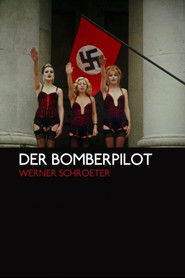
Der Bomberpilot

Der Bomberpilot

Schroeter’s film is a chronicle of Germany from the Nazi era until the economic boom of the 1950s and 1960s, centering on three women who search for a career as singers and dancers.
5.8

Year:

1970

Schwestern der Revolution

Schwestern der Revolution

Feminist short film set in West Berlin.
5.5

Year:

1969

Alabama (2000 Light Years)

Alabama (2000 Light Years)

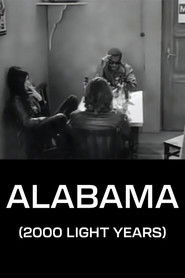
"The film starts with a shot of a cassette recorder, and it has a juke box in it. There’s always music in it. When I was asked by some critics at a festival press conference what the film was all about, I said 'it’s about the song All Along The Watchtower, and the film is about what happens and what changes depending on whether the song is sung by Bob Dylan or by Jimi Hendrix.'" Well, both versions of the song appear in the film, and everybody thought I was pretty arrogant to explain the story this way. But the film really is about the difference between the Dylan version of All Along the Watchtower, and the Jimi Hendrix Version. One is at the beginning and one is at the end." – Wim Wenders
5.3

Year:

1969

Paula - "Je reviens"

Paula - "Je reviens"

Paula–’je reviens’ is one of Schroeter’s first experiments in choreography, as he stages actors in an empty room.
0.0

Year:

1968

La morte d'Isotta

La morte d'Isotta

La morte d’Isotta is a passionate melodrama inspired by Richard Wagner and Comte de Lautréamont, with Schroeter appearing in a principal role.
0.0

Year:

1968

Meetings With Werner Schroeter

Meetings With Werner Schroeter

Meetings in Lisbon...
0.0

Year:

-

Maria Callas singt 1957 Rezitativ und Arie der Elvira aus Ernani 1844 von Giuseppe Verdi

Maria Callas singt 1957 Rezitativ und Arie der Elvira aus Ernani 1844 von Giuseppe Verdi

"Of all the female interpreters I know, Maria Callas was the one who, in her expressive power, could let time stand so long until all fear disappeared, including that of death itself, and reached a state similar to what should be called happiness has been. Just as a blind person develops his sense of hearing and touch better than a sighted person, Maria Callas was proof that one could work out of oneself without following stupid rules in a restricted system - she was too short-sighted to ever take the baton from the stage to be able to see the conductor - can turn weaknesses into one's own creativity without looking." - Werner Schroeter
0.0

Year:

1968