


Yang Fudong
DirectorWriter
-
Birthday
-
Zodiac Sign
-
Genres
0
Total Films
Also known as (male)
Place of Birth
-
Birthday
-
Zodiac Sign
-
Genres
0
Total Films
-
Also Known As (male)
-
Place of Birth
-
Birthday
-
Zodiac Sign
-
Genres
0
Total Films
Also known as (male)
Place of Birth
-
Birthday
-
Zodiac Sign
-
Genres
0
Total Films
-
Also Known As (male)
-
Place of Birth
actor
0 Works
producer
0 Works
director
43 Works
writer
3 Works
other
0 Works
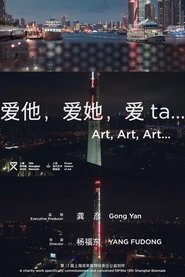
Art, Art, Art.
The 13th Shanghai Biennale cooperated with the artist Yang Fudong in a public welfare short film - "Art, Art, Art...".Year:
2021

Dawn Breaking
Dawn Breaking is the opening chapter of Yang Fudong’s Museum Film Project. "The film in its final version is something different from the dailies showing the process of making it."Year:
2018

Moving Mountains
Yang Fudong, one of the most influential contemporary artists in China, is known for his epic black-and-white films and photographs, which straddle the worlds of contemporary art installation and cinema. Moving Mountains is a 46-minute, black-and-white film, accompanied by photographs from the film set, drawings and props. The film is inspired by the ancient tale of a man, seeking to move a mountain, and extolls the virtues of perseverance and collective action. The artist makes this story a poetic reflection upon human nature and the shifting values to which it can be subjected.Year:
2016
Moving Mountains
Yang Fudong, one of the most influential contemporary artists in China, is known for his epic black-and-white films and photographs, which straddle the worlds of contemporary art installation and cinema. Moving Mountains is a 46-minute, black-and-white film, accompanied by photographs from the film set, drawings and props. The film is inspired by the ancient tale of a man, seeking to move a mountain, and extolls the virtues of perseverance and collective action. The artist makes this story a poetic reflection upon human nature and the shifting values to which it can be subjected.Year:
2016
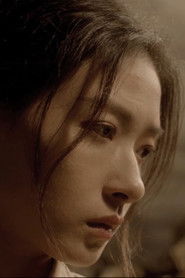
A Resolute Woman
A Resolute Woman // A Mother // Buffalos Gift // A Lonely Fat Man/ Lost Box // Seven Ribs // Waiting for Her to Come // The Power of Being // Calls from the Intellectuals // Brothers // The Only PineYear:
2016
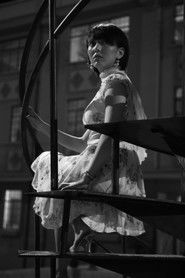
The Fifth Night
7-channel video installation, 35mm, b&w. Music:Jin Wang. In making the film noir drama The Fifth Night, Yang used different lenses for each camera, but filmed everything at the same moment, creating a labyrinthine, live-feed effect. The work recalls the narrative structure of a traditional Chinese hand-scroll, while its multiple perspectives are suggestive of an M. C. Escher drawing. The synchronous scene was captured in a single take, with the work running for 10 minutes and 37 seconds, the exact length of a reel of film.Year:
2015
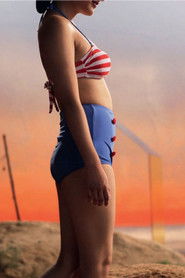
The Coloured Sky: New Women II
5 channel video installation, HD colour with sound, 12'00-15'48". Music by Wang Wenwei. With a haunting lyricism and dreamlike narrative, The Coloured Sky: New Women II examines the secret desires and anxieties of young women as they come of age. The work captures a journey that has on one hand ended and on the other has barely begun. The ingenues, teetering on the brink of womanhood, frolic self-consciously in an artificially staged beach scene, aware of their burgeoning sexuality and its underlying power. The shadow of China's historic system of concubinage hangs over these contemporary scenes, as the idealized beauties negotiate a new social milieu in which future prospects hinge on appearance and the cultivation of male fantasy.Year:
2014
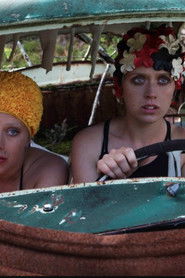
The Light That I Feel
8 channel-video installation, sound, 8- 14 mins. Music by: Jin Wang. "The light that I feel" series refers to an eponymous film shot during the summer 2014 on the island of Sandhornøy in Norway where Yang Fudong directed local actors and dancers. The Light That I Feel was first shown in situ on eight screens arranged within an architectural structure purposely built for the occasion on a beach on the island, and editing it at the Nordland College of Art and Film, Kabelvag. Influenced by Ingmar Bergman’s work, this project enabled Yang Fudong to direct European actors for the first time in a magnificent Scandinavian landscape. The artist seeks to show how the wind and trees can express a narrative. As in many of his films landscapes play a paramount role equivalent to that of the protagonists.Year:
2014
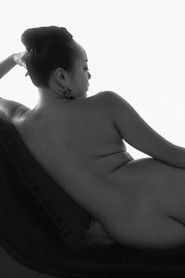
New Women
Multi-channel video, 35mm, B&W, 8-11 mins...She rises gently, her hair tousled by the wind; gracefully, she picks up a handkerchief and wipes her brow; sunlight catches the wall across from her and lingers there for a while.Year:
2013
Push the Door Softly and Walk in, Or Just Stay Standing Where You Are
16 screens, 10-20 minutes. It is so real. A remote and intimate world.Year:
2013
The Pride World
Multi-channel video. Specifically created for the exhibition EDIT-Image Fetish and Phobia in September 2012. Different from his previous works, this two-channel video is projected onto the Chinese traditional Xuan paper - Jia Xuan. The black and white image and the natural texture of Jia Xuan paper create a unique visceral sensation. It triggers and foregrounds a special nostalgic sentiment from the video’s characters and environment.Year:
2012
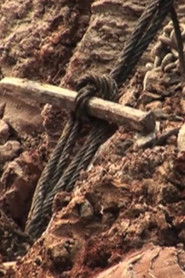
films4peace
“For my work for films4peace, I considered certain visual metaphors. Compared with the eternity of the universe, human life is short, very short. Our existence is like a grain of sand in a desert or a speck of stone on the rock that makes the world. Conflict and destruction seems absurd if you consider the insignificance of our time on earth. Let us distance ourselves from oppression and slaughter. The creation of world peace is more important for all humankind. In my film, huge boulders slowly rise up amidst a chaotic noise that drifts in and out. Human life is not always beautiful, more often than not, we are simply trying to survive, allowing our lives to continue and nothing more.” —Yang FudongYear:
2012

One Half of August
8-channel video installation. One half of August is an eight-screen, black-and-white, HD video installation in which Yang Fudong aims to create distortion and a change of reality in some of his selected video works by projecting them onto various structures and objects. Yang Fudong refers to this new technique as "multiple view film", which emphasizes the character's subtle expressions and simplest actions. What the viewer could perceive as separate instances, are actually simultaneously tied together into one scene, expanding and multiplying the spectator's usual vision and perception. As with most of Yang Fudong's works, here again the artist uses images metaphorically.Year:
2011

The Nightman Cometh
Yejiang / The Nightman Cometh features a cast of strange figures who slip between historical eras. Strewn with symbols of past and future, civilisation and wilderness, dream and reality, the work is laden with filmic, artistic and literary meanings but surrenders to none. An ancient warrior is seen wounded and forlorn after battle, in conflict about his path in life. Yang dramatises the clash between the hero's social role or 'mask', and the more authentic face of his instincts and aspirations. For Yang, the visible world presented in this work is not an objective one but rather the externalisation of internal sentiments.Year:
2011
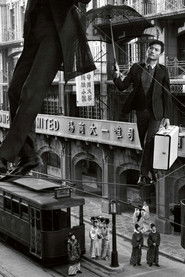
First Spring
“First Spring” is Prada's latest collaboration with pioneering Chinese artist Yang Fudong. Featuring young man gathered in Shanghai, dressed in Prada menswear, the black and white film portrays a timeless, dreamlike realm where anything is possible. Inspired by the Chinese adage that “the whole years work depends on a good start in spring”, this bold and beautiful film represents an exciting new direction for Prada's visual communications at the start of this decade.Year:
2010
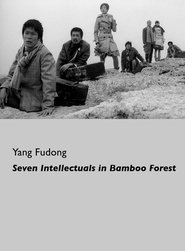
Seven Intellectuals in Bamboo Forest, Part V
The film 'Seven Intellectuals In Bamboo Forest' is based on the history of seven talented intellectuals from the ancient Chinese Wei and Jin Dynasties. Ruan Ji, Ji Kang, Shan Tao, Liu Ling, Ruan Yan, Xiang Xiu and Wang Rong were famous poets and artists at that time. Open and unruly, they used to gather and drink in the bamboo forest, singing songs and playing traditional Chinese musical instruments, in the hope of escaping from earthly life. They pursued individuality, freedom, and liberty. Their remarkable talent and passion made them a notable group in Chinese history. Part 5 is about the return to the city and to reality. We live in the city and belong to it. If any problem arises, we are able to solve it.Year:
2008
Seven Intellectuals in Bamboo Forest, Part IV
The film 'Seven Intellectuals In Bamboo Forest' is based on the history of seven talented intellectuals from the ancient Chinese Wei and Jin Dynasties. Ruan Ji, Ji Kang, Shan Tao, Liu Ling, Ruan Yan, Xiang Xiu and Wang Rong were famous poets and artists at that time. Open and unruly, they used to gather and drink in the bamboo forest, singing songs and playing traditional Chinese musical instruments, in the hope of escaping from earthly life. They pursued individuality, freedom, and liberty. Their remarkable talent and passion made them a notable group in Chinese history. Part 4 is about the idea of living on an island with no one else, avoiding the hustle and bustle of the busy metropolis. In Chinese legend, there is an island of Peach Blossoms - the very ideal place to live, where one's thoughts can fly freely.Year:
2008
Seven Intellectuals in Bamboo Forest, Part IV
The film 'Seven Intellectuals In Bamboo Forest' is based on the history of seven talented intellectuals from the ancient Chinese Wei and Jin Dynasties. Ruan Ji, Ji Kang, Shan Tao, Liu Ling, Ruan Yan, Xiang Xiu and Wang Rong were famous poets and artists at that time. Open and unruly, they used to gather and drink in the bamboo forest, singing songs and playing traditional Chinese musical instruments, in the hope of escaping from earthly life. They pursued individuality, freedom, and liberty. Their remarkable talent and passion made them a notable group in Chinese history. Part 4 is about the idea of living on an island with no one else, avoiding the hustle and bustle of the busy metropolis. In Chinese legend, there is an island of Peach Blossoms - the very ideal place to live, where one's thoughts can fly freely.Year:
2008

On the double dragon hills
A two-channel video projection film.Year:
2008

East of Que Village
Shot in the rural Chinese province of Hebei, this work captures a pack of wild dogs scavenging in an arid desolate landscape. East of Que Village considers the impact of Chinese industrialisation and urbanisation on rural communities, casting fresh light on those neglected by the new social-economic paradigm. The dogs, which literally have to eat each other to survive are juxtaposed with a group of villagers who struggle in the same ways. The work reflects the sense of isolation and loss increasingly present in Chinese society as communities are scattered, traditional rural villages are dissolved, and the fight for survival takes hold. The work's title signals to the only road leading from the village to the outside world.Year:
2007
Seven Intellectuals in Bamboo Forest, Part III
The film 'Seven Intellectuals In Bamboo Forest' is based on the history of seven talented intellectuals from the ancient Chinese Wei and Jin Dynasties. Ruan Ji, Ji Kang, Shan Tao, Liu Ling, Ruan Yan, Xiang Xiu and Wang Rong were famous poets and artists at that time. Open and unruly, they used to gather and drink in the bamboo forest, singing songs and playing traditional Chinese musical instruments, in the hope of escaping from earthly life. They pursued individuality, freedom, and liberty. Their remarkable talent and passion made them a notable group in Chinese history. In Part 3 these 7 young people try to change their identity and have a different life. They choose to live in China's Southwestern villages, where they can get closer to nature, and to their own hearts.Year:
2006

No Snow on the Broken Bridge
8-channel video installation, 35mm b&w film transferred to DVD. Music by Jin Wang. A freeze-frame tableau in which seven young men and women, dressed in a haberdasher’s ?nest, look outward from a rocky outcrop; boats slowly drifting across placid waters; lush, unpopulated landscapes dominated by mountains. Like all of Yang Fudong’s work, the narrative is loosely structured, favoring centripetal forces over linear paths. Here, glamorous young men and women are slowly pulled together as, alone or in pairs and quartets, they wend their way toward the eponymous bridge to catch a last glimpse of winter snow; the rabbits, parrots, and stubborn goats on leashes that accompany them hint at the dandyish excess of a bygone era.Year:
2006
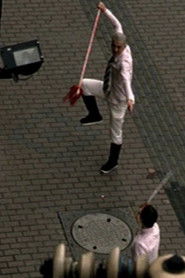
Manifold Little Hills
Wandering in the bustling streets, old-fashioned lanes and ruins of diverse-style architectures, two young man were performing singing(chang, 唱), dialogue(nian,念), acting(zuo, 做), acrobatics(da,打), in good order and well arranged. Though living in a daily and routine scene, what they were experiencing was unique and different "enjoyable dream life."Year:
2006
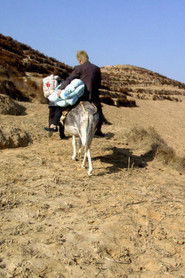
The Half Hitching Post
An Sai, Shanbei, An isolated village on the Loess Plateau, Northern China. Two young outsiders are moving in, While two young locals are struggling to escape. Comes into view a donkey full of luggage, Comes also into view a young couple, He carries her on a bike...Year:
2005
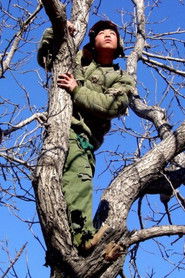
The Revival of the Snake
10 channel video installation. Music:Wang Wenwei. This work tells the end of the story of a soldier going into exile. On a sunny winter's day, the icy ground is stared with snow and life seems as peaceful as the weather. A soldier, escaping from a battlefield, comes to this deserted place which is plagued with the smell of death. He is wandering, attempting to leave this uninhabited world. The only option left to him, however, is walking, ceaselessly and endlessly. What is waiting for him? A hibernating snake is startled awake from its nice dreams and then sees a human, eyes blindfolded and hands bound on the back, kneeling on the freezing ice-covered lake. Who is sentenced to death by the sound of gunshots reverberating around the mountains?Year:
2005
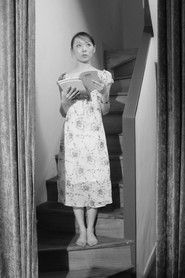
Seven Intellectuals in Bamboo Forest, Part II
The film 'Seven Intellectuals In Bamboo Forest' is based on the history of seven talented intellectuals from the ancient Chinese Wei and Jin Dynasties. Ruan Ji, Ji Kang, Shan Tao, Liu Ling, Ruan Yan, Xiang Xiu and Wang Rong were famous poets and artists at that time. Open and unruly, they used to gather and drink in the bamboo forest, singing songs and playing traditional Chinese musical instruments, in the hope of escaping from earthly life. They pursued individuality, freedom, and liberty. Their remarkable talent and passion made them a notable group in Chinese history. Part 2 exposes closed city life in a noisy metropolis, such as Shanghai. The 7 young people live in the city, but seem to have little connection with the city.Year:
2004
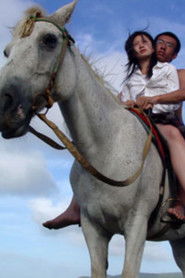
Close to the Sea
10-channel video installation. Sound by Jin Wang. A concert is being staged at the seaside. Accompanied by various musical instruments, the love story of a young couple is unfolded on the same location. The videos set on the centre display two scenarios taking place simultaneously: one shows a young couple riding a horse along the sea and the other a pair of lovers struggling for survival from a ship accident. The other eight screens deliver at the same time the performance of diverse instruments, a trumpet and a cello played on the rocks, for example. The background music, which is hallucinatory, dreamlike and even uncoordinated, reflects the conflicts between ideals and reality. The young lovers, despite the threat of death, continue with their discussion of ideal, faith and anticipation.Year:
2004
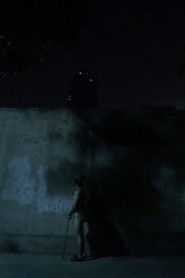
Right Night / Larva Night
Short film by Yang Fudong.Year:
2004
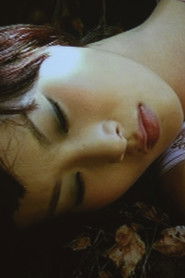
Lock Again
Two young men wear the uniform of 70’s policeman, sometimes they look like runaway criminal. They want to escape reality which is impossible to cast off. They yearn for the bright sunshine life, expecting the time to be captured, to exchange for a calmness of the heart.Year:
2004

Honey
This video appears to be a humorous stylistic reference to spy films. All the clichés – tension, eroticism, grave, cigarette-smoking men and atmospheric music – are present. The woman wears fishnet hose and a fur coat with her military uniform. This ambiguity of seduction and deceit is not only the earmark of espionage, but possibly also a metaphor for the present ambivalent situation in China.Year:
2003
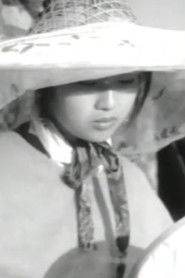
Liu Lan
Liu Lan tells a story about the break with tradition in China. An intellectual in a white suit meets a traditionally dressed woman in the countryside. Despite their mutual love, their lives seem incompatible. A woman’s voice sings a folksong, Why are people in love always separated from one another?’ The film’s atmosphere is melancholy and the landscape veiled in mist. Here Yang Fudong shows his connections with Chinese landscape painting.Year:
2003
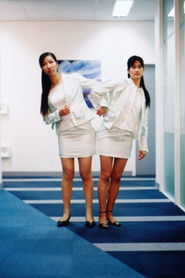
Siemens "S10"
In “S10” (2003), two female office workers wearing uniforms covered in zippers, zip together their arms and various other parts of their bodies. At this point we have entered the realm of a modern-day Shan Hai Jing inhabited by "exaggerated" creatures, a realm that is at the same time a metaphorical expression of a new concept of "subject" that is in the process of evolving organically from the individual to the other, and to the group. If we are all interconnected, just how far does the territory of the "individual" extend?Year:
2003

Seven Intellectuals in Bamboo Forest, Part I
Seven Intellectuals in Bamboo Forest has five parts. The series was finished in 2007 and shown as whole in the Venice Biennale the same year. Yang Fudong uses myths, individual memories and experiences as means to study identity and how it may be formed. In his films the spectator can sense the contradictions in the present and past China. Seven Intellectuals in Bamboo Forest, Part 1, was filmed on the Yellow Mountain. The mountain has a significant status in the traditional Chinese painting. The scenery, the not so clear motives of each character in the film combined with the music creates an almost poetic atmosphere.Year:
2003

An Estranged Paradise
Set in the city of Hangzhou, the film takes as its focal point a restless young man, Zhu Zi, following him as he aimlessly wanders through the city. Through a series of distinct vignettes, Yang depicts Zhu Zi's inability to find comfort in friends, lovers or environment as a reflection of the existential difficulty of China's "nameless generation," cast adrift during the rapid changes at the turn of the millennium.Year:
2002
An Estranged Paradise
Set in the city of Hangzhou, the film takes as its focal point a restless young man, Zhu Zi, following him as he aimlessly wanders through the city. Through a series of distinct vignettes, Yang depicts Zhu Zi's inability to find comfort in friends, lovers or environment as a reflection of the existential difficulty of China's "nameless generation," cast adrift during the rapid changes at the turn of the millennium.Year:
2002

Flutter, Flutter... Jasmine, Jasmine
3-channel video installation. Sound by Miya Dudu. An illustration of the words of the romantic song of the same name, and a commentary on it. We see a young man and woman in a large city, dreamily staring. Just like the song, they reflect hope, idealism and emotional purity. But the changes in the city proceed rapidly, and it is a question whether their ideals and feelings will remain untouched by this. Detail pictures:Year:
2002

Robber South
In a scene from “Robber South” (2001), which tells the story of a young man in the city making a living as a fruit seller while dreaming of becoming a businessman, the protagonist watches as a subway train pulls into a station, and in an instant the focus of his attention switches seamlessly to a deep blue sky. Compass in hand, he walks from house to house, tracing each door and wall with his fingers, a metaphor for his search for his own place in the city.Year:
2001

Su Xiaoxiao
Multi-channel video installation (4 overhead projectors, 19 TV sets). Yang Fudong captures the poetic sentiment that arises in moments of individual encounter with the real world, and his own expression of the world inside him. His artistic practice engages in a temperamental dialogue with the traditional culture and literature of China. Yang Fudong constructs a potential platform for dialogue and negotiation between the self and external reality. In so doing, he does not propagate ?xed believes or dogmas. His work is based on process, on what he learns from ceaseless study, observation, and involvement with his social environment and the way it relates to the individual.Year:
2001

Backyard – Hey, Sun Is Rising!
The film depicts a young man, or rather four young men, as they try to retain the sentimental feeling that is about to escape them when the sun comes up in the morning. In the expectations that they would never meet, they dressed up in the old military uniform and bathed in the morning sun. Their yawning drifts away with the wind; a wooden sword is the only attainable thing in their arms. The puppet-like laziness is shattered by the dancing sword, and they communicate in the anger of love and hate, but no real pain is ever felt. They attempt to capture the fiber of Peking Opera within the melody, but are accidentally brought above the city sky of their memories.Year:
2001

Tonight Moon
Video installation (1 overhead projector, 24 small black and white TV sets, 6 big TV sets). expressionless men in suits amuse themselves by playing around in boats, swimming, and hiding behind trees in scenes set in a garden. The scenes appear to be daydreams. Yang says that he choose to create this affect after noticing the way people playing in gardens tend to give free rein to their imagination and enter their own fantasy world. The arched gateway represents the border between the real world and the other, enchanted land beyond. In the actual installation, a number of small monitors are embedded in a large screen onto which an image of the garden is projected, each depicting men swimming naked.Year:
2000
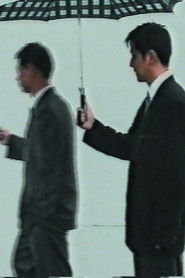
City Light
Single-channel video. Colour, sound.Year:
2000

After All, I Didn't Force You
Implicitly a reaction to the forms of individualism in a developing modern mass society. Yang Fudong strings together takes with different characters so quickly one after the other that they “lose face.” A man explains to a woman the sentence"I didn't force you". Separate movements of 12-14 people are combined/cut to form a fictive man who repeats the words "I didn't force you" to a woman.Year:
1998
I Love My Motherland
Early short film by Yang Fudong.Year:
1990
