

Yo Ota
Director
-
Birthday
-
Zodiac Sign
-
Genres
0
Total Films
Also known as (male)
Place of Birth
-
Birthday
-
Zodiac Sign
-
Genres
0
Total Films
-
Also Known As (male)
-
Place of Birth
-
Birthday
-
Zodiac Sign
-
Genres
0
Total Films
Also known as (male)
Place of Birth
-
Birthday
-
Zodiac Sign
-
Genres
0
Total Films
-
Also Known As (male)
-
Place of Birth
actor
0 Works
producer
0 Works
director
24 Works
writer
0 Works
other
1 Works
Le Mur (wall) - 2
Directed by Yo Ota.Year:
2021
Ultramarine
“The ‘exhibition’ held by ‘artist’ Katsuhiro Fujimura in Tokyo during the very hot summer of 2013 was one that made viewers suffer. The ‘painting’ that stood leaning against the window had very faint colors and regular scratches that could not be seen very well because of the light streaming in from the outside. The light changed with the time of day, and the surface of the painting also shifted. The paint on the front of the panel can only be perceived as ‘color’ by reflecting light. The fact that if the light changes what is seen also changes is quite obvious, but because it is a ‘painting’ viewers find this hard to accept.” - Yo OtaYear:
2014
Don't Dare to Stop Love
Don’t Dare to Stop Love follows the conflicted and delusional life of a single mother and cancer victim. An abstract exploration of her relationships with both her young lover and teenage daughter, the film shows us the tortures of a self-indulgent mind. In a plea for affection, she devotes the last months of her life taking care of "Pet," her boyfriend. This, however, turns sour when her excessive need for pity becomes too much for him to bear. Intercut with sketches of her teenage daughter gossiping about her mother’s strange behaviour, we develop a compassion for the lead. Will she succumb to the darkness of her own mind or will she be inspired to overcome her fate? © Julia WieseYear:
2012
Nebukawa
“There was an art event at a closed school, Kataura Junior High School, in Nebukawa, Kanagawa Prefecture. If I did not participate in this event to show my films, I would never have got off at Nebukawa Station. I saw the sea from the school building. The installation by Tetsuya Iimuro was placed in a science room at the school, where one could see the ocean through the windows.” - Yo OtaYear:
2012
Reflex/Reflection
“This film was made for an event that included an exhibition of artwork by Eishi Yamatomo. Yamatomo’s metal sculpture is often finished with a chromium plating, which reflects its surroundings. For this project, I tried to obtain the image of a metal sculpture as an existing entity and its reflection as an illusion on a film medium, which can hold an image as an object. It was originally shot on 8mm film, hand-processed, edited, then re-photographed on 16mm film.” - Yo OtaYear:
2009
Inclined Horizon
“My attempt at a filmic interpretation of Haraguchi Noriyuki’s ‘Inclined Horizon,’ a three-dimensional physical work featured in the ‘Dance Hakushu 2006’ exhibition held in the Hakushu district of Hokuto City, Yamanashi Prefecture. Haraguchi’s work was modeled out of earth that will return to its original form after about a month, and my aim was to resurrect the concept of this work on film.” - Yo OtaYear:
2007
Antonym of Concord(e)
A work whose title is the idea. Shot at the famous Place de la Concorde in Paris. The square owes its discord neither to its Egyptian obelisk nor to the fact that it was the site of the execution of King Louis by guillotine. The film was shot with Super8, Kodacrome 80 film and has been re-shot with an optical printer during editing. The mixing of stills with 24 frames/second film creates visuals with a ‘discordant passage of time’.Year:
2005
Snail Dance
Short by Yo Ota.Year:
2004
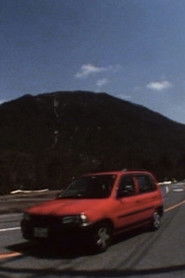
Speed Trap
Yo Ota goes on working on « the space of the unreal movement » on the film medium and on showing time development in non narrative cinema. This film has nothing to do with the English meaning of «Speed trap», that is speed control by police radars. To obtain objects in movement, he set his 16mm camera on the verge of a road. During film shoot, some drivers thought his camera was a speed trap and briskly slow down in front of the camera.Year:
2004
Discrepant Sight
How well can movies reproduce the reality we see? Cinema used to record and reproduce the movements of the scene using a camera (photograph), a device that records the scene in terms of perspective. Is it true? Isn't it possible that our way of seeing things, on the contrary, was created by photographs and movies, or by paintings based on perspective that existed before then? This film provokes the way of viewing films cultivated in this way.Year:
2003
Off The Sync
Experimental short by Yo Ota.Year:
2002
Incorrect Intermittence
“This film offers a metacinematic study of tempo and change and a figure of velocity. […] Ota recorded [three different locations in Tokyo] at the interval of hours, and sometimes even days, by using different filters and by alternating the camera speed. The result…represents an inquiry into the abstract space-time of cinema where Ota plays with the physical fact that time is a ‘function of movement in space.’” –Malin WahlbergYear:
2000
Incorrect Continuity
“Sequences of space-time manipulation that raise the problem of continuity in the shot.” - Yo OtaYear:
1999
Distorted Movi Sion
“The structure of human vision is the visual knowledge of the world. Individuals do not visually understand the world through the eyes, but through the brain. That is to say, human vision has been formed by knowledge and experience. The film can show a new vision, provided that the cinema is also a kind of visual experience and visual knowledge.” - Yo OtaYear:
1998
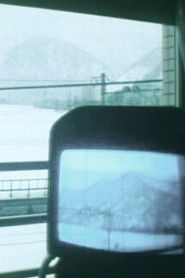
Distorted "Tele" Vision
“The visual harmony of the landscape is disturbed by a screen that allows us to see into the distance (television). The film is composed of six scenes that feature a television in the landscape. The speed of the television (in NTSC) is 30 frames per second, and never changes in this film. But the landscape views pass at different speeds.” - Yo OtaYear:
1997
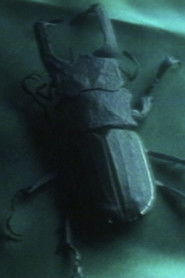
Entomologist
In this work, no matter which scene or cut you look at, basically a different amount of time will pass than it did during the shooting. This is true not only inside the screen of individual cuts, but also in the direction of the entire time axis. The time that flows here is a cinematic time that was newly created using the time that flowed when Mr. Kazufumi Kobayashi created a stag pattern out of paper. If we say that time is a function of motion and space, then this can be rephrased as cinematic motion and cinematic space generated by the film.Year:
1995
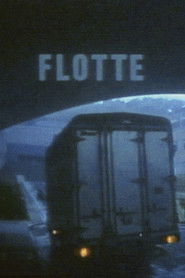
FLOTTE
Flotte is French slang for rain or downpour. This work was taken on a rainy day at the Abt Gallery in Waseda, Tokyo, a few days before his solo exhibition. If I can't shoot that day, I have to give up on the new work, and I can't help but worry about the rain. Before I saw the rush, I was worried about whether the picture would come out properly, but the rain came out beautifully, so I gave it the title "FLOTTE". It is constructed so that the speed changes intermittently in one cut (actually, it is meant to appear that way).Year:
1993
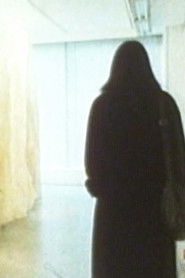
Installation Time
“Mr. Tsuguö Yanaï makes paper objects. He installs these objects in a gallery in Tokyo. The camera was also installed in the gallery. It filmed all of the time of installation and its preparation…. Yet the film is not the documentary of an installation, but of installation time.” - Yo OtaYear:
1989
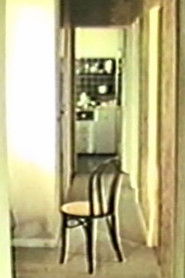
Chaise Plus
In this work, the Lumière-like technique of photographic reproduction of reality is combined with the animation-like technique of photographing each frame while shifting it to make non-moving objects look like they are moving. However, if there is a slight difference from what we normally think of animation, it is that the person being animated is a human being who can move by himself.Year:
1987
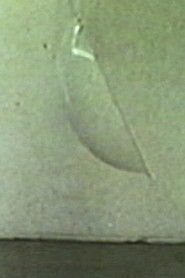
Städel
“Peter Kubelka…was teaching at Staatliche Hochschule für Bildende Künste – Städelschule (Städel) at the time. His classes, filmmaking and cooking, were very unique, and this film was made around the time I was studying with him at Städel… This is a single-shot film, moving along the passageway using a handmade dolly. I used an Arriflex 16ST camera, and I changed the filming speed from 48fps to 4-6 fps while shooting.” - Yo OtaYear:
1985
Temps Topologique
“One can not speak of time as a thing in itself. It is movements and variations that give the feeling of time. Men have always linked time and spatial movement.” - Yo OtaYear:
1981
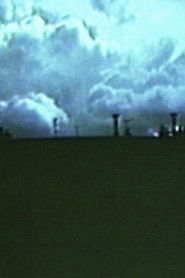
Une Succession Intermittente
Even if you watch it all day long, the human eye cannot see the movement of the clouds. In that sense, it can be said that interval shooting in movies has expanded human vision itself. Just as the invention of photography captures momentary movement, cinema presents a world that seems to compress real time. Interval shooting is normally used only in science films and the like. In this work, such changes were captured at intervals of a few seconds, rather than frame-by-frame. Without a timer or anything, I set the camera on a tripod in my room, sat down on a chair beside me, and pressed the release bit by bit, entirely manually from before dawn until the sun went down.Year:
1980
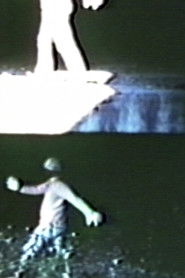
Un Relatif Horaire No.3
A work I made when I was attending the film department of the University of Paris 8. At the time, I was living in a downtown area in the northwest of Paris, close to the Place de la Bastille, which was associated with the French Revolution. Building construction sites were scattered around the area due to redevelopment. The shooting location was a building with only walls and floors, whether it was under construction or being demolished. I decided on the composition so that the wall and floor exactly intersect in the center of the screen. In order to capture 1/4 of the screen, 3/4 of the screen must be covered with a mask. Then, while rewinding the film, I took four shots at different frame speeds. One cut, one scene, a fixed screen with no camera work. The same man is walking in each part of the continuous screen, which is divided into four parts. The movement of the same man, who was just walking at the same speed, has four different speeds on the screen.Year:
1980
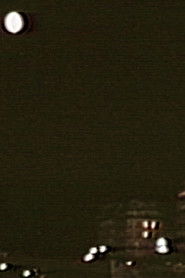
Un Relatif Horaire
The moon in the night sky chases us wherever we go. The moon is in fact moving, but it is too far away and its movement is too slow for the human eye to see its movement. It is almost the same as saying that it is not moving in our consciousness.Year:
1980