Аватар персоны Yuliya Kiseleva

Yuliya Kiseleva

DirectorProducerExecutive Producer
Yuliya Igorevna Kiseleva (Russian: Ю́лия И́горевна Киселёва; born 17 February 1982; Asbest) is a Russian documentary filmmaker. She graduated from the Faculty of Journalism of USU and the directing faculty of VGIK (workshop of non-fiction films by I. A. Grigoriev). He lives in Moscow. The first documentary film "Far from London" — about the playwright Vasily Sigarev — was shot in 2007 at the Yekaterinburg studio "A-film". In 2011 and 2012, she studied screenwriting at Robert McKee's seminars ("Story", "Genres"). He has been making popular science films since 2015. As a director, she has implemented more than 20 original projects, released dozens of television films and programs, many presentation and corporate films and commercials. She worked as a screenwriter, editor and chief editor on TV. He periodically lectures and conducts master classes at various forums and festivals, as well as at universities and film schools. The author's films took part in more than 100 Russian and foreign film festivals (where they received more than 70 prizes and diplomas), were released, were shown on TV (Channel One, Culture, Science, OTR), and posted on 13 online platforms. Winner of the award "For Loyalty to Science" (2022) in the nomination "scientific director of the year". Laureate (2021) and four times finalist (2007, 2012, 2014, 2022) of the Laurel Branch Award in the field of non-fiction films and television. Winner of the TV contest "TEFI-region" (2014). Finalist of the awards "Knowledge" (2021), "Headliner" (2020), twice nominee of the European Academy of Scientific Cinema (2020, 2021). In 2014-2016, he was a teacher at the AURUM Film School. In 2022, he became the artistic director of the "Laboratory of Scientific Cinema", implemented jointly with the FUNK Festival. Since 2022 - co-founder and artistic director of the project "Laboratory of Scientific Cinema 2.0" (together with producer Liliya Sabirova).

17-02-1982

Birthday

Aquarius

Zodiac Sign

-

Genres

0

Total Films

Юлия Киселева, Юлия Киселёва, Yulia Kiseleva, Yuliya Kiselyova

Also known as (female)

Asbest, USSR (Russia)

Place of Birth

Popular works

Creative career

actor

0 Works

producer

6 Works

director

48 Works

writer

15 Works

other

4 Works

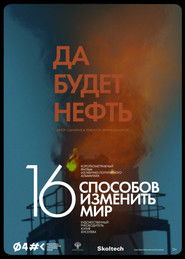
There Will Be Oil

There Will Be Oil

Oil is a primary energy source in the world. Global oil consumption reached approximately 95 million barrels per day but oil fields' quality is constantly declining. A team of Russian scientists came up with more accurate, cheaper, and faster technology that can increase the oil production rate. After all, modern civilization is built in the way that 'to live well' means 'consume more oil'
0.0

Year:

2022

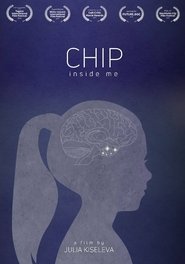
Chip Inside Me

Chip Inside Me

The film is based on five cases of people with implants in the head. Against the backdrop of the growing popularity of the topic of “chipping” and fear of being controlled by artificial intelligence, filmmakers find five dramatic stories where the “chip in the head” is a vital necessity. With the help of implants, doctors cure deafness, remove tremor from patients with parkinsonism, stop epilepsy attacks and treat dystonia. Where can the scientific discoveries of the recent years lead us? Is it possible to control people with the help of technology and what neuroethical issues are encountered in its use?
0.0

Year:

2022

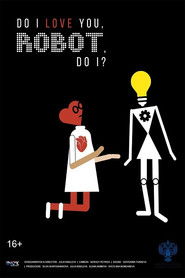
Do I Love You, Robot, Do I

Do I Love You, Robot, Do I

Anthropomorphic robots are increasingly being introduced into our lives: they meet us at the reception, educate children and even live in families as partners. Scientists are trying to make robots as human-like as possible. In the late 80s, scientists studying the emotional reaction of people to robots discovered the "uncanny valley effect": the most humanoid robots caused dislike and even fear in people. But what will happen when they become indistinguishable from a person? And will they?
0.0

Year:

2021

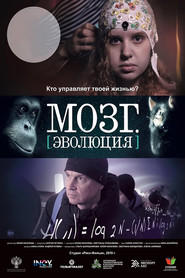
Brain. Evolution

Brain. Evolution

In the film, we look into the future. How does scientific knowledge change our worldview, culture and environment? On the one hand, the development of technology expands our boundaries of freedom - we live longer, learned to establish communication with paralyzed people, etc. But the more scientists learn about the brain, the more questions arise. Back in the 1980s, Benjamin Libet conducted experiments that, according to many scientists, proved that man does not have free will. Neuroscientists say that our behavior and decisions depend only on the activity of neurons.
0.0

Year:

2019

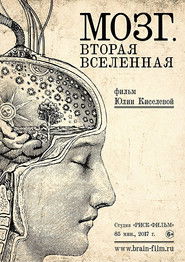
Brain. Second Universe

Brain. Second Universe

What is a human brain? Is it just a part of central nervous system, super computer or master who controls human's life? Modern neuroscience researches will help us answer this questions.
10.0

Year:

2017

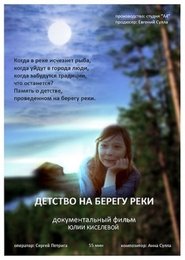
Childhood by the River

Childhood by the River

When Masha was ten years old she lived in a far away northern village, where she was the only pupil in her school. She loved her village - a quiet place without any stores, cell phones, and other spoils of civilization. Masha dreamed to build a clinic there. Masha is seventeen now. She goes to a boarding school in a nearby village, and realizes that she needs to leave.
0.0

Year:

2014