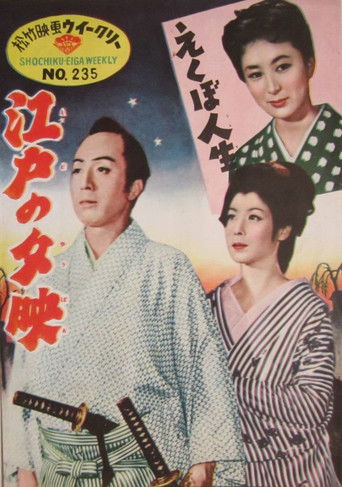
Edo no yubae

no information on the genres

0.0

no information on the tagline

In the fourth year of Keio (1868), defeated retainers sought to restore the Tokugawa shogunate with the help of Enomoto Takeaki's navy. Honda Koroiku was one of them. He discreetly handed a departure note to his fiancée, Otosei, the daughter of Matsudaira Soebe, and left Edo. Otosei's cousin and Koroiku's friend, Domae Daikichi, was once a brave warrior of the shogunate army. However, he had since fallen into a life of debauchery in Yanagibashi and was rumored to be involved with a geisha named Orikki.

$0

Budget

$0

Revenue

01-09-1954

Release Date

JP

Country

-

Rating

-

Votes

-

Age Rating

102 min

Runtime

Released

Status

Japanese

Language

Popular actors
Media

View all media:

All Media

Нет информации по фоновой картинке

Медиа изображениеМедиа изображениеМедиа изображение
Director
Noboru Nakamura

Noboru Nakamura

Noboru Nakamura (中村登, Nakamura Noboru, 4 August 1913 – 20 May 1981) was a Japanese film director and screenwriter. After graduating from the Tokyo Imperial University Faculty of Letters in 1936, Nakamura joined the Shochiku film studios, working as an assistant director for Torajirō Saitō and Yasujirō Shimazu. He debuted as director in 1941 with Life and Rhythm, and finally received recognition with his 1951 film Home Sweet Home. His most noted works include the Yasunari Kawabata adaptation Twin Sisters of Kyoto (1963), The Kii River (1966) and Portrait of Chieko (1967). Both Twin Sisters of Kyoto and Portrait of Chieko were nominated for the Academy Award for Best Foreign Language Film Nakamura was posthumously awarded the Order of the Rising Sun, 4th class.
Related Movies

There are no similar films yet.

You might like it

There are no recommended films yet.