

Gin'ichi Kishimoto
ProducerExecutive Producer
-
Birthday
-
Zodiac Sign
-
Genres
0
Total Films
Also known as (male)
Place of Birth
-
Birthday
-
Zodiac Sign
-
Genres
0
Total Films
-
Also Known As (male)
-
Place of Birth
-
Birthday
-
Zodiac Sign
-
Genres
0
Total Films
Also known as (male)
Place of Birth
-
Birthday
-
Zodiac Sign
-
Genres
0
Total Films
-
Also Known As (male)
-
Place of Birth
actor
0 Works
producer
24 Works
director
24 Works
writer
0 Works
other
0 Works

The Empty Table
One year has passed since the Kidojis' eldest son Otohiko was arrested for his part in a terrorist kidnapping, which resulted in multiple deaths. Although the parents of all the other perpetrators have either resigned from their professional positions or taken their own lives, Nobuyuki Kidoji tries to remain adamant that he was not responsible for his son's actions.Year:
1985

Dojo Breaker
Tomisaburo Wakayama is back with a new take on the classic Yamamoto Shugoro masterpiece “Ame Agaru” as a samurai on the run with his bride who makes a living by challenging dojo masters to a match, then taking money from them to keep quiet about it. Staying at an inn filled with many colorful characters and trying to make enough money to bribe the border officials to let them pass to the next domain this exciting, yet heartfelt story is a true testament to the power of the sword. When he meets an equally skilled swordsman the sparks will fly with a surprise ending that captures the soul of Japan!Year:
1982
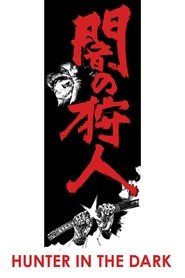
Hunter in the Dark
Yataro Tanigawa, a one-eyed hired assassin, impresses yakuza boss Gomyo Kiyoemon with his skill. Gomyo hires Tanigawa as his bodyguard, or yojimbo, to protect him during an inter-clan conflict. Tanigawa quickly rises in stature in the clan, but finds his boss's enemies almost overwhelming.Year:
1979

The Fossil
An industrialist is diagnosed with terminal cancer. He is on a trip to Europe at the time, and a glimpse of a Japanese woman in that setting causes him to fantasize about her as the personification of his impending death. As his dialogue with his imagined mortality continues, he actually meets the living woman who is the template for his fantasy, and together they tour rural churches. Gradually he comes to some kind of peace about the diagnosis. When he returns to Japan, he is met with a series of challenges which profoundly test the lessons he has learned.Year:
1974

Inn of Evil
The story takes place in feudal Japan, when any commerce with the rest of the world was strictly prohibited. An idealist suddenly appears in an isolated inn (the one that the title refers to), the head-quarters of a group of smugglers, with stolen money intended to ransom his loved one who is forced to work in a brothel.Year:
1971

Song of Vengeance
Executive management of a major Tokyo construction company are getting bumped off one after another. It seems obvious that it is a former partner of the company with a long-standing grudge who is responsible, but he died in the first ten minutes of the movie. Or did he? This may aptly be described as a giallo-noir for the unrelenting string of murders by a mystery man and the black-and-white gritty urban setting.Year:
1968

Cash Calls Hell
Before leaving prison, Oida uncomfortably enters into an agreement with his cell mate: in exchange for a half-share of 30,000,000 yen, he is to assassinate three strangers given to him on a list. However, upon meeting his first potential victim, Oida has second thoughts. Yet, even as he tries to back out, the body count starts climbing. Oida must now try to alert the people on his list of their impending danger, and find out why they are being targeted in the first place.Year:
1966

Sword of the Beast
Legendary swordplay filmmaker Hideo Gosha's Sword of the Beast chronicles the flight of the low-level swordsman Gennosuke, who kills one of his ministers as part of a reform plot. His former comrades then turn on him, and this betrayal so shakes his sense of honor that he decides to live in the wild, like an animal. There he joins up with a motley group who are illegally mining the shogun’s gold, and, with the aid of another swordsman, gets a chance not just at survival but to recover his name and honor.Year:
1965

Samurai from Nowhere
Misawa Ihei (Nagato) is traveling with his wife Tae (Iwashita Shima) who abhors the practice of sword fighting for prize money. Tae is the daughter of the clan's chief counselor who married the low-ranking Ihei to avoid becoming the clan lord's mistress. Into the mix comes Oba Gunjuro (Tetsurō Tamba), a mysterious ronin who will do anything for money. This leads to a fitting climax as the forces of hate and love converge while the couple attempt to break through the border!Year:
1964

Three Outlaw Samurai
Shiba, a wandering ronin, encounters a band of peasants who have kidnapped the daughter of their dictatorial magistrate, in hopes of coercing from him a reduction in taxes. Shiba takes up their fight, joined by two renegades from the magistrate's guard, Sakura and Kikyo. The three outlaws find themselves in a battle to the death.Year:
1964

Tange Sazen
In 1730, the Tokugawa Shogunate orders the Yagyu Clan to repair a huge shrine. Since it cannot refuse the Shogunate's request, the impoverished Yagyu Clan tries to raise funds by obtaining a sword which holds the key to a wondrous, hidden treasure. After learning the sword's secret, Tange Sazen sides with the Yagyu Clan, but his motive seems to be more than just pure interest in the treasure...Year:
1963

Harakiri
Down-on-his-luck veteran Tsugumo Hanshirō enters the courtyard of the prosperous House of Iyi. Unemployed, and with no family, he hopes to find a place to commit seppuku—and a worthy second to deliver the coup de grâce in his suicide ritual. The senior counselor for the Iyi clan questions the ronin’s resolve and integrity, suspecting Hanshirō of seeking charity rather than an honorable end. What follows is a pair of interlocking stories which lay bare the difference between honor and respect, and promises to examine the legendary foundations of the Samurai code.Year:
1962

The Tragedy of Bushido
A 16-year-old youth is ordered to commit ritual suicide to follow his deceased lord into death and preserve the honor of his clan. His elder brother's wife, who has raised him as if he were her own child, asks her husband for permission to spend a single night with the young man and teach him the pleasures of the flesh, out of motherly mercy. However, the following day, an official decree is issued to ban suicide through fidelity...Year:
1960
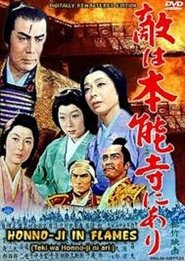
Honno-Ji in Flames
The plot is based on the novel "Akechi Samanosuke no Koi," the final work in a trilogy by Hiroshi Kato about the forced suicide of Oda Nobunaga at the temple Honnoji. Historically, the general Akechi Mitsuhide is credited with causing Nobunaga's downfall. Kato's novel focuses on Mitsuhide's nephew Samanosuke, who fought alongside his uncle during the assault on Honnoji.Year:
1960

Pineapple Butai
The story of the role played by Japanese-American soldiers from Hawaii in the Korean War of the 1950s.Year:
1959

Taikoki - The Saga of Hideyoshi
From birth Hideyoshi was a restless, defiant spirit--a child of the poorest of the poor. Cast out of his peasant cottage, he would live by his wits, driven by his burning ambition to become a samurai and to find a warlord worth pledging his sword to. This is the story of his rise, and the thunderous battle he pinned his hopes on. The challenge that had already ruined and bloodied the armies of higher-ranking samurai than Hiyoshi. The battle that brought him rank, fame and fortune and transformed him into Hashiba Hideyoshi, right-hand man to the ruthless Lord Oda Nobunaga, and would drive him on to conquer Japan.Year:
1958

流轉
In the eleventh year of the Tempō era, the Kawarazaki-za theater in Edo buzzed with excitement for a new production of "Kanjinchō" by Naritaya, featuring music by the master Kineya Rokusaburō. However, Naritaya's requests to change some of Rokusaburō's most painstakingly crafted parts of the composition angered his disciple, Shinjirō, leading to a conflict and Shinjirō's abandonment of the shamisen. One day, Shinjirō was captivated by the mysteriously beautiful dance of Oaki, a traveling performer's daughter, who seemed to be channeling her art into a form of revenge.Year:
1956

大江戸出世双六
Isshin Tasuke, a friend of Ōkubo Hikozōemon, the esteemed public arbitrator of the realm, saved the maid Onatsu from punishment after she accidentally broke a plate gifted by Lord Ieyasu. Tired of the strict samurai service, Tasuke moved to the Genbei tenements and opened a fish shop. This tenement housed various characters, including the landlord's daughter Osen who had a crush on Tasuke, the midwife Okan, the blind masseur Oyone and her husband, the carpenter-loving couple Yoshigorō and Ohama, the rōnin Takeuchi Yogoemon, and the siblings Ochika and Shin'nosuke who cared for their sick mother.Year:
1955

元祿美少年記
On February 4th of the 16th year of the Genroku era, Yatō Uemon no Shichi reminisces while waiting his turn for seppuku at the Mizuno residence. When news of his lord, Asano Naganori, attacking Kira Yoshinaka in the palace reached Akō, Uemon no Shichi was sixteen. The family elder, Ōishi Kuranosuke, determined to avenge, gathered allies, but Uemon no Shichi's father, Chōsuke, being sickly and considered too young, was not included. Chōsuke committed suicide.Year:
1955

荒木又右衛門
Watanabe Kazuma and Kawai Matagorō from the Bizen Okayama Ikeda clan were close friends, but they inevitably became enemies after Matagorō killed Kazuma's younger brother, Gentayū, and fled. Seeking assistance, Kazuma asked his brother-in-law, Araki Mataemon, for help, but Mataemon refused, saying that it was against the code for a brother to avenge another brother's death. On the other hand, the lord of the clan, Ikeda Tadao, ordered a search for Matagorō, who was found to be sheltered by the Hatamoto, including Andō Jiemon, in Edo. Tadao was furious but unable to act. Matagorō, in Edo, came to regret his birth as a samurai. He met and fell in love with Okō, a bathhouse maid. As the discord between the Hatamoto and the Ikeda clan deepened, Tadao died of illness. Seizing the opportunity to ease the conflict, the shogunate ordered the Ikeda clan to be succeeded by the young lord Katsugorō and to relocate to the Ikeda clan of Inshū Tottori. Meanwhile, Matagorō was exiled from Edo.Year:
1955

Edo no yubae
In the fourth year of Keio (1868), defeated retainers sought to restore the Tokugawa shogunate with the help of Enomoto Takeaki's navy. Honda Koroiku was one of them. He discreetly handed a departure note to his fiancée, Otosei, the daughter of Matsudaira Soebe, and left Edo. Otosei's cousin and Koroiku's friend, Domae Daikichi, was once a brave warrior of the shogunate army. However, he had since fallen into a life of debauchery in Yanagibashi and was rumored to be involved with a geisha named Orikki.Year:
1954
Beautiful Tengu
During the tumultuous end of the Tokugawa shogunate, the Tengu Party rose in rebellion in Mito. Friends from their hometown, Tanaka Genzo and Fujita Koshiro, each walked different paths. Koshiro, who upheld the philosophy of "Revere the Emperor, Expel the Barbarians," became a leader of the Tengu Party, taking refuge in the mountains. Genzo, however, did not have any particular ideological stance.Year:
1954

素浪人日和
At the Fugenji temple in Koishikawa, Edo, a memorial service for the 49th day after the passing of Kyogoku Takanori, the lord of the Tanba-Miyazu domain, was held. Despite being sons of Takanori, three brothers, who had different mothers, gathered, each having grown up in different circumstances.Year:
1954

慶安水滸傳
Chikuzen, a ronin named Yoh Daisuke, after pacifying some ruffians at the theater of Onna-Kata Ogino Sawanojiki, formed a bond with the theater's bodyguard, Maruhashi Tadayasu, and Kaku, a priest. He ended up settling at the Kasugaya, the house of Oko, whom he had saved. When Oko decided to go to Edo, where her biological father lived, Daisuke accompanied her. Along the way, at Suruga Abe River, they encountered Sawanojiki's theater group, which had departed from Osaka earlier heading to Edo. A scuffle initiated by Tadayasu over a ferry boat with the students of Yui Masayuki but was amicably resolved through Masayuki's intervention.Year:
1954