Аватар персоны Masaki Tamura

Masaki Tamura

Director
Masaki Tamura (たむら まさき, Tamura Masaki, 26 January 1939 – 23 May 2018) was a Japanese cinematographer. Born in Aomori Prefecture, Tamura early on worked at Iwanami Productions (Iwanami Eiga), where. as an assistant, he helped photograph documentary films. He became a full-fledged cinematographer working on many of the documentaries of Shinsuke Ogawa. At the same time, he began photographing feature fiction films by directors such as Kazuo Kuroki, Yōichi Higashi, and Toshiya Fujita. He particularly became known for his collaborations with Mitsuo Yanagimachi. After working with many famous directors such as Juzo Itami, Sōgo Ishii, Gō Takamine, Kiyoshi Kurosawa, and Kaizō Hayashi, he began working in the 1990s with a new generation of directors, such as Nobuhiro Suwa, Naomi Kawase, and Makoto Satō. His collaborations with Shinji Aoyama were notable in his final years. In 1982, he won the Mainichi Film Award for best cinematography for the film Farewell to the Land. The same year, he won the best cinematography award at the Yokohama Film Festival for Farewell to the Land and A Japanese Village - Furuyashikimura.

26-01-1939

Birthday

Aquarius

Zodiac Sign

-

Genres

0

Total Films

Masaki Tamra

Also known as (male)

Hirosaki, Aomori, Japan

Place of Birth

Popular works


Creative career

actor

0 Works

producer

0 Works

director

55 Works

writer

0 Works

other

54 Works

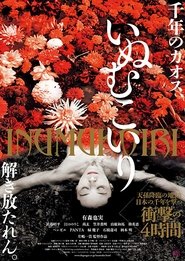
The Dog Bridegroom

The Dog Bridegroom

Ninomiya Azusa is a depressed elementary school teacher in Tokyo, who has problems both at work and in her personal life. One day, she suddenly hears a voice saying "If you go to Imore Island, you will get what you want.", so she decides to give it a try.
0.0

Year:

2017

Drive-In Gamo

Drive-In Gamo

Saki and Toshi were born and raised at the shabby "Drive in Gamo," located on the side of a road. Their father was a yakuza but he was kicked out of the group. Because of their father, Saki and Toshi were known as being part of the idiot family. Saki in desperation with her life became a troubled kid. She got pregnant and ran away from family. But one day, Saki who suffered from physical violence by her husband, comes back home.
0.0

Year:

2014

Drive-In Gamo

Drive-In Gamo

Saki and Toshi were born and raised at the shabby "Drive in Gamo," located on the side of a road. Their father was a yakuza but he was kicked out of the group. Because of their father, Saki and Toshi were known as being part of the idiot family. Saki in desperation with her life became a troubled kid. She got pregnant and ran away from family. But one day, Saki who suffered from physical violence by her husband, comes back home.
0.0

Year:

2014

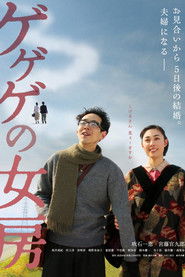
The Wife of Gegege

The Wife of Gegege

A woman from rural Japan marries a struggling cartoonist in Tokyo. Their life is difficult before he finds success, but at least they're together.
0.0

Year:

2010

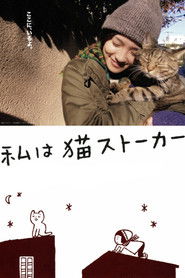
I’m a Cat Stalker

I’m a Cat Stalker

Haru works at a part-time job for a bookstore. Her dream is to become an illustrator and she also loves cats. One day, after a cat named Chibutomu disappears from the bookstore Haru canvasses the neighbourhood in search of Chibutomu.
6.8

Year:

2009

Tokyo Rendezvous

Tokyo Rendezvous

A salaryman debates selling his grandfather's land to pay off his father's debt.
5.4

Year:

2008

Shadow of Sand

Shadow of Sand

"Shadow of Sand" - Set in Tokyo in the 1980's. Yukie, a young woman lives with the vision of the lover she has murdered. After his death he continues to appear in her room. Yukie maintains her usual life, trying to avoid discovery of her crime until a new lover turns up.
6.0

Year:

2008

Sad Vacation

Sad Vacation

Kenji, abandoned by his mother, scrapes out a meager existence doing odd jobs including driving bar hostesses and their customers home. Besides this he takes care of the sister of an old friend in jail and a young illegal immigrant. Eventually his life reaches a turning point.
6.8

Year:

2007

AA

AA

"AA" is a documentary about Akira Aida (mostly known as Aquirax Aida), a japanese music critic who introduced free jazz, improvisation, and progressive rock to Japan. It's based on interviews with 12 critics and musicians who had connections with him. This is a documentary that considers the past, present and future of improvisation.
4.5

Year:

2006

Crickets

Crickets

Kaoru, a wealthy woman whose youth is fading, abandons the hustle and bustle of the city to live a peaceful life in a house on the coast. There she takes care of an old deaf, dumb and blind man as if he were an insect, a child or a pet. He can’t do anything for himself, so she feeds him and accompanies him on his walks. This strong mutual dependency offers Kaoru an escape from society and allows her to free herself from restrictions imposed by common sense.
7.0

Year:

2006

My God, My God, Why Hast Thou Forsaken Me?

My God, My God, Why Hast Thou Forsaken Me?

A.D. 2015: A virus has been spreading in many cities worldwide. It is a suicidal disease and the virus is infected by pictures. People, once infected, come down with the disease, which leads to death. They have no way of fighting against this infection filled with fear and despair. The media calls the disease the "Lemming Syndrome".
7.2

Year:

2005

The Lakeside Murder Case

The Lakeside Murder Case

Three couples are staying at a lakeside cottage with their children. They want them to prepare intensely for a prestigious high school's entrance exam with the help of a private tutor. One night, one of the wives confesses to her husband that she has killed his mistress.
6.4

Year:

2004

A Forest with No Name

A Forest with No Name

Private detective Mike takes on an assignment to return a girl, who is set to marry into a prestigious family, from a mysterious commune in the forest.
4.7

Year:

2003

A Boy's Summer in 1945

A Boy's Summer in 1945

Commencing well-respected Nippon director Kazuo Kuroki's sixth decade behind the camera, "A Boy's Summer in 1945" (literally "A Beautiful Summer in Kirishima") is a lyric, novelistic drama set in the countryside in the last days before Japan's surrender ending WWII. Striking a welcome retro note in its languid pacing and delicate handling of seriocomic ensemble threads, handsome production is a natural for fests. It might also prove a cornerstone for retrospectives or ancillary releases of works by a helmer ("Preparation of the Festival," "Ronin-gai") who's long been appreciated at home but has won just limited attention abroad.
5.3

Year:

2002

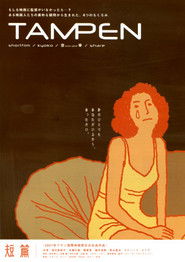
Tampen

Tampen

Four short films produced without a director
0.0

Year:

2001

Red Persimmons

Red Persimmons

The ostensible subject of this film is the growing, drying, peeling and packaging of persimmons in the tiny Japanese village of Kaminoyama. The inhabitants explain that it is the perfect combination of earth, wind and rain that makes their village’s persimmons superior to those grown anywhere else, including the village just a few miles away. The film’s larger subject, however, is the disappearance of Japan’s traditional culture, the end of a centuries-old way of life.
8.0

Year:

2001

To the Backstreet: The Films Kenji Nakagami Left Out

To the Backstreet: The Films Kenji Nakagami Left Out

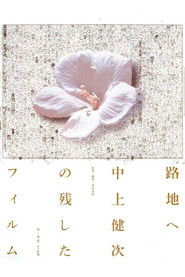
Kenji Nakagami, one of the most notable Japanese writers of the post-war, died in 1992. His work reveals a strong connection to his homeland, Kishu: a mountainous region that connects to the Pacific Ocean through a river. "To The Alley" (alternative title) is a documentary about Kenji's life. Incorporating 16 mm images from the writer's personal archive and adding new footage, director Shinji Aoyama travels through the paths of the life and art of the Japanese writer.
0.0

Year:

2001

Desert Moon

Desert Moon

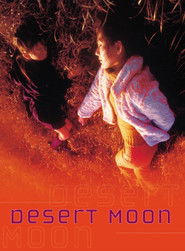
A successful businessman and his alcoholic wife attempt to piece together their unhappy lives and shattered marriage. Little do Nagai and Akira know that their precarious relationship will soon be transformed by a stranger, the enigmatic Keechie.
6.0

Year:

2001

Self and Others

Self and Others

In 1983, photographer Gocho Shigeo met an early death at the young age of 36. The view we see reflected in Gocho’s photographic images has become more profound over time since his death and has struck a chord in people’s hearts. While focusing on Gocho’s collection of photographs Self and Others, the film also visits places associated with him, creating a collage with the manuscripts, letters, photographs and voice recordings remaining in an attempt to capture “one more gesture”—a theme pursued by Gocho through photographic expression. This film is neither a critical biography nor a monograph on the photographer. Rather, we are offered a new perception. As if mesmerized, the photographs Gocho left behind captivate us in their gaze.
5.8

Year:

2001

Eureka

Eureka

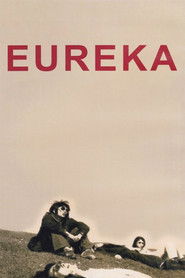
In rural Japan, the survivors of a tragedy converge and attempt to overcome their damaged selves, all while a serial killer is on the loose.
7.7

Year:

2000

Shady Grove

Shady Grove

Rika, a bright, attractive, and driven young woman, is intent on marrying her dreamy boyfriend Seiichi Ono who is not only tall and handsome but also an up-and-coming executive. One day, Ono abruptly dumps her.
3.5

Year:

1999

Paradise Sea

Paradise Sea

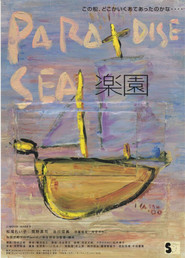
Japanese drama set in a southern Kyushu island where dance-troupe leader Shinji (Shinji Arano) stays on as his touring troupe departs. After Shinji moves in with an old man (Nobuyoshi Tanigawa) cared for by his granddaughter (Reiko Matsuo), he becomes an apprentice to the old man's construction of a wooden boat
6.0

Year:

1998

Eyes of the Spider

Eyes of the Spider

Nijima, a white-collar worker, finds the man responsible for his young daughter's murder. He tortures and interrogates the man, who maintains his innocence, before killing and burying him. He returns to his ordinary life feeling listless and hollow, until he encounters a man that introduces himself as an old friend. The man offers Nijima a new job, and subsequently introduces Nijima to his band of hired killers.
6.6

Year:

1998

Serpent's Path

Serpent's Path

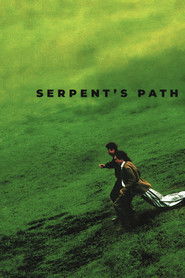
Miyashita, a former low-level yakuza member, has tracked down and kidnapped his daughter's murderer with help of his friend Nijima. But others are soon implicated in the death, leading the pair further down a violent path of revenge.
6.8

Year:

1998

Suzaku

Suzaku

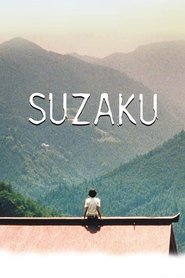
Depicts the life of a family in a remote Japanese timber village. Family head Tahara Kozo lives with his mother Sachiko, wife Yasuyo, nephew Eisuke and young daughter Michiru. Economic recession and failed development plans cause tragedy in the family.
7.1

Year:

1997

2/Duo

2/Duo

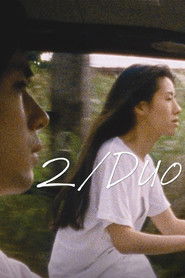
The slow collapse of the relationship between an out-of-work actor and his girlfriend.
7.6

Year:

1997

Helpless

Helpless

Yasuo is a gangster just released from jail. Believing his boss double-crossed him, enraged Yasuo is on his way to find the boss. But before setting out for the dangerous trip, Yasuo asks Kenji to take care of his mentally challenged sister, Yuri, and a mysterious black bag.
5.9

Year:

1996

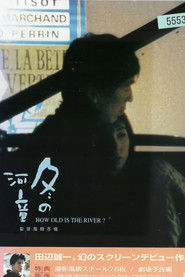
How Old Is the River?

How Old Is the River?

Three brothers, their father missing and tensions boiling, gather at their rural summer house; soon enough, they're unexpectedly joined by a female cousin.
8.0

Year:

1995

Wandering Peddlers

Wandering Peddlers

Resulting pic blurs the line between documentary and fiction as Yanagimachi explores the lives of a couple of groups of peddlers, and they appear to act out their personal dramas for the camera.
0.0

Year:

1995

The Legend of Zipang

The Legend of Zipang

Jigoku-gokuraku-maru is a samurai on the run. One bounty hunter hoping to collect the sizeable reward is Teppo Oyuri, a comely lass who is an ace shot with her pearl-laden pistol. Before she can set her sights on Jigoku-gokuraku-maru, he is attacked by a hoard of sword-wielding thugs also hoping to collect the reward. He dispatches them with bloody aplomb. Later, Jigoku-gokuraku- maru and Teppo Oyuri -- who has fallen for the master swordsman in spite of herself -- ventures to Zipingu -- the Land of Gold -- in search of a magical gold sword.
5.6

Year:

1990

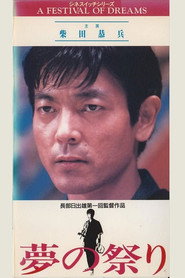
Festival of Dreams

Festival of Dreams

0.0

Year:

1989

Untamagiru

Untamagiru

A magical realist story of the legendary Okinawan hero Untamagiru participating in efforts to form an independent Okinawa before the island was returned to Japan in 1972.
4.7

Year:

1989

Evil Dead Trap

Evil Dead Trap

A talk show hostess takes a camera crew out to an abandoned factory to investigate a purported snuff film that was made there. As she gets closer to the truth, she and her friends are subjected to a brutal nightmare.
6.0

Year:

1988

Magino Village: A Tale

Magino Village: A Tale

The movie compiles footage taken by Ogawa Production for a period of more than ten years after the collective moved to Magino village. Unique to this film are fictional reenactments of the history of the village in the sections titled "The Tale of Horikiri Goddess" and "The Origins of Itsutsudomoe Shrine". Ogawa combines all the techniques that were developed in his previous films to simultaneously express multiple layers of time—the temporality of rice growing and of human life, personal life histories, the history of the village, the time of the Gods, and new time created through theatrical reenactment—bring them into a unified whole. The faces of the Magino villagers appear in numerous roles transcending time and space—sometimes as individuals, sometimes as people who carry the history of the village in their memories, sometimes as storytellers reciting myths, and even as members of the crowd in the fictional sequences.
6.2

Year:

1987

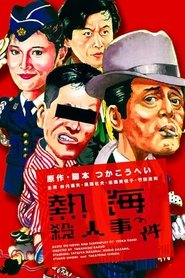
Atami Murder Case

Atami Murder Case

Chief Detective KIMURA Denbei, fondly referred to as Smoky Denbei, is a legendary figure at the Metropolitan Police Department. Transferred to Denbei's Criminal Investigation Division 1, Detective KUMADA Tomekichi arrives from the Toyama Prefectural Police. KUMADA is disconcerted by Denbei's position that murderers nowadays do not need a plausible motive, but gradually adapts to Denbei's unusual methods of investigation.
0.0

Year:

1986

Tampopo

Tampopo

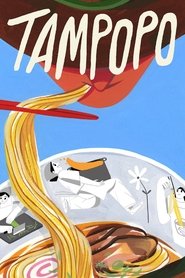
In this humorous paean to the joys of food, a pair of truck drivers happen onto a decrepit roadside shop selling ramen noodles. The widowed owner, Tampopo, begs them to help her turn her establishment into a paragon of the "art of noodle-soup making". Interspersed are satirical vignettes about the importance of food to different aspects of human life.
7.8

Year:

1985

Fire Festival

Fire Festival

Tatsuo, a reverent lumberjack, seeks to disrupt plans to build a marine park on his family land, instead promoting his traditions in reactionary ways.
5.9

Year:

1985

The Crazy Family

The Crazy Family

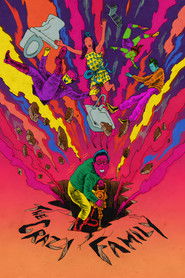
The Kobayashi family finally are able to move out of their tiny, cramped Tokyo apartment to the suburban house of their dreams. But things are not as perfect as they seem: the house is infested by termites and the family starts going crazy. As the Kobayashis' house begins to crumble, so does the sanity of its inhabitants. Father Katsuhiko takes it upon himself to keep them from the asylum… at any cost.
6.6

Year:

1984

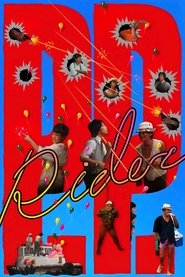
P. P. Rider

P. P. Rider

Three high-school students tangle with indulgent yakuza and lackadaisical police as they set out in search of the class bully, who has been kidnapped.
5.4

Year:

1983

Furuyashiki: A Japanese Village

Furuyashiki: A Japanese Village

This is Ogawa Productions’ first major film from their Yamagata period. They had already started photography on Magino Village -A Tale but they were drawn to this village deep in the high country above Magino when a particularly cold bout of weather threatened crops. Inevitably, their attention strayed from the impact of weather and geography on the harvest to the “life history” of Furuyashiki Village. On the one hand, Ogawa returns to his roots by playing with the conventions of the science film. At the same time, he discovers a local, peripheral space in which to think about the nation and the state of village Japan. From this “distant perspective” in the very heart of the Japanese mountains, Ogawa discovers a village still dealing with the trauma of global warfare and struggling for survival as their children flee for the cities.
6.5

Year:

1982

The Unspoiled Diamond

The Unspoiled Diamond

A college student has an affair with a married, middle-aged teacher.
3.0

Year:

1982

Farewell to the Land

Farewell to the Land

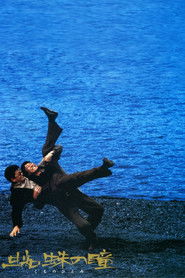
Yukio is an ex-farmer working as a dump-truck driver in Kashima. Haunted by the drowning of his two young sons, whose names he has had tattooed on his back in penance, and locked in a sibling rivalry with his traditional but urbane younger brother who lives in Tokyo, Yukio has become an amphetamine-addicted loner at odds with his family, friends and colleagues.
4.4

Year:

1982

The Magino Village Story: Pass

The Magino Village Story: Pass

This rural documentary features poet Jin Makabe. Thoughts about agriculture, memories, landscapes.
0.0

Year:

1978

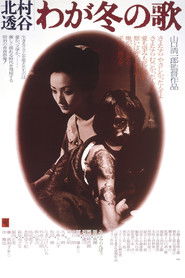
Kitamura Tokoku: My Winter Song

Kitamura Tokoku: My Winter Song

This biopic is centered on New Year's Day of 1894, when Kitamura is recovering from a suicide attempt. Japan is then under the spell of fervent patriotism because the government wants to build up public support for a war with China. Kitamura's literary friends and militant comrades come to visit. They wonder why Kitamura wants to kill himself. Kitamura at first refuses to receive them, then he sits down with them and looks back on his days as a civil rights militant, his stormy love life and his ardent but destructive desire to live literature to the full.
5.0

Year:

1977

Sanrizuka: The Sky of May

Sanrizuka: The Sky of May

In the mid-1970s, protests were waning across Japan after the Red Army scandal of Asama Cottage. In Sanrizuka, people were weary of the violence and the airport was well under construction. As for Ogawa Productions, they invited criticism by pulling out and moving to a quiet village in northern Japan. But when protesters back in Sanrizuka erected a tall tower at the end of one runway, they sent a crew to document what happened. This became the final film of the Sanrizuka Series.
5.0

Year:

1977

Nemuremitsu

Nemuremitsu

Omnibus about three actresses from different generations
0.0

Year:

1976

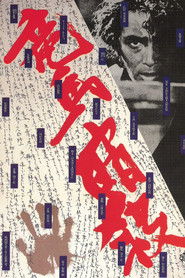
The Assassination of Ryoma

The Assassination of Ryoma

Story of the last three days in the life of Sakamoto Ryoma (1836-1867), imperial loyalist who tried to unite the Choshu and Satsuma clans and prepared the way for the Meiji Restoration (1868).
5.0

Year:

1974

Lady Snowblood

Lady Snowblood

Yuki's family is nearly wiped out before she is born due to the machinations of a band of criminals. These criminals kidnap and brutalize her mother but leave her alive. Later her mother ends up in prison with only revenge to keep her alive. She creates an instrument for this revenge by purposefully getting pregnant. Yuki never knows the love of a family but only killing and revenge.
7.5

Year:

1973

A Japanese Demon

A Japanese Demon

0.0

Year:

1973

Sanrizuka: Heta Village

Sanrizuka: Heta Village

Shinsuke Ogawa documentary about the life of the farmers in Heta Village opposing their resettlement due to the construction of Narita Airport.
6.2

Year:

1973

Sanrizuka: The Building of Iwayama Tower

Sanrizuka: The Building of Iwayama Tower

The third film in Ogawa Productions’ Narita/Sanrizuka series of documentaries about the resistance by farmers and activists to the construction of the Narita Airport.
0.0

Year:

1972

Sanrizuka: Peasants of the Second Fortress

Sanrizuka: Peasants of the Second Fortress

It's the mid 60s. Tokyo needs a new airport. There isn't anywhere in Tokyo to put it, so the government decides on displacing some adjacent villages. The peasants of these villages are not having it. What results is a remarkable act of protest and civil disobedience.
5.7

Year:

1971

Sanrizuka: The Three Day War

Sanrizuka: The Three Day War

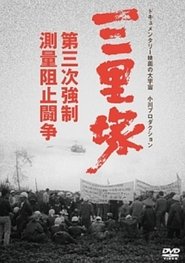
In 1968 the plan by the government to construct a new international airport in the fields of Sanrizuka near Tokyo unleashed one of the most important and enduring social upheavals in the history of postwar Japan. The plan sought to evict thousands of farmers from their lands without any sort of respect for the locals’ rights. Their resistance to eviction was met with extreme violence by the police. Activists from all over the country, including thousands of students, joined with the farmers in their mounting struggle. As the combats in Sanrizuka became more intense and the numbers of police increased, the collective became more involved in the fighting. Sanrizuka: The Three Day War was what Ogawa called a “bullet film”, an immediate and powerful piece of agitprop shot in three days and intended to be seen as quickly and widely as possible. Credit: ICA London
0.0

Year:

1970

The Battle Front for the Liberation of Japan – Summer in Sanrizuka

The Battle Front for the Liberation of Japan – Summer in Sanrizuka

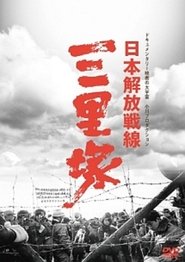
In 1968, Ogawa decided to form Ogawa Productions and locate it at the newly announced construction site of Narita International Airport in a district called Sanrizuka. Ogawa chose to locate his company in the most radical of the villages, Heta. Some farmers immediately sold their land; others vehemently protested and drew the support of social movements across the country. Together they clashed with riot police sent in to protect surveyors, who were plotting out the airport. Summer in Sanrizuka is a messy film – its chaos communicating the passions and actions on the ground.
6.3

Year:

1968