


Michael Blackwood
DirectorProducerWriter
-
Birthday
-
Zodiac Sign
-
Genres
0
Total Films
Also known as (male)
Place of Birth
-
Birthday
-
Zodiac Sign
-
Genres
0
Total Films
-
Also Known As (male)
-
Place of Birth
-
Birthday
-
Zodiac Sign
-
Genres
0
Total Films
Also known as (male)
Place of Birth
-
Birthday
-
Zodiac Sign
-
Genres
0
Total Films
-
Also Known As (male)
-
Place of Birth
actor
0 Works
producer
37 Works
director
144 Works
writer
1 Works
other
3 Works

George Segal
George Segal constructs a type of human form and vulnerability that feels rare in the world of sculpture. As we follow his process at the isolated New Jersey farmhouse that serves as his studio, the intimacy between Segal and his art is contagious. He casts people who he knows, respects and admires, making the final outcome of the piece seep with personality and humanity. Segal is focused on creating a mold that does not necessarily subscribe to society’s notion of beauty. Originally released in 1979.Year:
2016

The Artist's Studio: Carroll Dunham
In an effort to work without the distractions of the city, artist Carroll Dunham moved his studio from Manhattan to a small village in Connecticut, not far from where he grew up. Finding himself to be more at peace in the calm, rural setting, Dunham feels the freedom to create wildly bold and visually stimulating work, painting his way through expression and sexuality. Continuously holding a mirror up to society, Dunham aims to examine the ways in which we interpret images and ideas surrounding the physical human form and our contrived notions of appropriate depictions of it through art and media. Dunham's large canvas works are flooded with vivid color and striking imagery that grabs the attention of its audience and encourages a reconsideration of form and gaze. "The Artist's Studio: Carroll Dunham" documents a visit with critic Roberta Smith as she observes his new captivating work: a series entitled "In the Flowers" and a large canvas "The Beach".Year:
2014

Greg Lynn: Archaeologist of the Digital
Greg Lynn, one of the leading figures in computer-aided architectural design, visits the first in a series of exhibitions initiated by the Canadian Centre for Architecture for which he is the curator. The exhibitions, which will travel to the Yale School of Architecture Gallery, are meant to explore the role of digital technologies in the design process since its beginnings. The first exhibition, entitled "Archaeology of the Digital", features four individuals who are pioneers in applying new technologies to architectural design: Peter Eisenman, Frank Gehry, Chuck Hoberman, and Shoei Yoh. At the exhibition Lynn is joined by three of the four practitioners: Eisenman, Gehry and Hoberman, who each explain their path to the digital at the time.Year:
2014
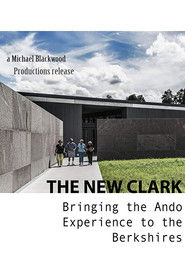
The New Clark: Bringing the Ando Experience to the Berkshires
"The New Clark: Bringing the Ando Experience to the Berkshires" is a revealing insight into a long-term radical expansion of the Clark Art Institute in Williamstown, Massachusetts. The film follows the close collaboration between the museum and its internationally-acclaimed Japanese architect, Tadao Ando. Both Ando and the director of the Clark Art Institute, Michael Conforti, ponder the complexities of the project and the challenges involving aesthetic, setting, and community impact during the difficult twelve-year period. Determined to honor the institute's original buildings while introducing the modern elements associated with his unique style, Ando's design evokes a classic tranquility that seamlessly blends the Clark Art Institute with its stunning surroundings.Year:
2014
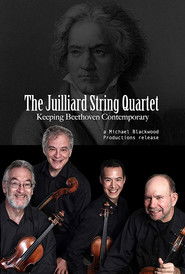
The Juilliard String Quartet: Keeping Beethoven Contemporary
Filmed during a rehearsal and performance of Beethoven's Quartet in B Flat Major, Opus 130, "The Juilliard String Quartet: Keeping Beethoven Contemporary" is an exciting portrait that explores the creation and history of the famed Quartet, offering a glimpse inside the world of its four current members. Founded in 1946 by Juilliard School president William Schuman and violinist Robert Mann, with the intent of pursuing the brilliant musicianship of the classical genre, the Quartet continued well beyond its original membership, bringing the music along into a new era. Opening up their dialogue to us, the members of the Quartet, Joseph Lin, Joel Krosnick, Ronald Copes and Samuel Rhodes, speak in detail about the string quartet as a musical genre, its vibrant history, and the significant contributions of BeethovenYear:
2012

Lee Ufan: Marking Infinity
"Marking Infinity", Lee Ufan's recent retrospective exhibition at the Guggenheim charts the artist's creation of a visual, conceptual, and theoretical language that has radically expanded the possibilities for sculpture and painting over the past forty years. Deeply versed in modern philosophy, Lee is also an influential writer and is recognized as the key theorist of Mono-ha, an anti-formalist, materials-based art movement that developed in Tokyo in the late 1960s. Active internationally over the last four decades, Lee is acclaimed for an innovative body of Post-Minimalist work that promotes process and the experiential engagement of viewer and site.Year:
2012

The Artist's Studio: E.W. NAY
A visit to the studio of Ernst Wilhelm Nay, a remarkable, if somewhat solitary German artist, who established his status at age 30, just before the advent of the Nazi takeover. Nay belonged to the persecuted generation of German artists who, just as their work began to blossom, were forced out by Hitler's art dictatorship. Labeling the art "decadent", the Hitler regime called for the removal of Nay's paintings from museum collections and the artist was banned from showcasing his new work. After the end of World War II, Nay returned to painting and worked tirelessly to make up for lost time, producing new pieces year after year and quickly becoming one of Germany's leading painters. Ernst Wilhelm Nay died in 1968 at the age of 65 yet his studio, still intact, offers a retrospective of his work starting from the 1920s. His wife, Elisabeth Nay walks us through the studio, offering insights into her husband's process and creative intent.Year:
2012
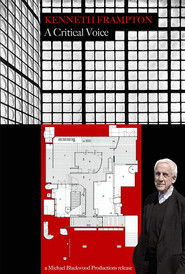
Kenneth Frampton: A Critical Voice
Critic Kenneth Frampton is a masterful commentator on the architecture of our time. At the start of his long-spanning career Frampton worked as an architect in London before settling into his writing and teaching, which mainly took place at Columbia University. Over the past fifty years Frampton has certified himself as a prolific and influential contributor towards a progressive interpretation of the role of architecture in modern society. In "Kenneth Frampton: A Critical Voice", architect Stan Allen interviews the renowned critic and questions him about his architectural contemporaries, notable past projects, and published writings.Year:
2012
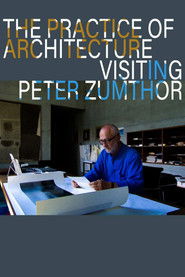
The Practice of Architecture: Visiting Peter Zumthor
Architect Peter Zumthor lives and works in the remote village of Haldenstein in the Swiss Canton of Graubünden where he can keep the politics of architecture at a comfortable distance as he enjoys status and praise for his unique modernist buildings. In "The Practice of Architecture", critic Kenneth Frampton visits Zumthor at his studio where the two are surrounded by models, designs and plans for current and future projects throughout Europe and the United States. Frampton questions the renowned architecture on the motives and methods behind some of his most famous works, including his Zinc-Mine-Museum in Norway and the highly acclaimed Therme Vals, a stunning hotel and spa built over the thermal springs in Graubünden. While walking us through his career, Zumthor discusses his penchant for minimalism, the importance of landscape, light and material, and the architectural theory behind his stunningly precise styleYear:
2012

Lebbeus Woods + Steven Holl: The Practice of Architecture
Architects Lebbeus Woods and Steven Holl have been friends for many years, brought together by their creativity, philosophy and visionary architectural pursuits. While both are theorists, Woods finds himself preoccupied with bold, speculative designs that push back against notions of time and space, not waiting or searching for any kind of commissions but instead forming his own aesthetical world through the freedom of drawing. This approach stands in direct contrast with Holl's body of work, which consists of many physical buildings both in the United States and abroad. This known order between the two architects has recently been interrupted by Holl commissioning Woods to design a four-story pavilion for his large-scale multi complex Sliced Porosity Block in Chengdu, China. Getting together at Woods' workspace in downtown Manhattan, the longtime friends recall their careers while discussing the current project and their mutual architectural practices.Year:
2012
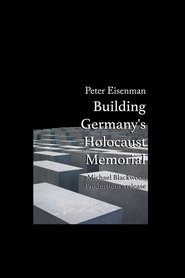
Peter Eisenman: Building Germany's Holocaust Memorial
This documentary explores the creation of the Holocaust Memorial in Berlin as designed by architect Peter Eisenman. Reaction of the German public to the completed memorial is also shown.Year:
2009

Jeff Wall: Retrospective
Jeff Wall is one of the most important and influential photographers working today. His work played a key role in establishing photography as a contemporary art form.Year:
2007
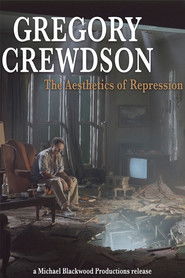
Gregory Crewdson: The Aesthetics of Repression
Crewdson is observed and questioned closely during his work on ten new images in as many different sets.Year:
2005
The Cremaster Cycle: A Conversation with Matthew Barney
For his five Cremaster films Matthew Barney's created a multitude of sculptural forms and structures. Recently both the sculptures and the films traveled to museums in Cologne, Paris and New York's Guggenheim. In THE CREMASTER CYCLE: A Conversation with Matthew Barney, the artist guides the camera through this remarkable creation at the Guggenheim Museum while being questioned by Michael Kimmelman, chief art critic of the New York Times.Year:
2004

A Day with Zaha Hadid
While guiding us through her retrospective exhibition “Zaha Hadid Has Arrived”, the renowned architect recalls her career from its beginning, discussing her education, inspiration and technique. The exhibition, located at The MAK in Vienna, features a new sculpture from Hadid entitled “Ice Storm” that serves as the centerpiece of the show and captures her sleek signature. From her famed Bergisel Ski Jump to Rome’s Museum of Contemporary Art, Hadid’s architectural resume shines in its diversity and exploration. A Day with Zaha Hadid reviews Hadid’s work of the last decade and celebrates her perpetually modern and daring designs.Year:
2004
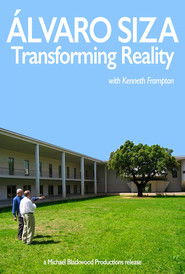
Alvaro Siza: Transforming Reality
In Alvaro Siza: Transforming Reality Portugal's renowned architect reviews his work with architectural historian, Kenneth Frampton. While touring his projects Siza discusses his approach to architecture, explaining that it is centered around the idea that setting is integral to design and that a structure should be reinforced by surroundings that both enhance and highlight its potential.Year:
2003
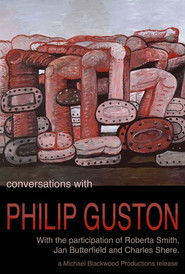
Conversations with Philip Guston
Art historians and critics talk with Philip Guston about his ideas and new work of the 1970's. Filmed during the making of "Philip Guston: A Life Lived."Year:
2003

Sol LeWitt: 4 Decades
"Sol LeWitt: 4 Decades" presents an opportunity to accompany one of the great artists of our time on a tour of his work, from his formative years to the present. Joined by curator Gary Garrels, LeWitt offers context and motive behind his 2000 retrospective exhibition at Chicago's Museum of Contemporary Art. A heavy emphasis is placed on LeWitt's spectacularly large scale wall drawings, for which he is best known. Garrels, who with LeWitt, spent three years on the creation of the exhibition, leads the artist through his breakthroughs of four decades, from the 1960s to the present.Year:
2001
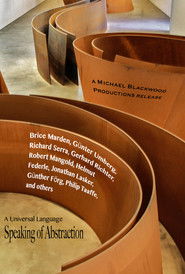
Speaking of Abstraction: A Universal Language
At the beginning of the twenty-first century, abstraction - that most quintessentially modernist innovation - maintains a peculiarly contradictory position. Used, on one hand, by post-modernist artists as just one more quotable style amongst many, it is on the other hand still considered an elitist or hermetic language by audiences intimidated by its lack of recognizable subject matter. Yet ultimately, abstraction continues to be a viable creative path for contemporary artists of all generations, many of whom embrace it as the most inclusive and fundamentally resonant of artistic languages. Filmed at the artists' studios, the Dia Center for the Arts, and the Guggenheim Museum during their exhibition, "Abstraction in the Twentieth Century."Year:
1999

Musical Outsiders: An American Legacy
American composers have long struggled against the momentum of the Western European classical tradition and the prestige it has held in America's cultural life. "I did not want to have any stricture at all, I wanted to be completely free." So spoke Harry Partch, describing not only his own path, but also that of two other influential American composers: Lou Harrison and Terry Riley. They were attracted to musical ideas and sounds outside of the surrounding classical mainstream. Together they offer a deeper understanding of what those alternatives are and how they have affected American culture.Year:
1994
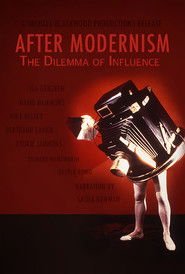
After Modernism: The Dilemma of Influence
Since the 1960s, other disciplines, cultures, and artists previously excluded from modernism's privileged canons have become absorbed into an ever expanding field of activity and influence. Younger artists are a new breed of cultural scavengers, anything or anyone is fair game for appropriation or reinterpretation. Fascinated by notions of space, time and the human body, artists such as David Hammons, Laurie Simmons and Richard Wentworth have carved their own path through conceptual art.Year:
1992

Butoh: Body on the Edge of Crisis
"Butoh: Body on the Edge of Crisis" is a visually striking film portrait shot on location in Japan with the participation of the major Butoh choreographers and their companies. Although Butoh is often viewed as Japan's equivalent of modern dance, in actuality it has little to do with the rational principles of modernism. Butoh is a theater of improvisation which places the personal experiences of the dancer on center-stage. By reestablishing the ancient Japanese connection of dance, music, and masks, and by recalling the Buddhist death dances of rural Japan, Butoh incorporates much traditional theater. At the same time, it is a movement of resistance against the abandonment of traditional culture to a highly organized consumer-oriented society.Year:
1990
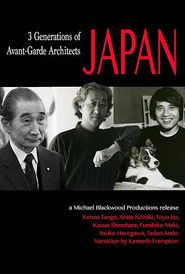
Japan: 3 Generations of Avant-Garde Architects
Japan's establishment as an economic superpower led to a Golden Age of Japanese architecture. Six innovators stand out particularly, fusing Japanese traditions with modern materials and technology.Year:
1989
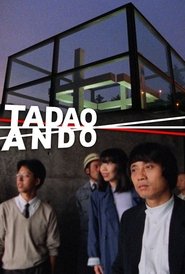
Tadao Ando
Tadao Ando, a self-taught architect, proposes an international architecture that he believes can only be conceived by someone Japanese. His architecture mixes Piranesian drama with contemplative spaces in urban complexes, residences and chapels. This film presents the formative years of his impressive career before he embarked on projects in Europe and the United States.Year:
1988
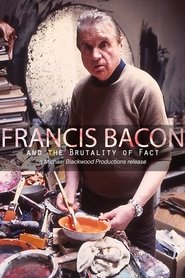
Francis Bacon and the Brutality of Fact
In his London studio, Francis Bacon discusses his work and approach with David Sylvester. His representations of the human figure in portraits and triptychs link him to the distorted realism of Van Gogh and Picasso, who also portrayed the intensity of life that Bacon calls “the brutality of fact.”Year:
1987
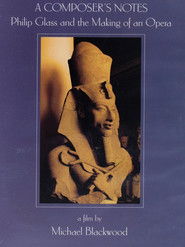
A Composer’s Notes: Philip Glass and the Making of an Opera
This documentary by Michael Blackwood looks at the development and production of Glass' opera Akhnaten. The film follows two productions by the Württemberg State Theater, Stuttgart, and the Houston Grand Opera.Year:
1986

Mies
No understanding of the modern movement in architecture is possible without knowledge of its master builder, Mies van der Rohe. Together with documentation of his life, this film shows all his major buildings, as well as rare film footage of Mies explaining his philosophy. Phyllis Lambert relates her choice of Mies as the architect for the Seagram building. Mies's achievements and continuing influence are debated by architects Robert A.M. Stern, Robert Venturi, and Philip Johnson, by former students and by architectural historians. Mies is seen in rare documentary footage.Year:
1986

Empire City
A film essay contrasting the modern metropolis with its "golden age" from 1830-1930, with the participation of some of New York's leading political and cultural figures. Made at a time when the city was experiencing unprecedented real estate development on the one hand and unforeseen displacement of population and deterioration on the other. Empire City is the story of two New Yorks. The film explores the precarious coexistence of the service-based midtown Manhattan corporate headquarters with the peripheral New York of undereducated minorities living in increasing alienation.Year:
1985

Philip Guston: A Life Lived
Late in life, the artist looks back over a career that originated in social realism during the '30s, moved to the center of Abstract Expressionism, and culminated in a return to figuration. Filmed at his retrospective in San Francisco in 1980 and at his Woodstock studio, where Guston is seen painting, the artist speaks candidly about his philosophy of painting and the psychological motivation for his work.Year:
1982

Making Dances: Seven Post-Modern Choreographers
Made in 1980, this film explores the contemporary dance scene through the work of seven New York-based choreographers. They discuss the nature of dance and the evolution of their own work. Filmed at rehearsals, performances, and during interviews, the film is a unique primary source. The artistic roots of these seven artists can be found in Martha Graham's concern with modern life as a subject for dance and in Merce Cunningham's emphasis on the nature of movement. In the 1960s, the interaction of art forms generated choreographic innovations. Especially influential was John Cage, whose radical ideas served as a point of departure for much of the new choreography. Each of the choreographers in Making Dances draws inspiration from the Graham/Cunningham tradition, yet each makes a highly distinctive statement. Structure, movement in non-fictive time and space, and the nature of movement itself are recurring themes.Year:
1980
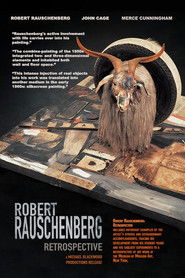
Robert Rauschenberg: Retrospective
This film includes important examples of the Robert Rauschenberg's diverse and extraordinary accomplishments, tracing his development from his student years and his earliest experiments to a retrospective of his work at the Museum of Modern Art in New York. It features Rauschenberg, John Cage and Merce Cunningham, and was released in 1979.Year:
1979
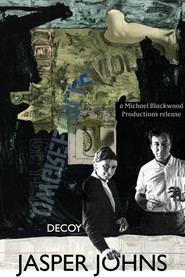
Jasper Johns: Decoy
Jasper Johns’s Decoy is rooted inside the notions of reproduction, transformation and memory. Believing that an image gains new meaning each time it is presented, Johns boldly confronts his own past work, most notably Ale Cans (1964), and uses Decoy as a method of metamorphosis. The repetition of certain motifs allows both Johns and his spectators to confront the change an image goes through when approached from a different angle or placed in a new artistic context. As noted in the film, “each time a motif is used and reused additional memories accrue, new layers of meaning, and the image itself begins to acquire its own history.” (Jasper Johns) It is through Johns’s reimagining that the items he features in his work take on new life and grow from object to art, thus redirecting society’s interpretation.Year:
1973

Andy Warhol
With a rambling, unstructured style that echoes Andy Warhol’s own approach to filmmaking, this documentary profiles his career, showing him to be a brilliant manipulator, dedicated voyeur and person of astute commercial judgment.Year:
1972

Larry Rivers
In free-ranging conversations as he works in his studio, Rivers oppositional nature and independent mind are apparent. He reflects on his past painting and its critical reception, and speculates on his place in art history. Like his art, Larry Rivers is the opposite of self-contained. Alive, gregarious, fraught with feeling, he has always been drawn to poetry and to jazz. His own saxophone playing appears to be an extension of the expressive and experimental character found in his paintings, drawings, constructions, and video works. Rivers is shown at work in his New York studio. He examines a series of his Dutch Masters paintings, inspired by the standard cigar-box image which recalls Rembrandt, as well as several of his iconoclastic portraits. Among these are his naked renditions of the late poet and critic Frank O'Hara and the bold double images of his former mother-in-law, Berdie. He died in 2002.Year:
1972
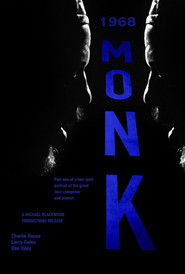
Monk
Part one of a two-part portrait of the great Jazz composer and pianist. In 1968, we had the opportunity to spend time with Thelonious Monk and his musicians, following him in New York and Atlanta. In New York his quartet plays at the Village Vanguard and at recording sessions for Columbia Records; in Atlanta they appear at a Jazz Festival organized by George Wein. The members of the quartet were Charlie Rouse, Larry Gales, and Ben Riley.Year:
1968

Hans Werner Henze: Summer of 1966
Hans Werner Henze: Summer of 1966 follows the acclaimed German composer to Salzburg and Berlin, documenting his rehearsals for his now famous opera, "The Bassarids". Based on a fragment of a Euripides play, the opera was a widely celebrated point in Henze's career, capturing his compositional style and progressive musical attitudes. Celebrating his 40th birthday at the time, Henze was then living in Rome and enjoying a growing reputation all over Western Europe as a conductor and composer.Year:
1967

Broadway Express
Shot in 1959, Michael Blackwood’s first film Broadway Express is a portrait of New York City’s diverse population, as captured in the city’s subways during the evening rush hour and late at night. The film is a portrait of the city through the faces of the passengers held captive for the ride.Year:
1961
