


Rosalind Nashashibi
DirectorWriter
-
Birthday
-
Zodiac Sign
-
Genres
0
Total Films
Also known as (female)
Place of Birth
-
Birthday
-
Zodiac Sign
-
Genres
0
Total Films
-
Also Known As (female)
-
Place of Birth
-
Birthday
-
Zodiac Sign
-
Genres
0
Total Films
Also known as (female)
Place of Birth
-
Birthday
-
Zodiac Sign
-
Genres
0
Total Films
-
Also Known As (female)
-
Place of Birth
actor
0 Works
producer
0 Works
director
29 Works
writer
3 Works
other
2 Works
The Invisible Worm
Benjamin Britten’s elegiac musical setting of William Blake’s “The Sick Rose” supplies the title of Rosalind Nashashibi’s video, which unfolds as an elliptical cross-media dialogue between the multimedia artist Elena Narbutaitė, the sculptures of Marie Lund, and Nashashibi’s own paintings and camera. What emerges is a set of funny and deep reflections on artist-types and the contexts and meanings of art-making—as a place to breathe and wonder, or a form of wasting time. “Don’t take it all too seriously.”Year:
2024
The Invisible Worm
Benjamin Britten’s elegiac musical setting of William Blake’s “The Sick Rose” supplies the title of Rosalind Nashashibi’s video, which unfolds as an elliptical cross-media dialogue between the multimedia artist Elena Narbutaitė, the sculptures of Marie Lund, and Nashashibi’s own paintings and camera. What emerges is a set of funny and deep reflections on artist-types and the contexts and meanings of art-making—as a place to breathe and wonder, or a form of wasting time. “Don’t take it all too seriously.”Year:
2024
Denim Sky
Made between 2018-2022 across different time scales and locations across the world. Denim Sky is a feature film in three parts. Together the trilogy is a playful exploration of non-nuclear family and community structures, the theoretical effects of non-linear time travel on human relationships, and how this could aid or problematise communication. The narrative is based on a fiction about a spaceship crew brought together in order to develop a crew mentality, so that they can be used to test a new form of space travel that uses non-linear time. Throughout, the light humour and fraternal mood of the group are disrupted by unsettling and unexpected events.Year:
2022
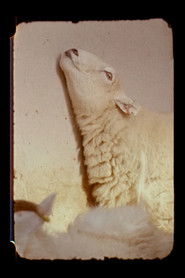
Lamb
‘Lamb’ was shot in a farmer’s lambing shed near Skaer’s house on the island of Lewis. The soundtrack was composed by Will Carslake and Olivia Ray in collaboration with Nashashibi.Year:
2020
Part Two: The moon is nearly at the full. A team horse goes astray
A science fiction scene appears to be re-enacted on a beach, in which a man instructs a young woman walking lonely across the sand to return to base.Year:
2019
Part One: Where There Is a Joyous Mood, There a Comrade Will Appear to Share a Glass of Wine
'Part One: Where There Is a Joyous Mood, There a Comrade Will Appear to Share a Glass of Wine' concerns affective relations and community building. The film is like a spell or a promise for a new and more liberating type of family structure. The film has a non-linear narrative that weaves various intimate settings, some within shared domestic spaces, others in outdoor environments. Shot in Lithuania, London, and Edinburgh, the film features the artist and her children, as well as close friends, which she considers extended family.Year:
2019
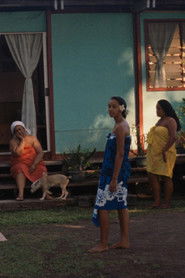
Why Are You Angry?
Taking its title from one of Gauguin’s late paintings, Nashashibi/Skaer follow in the painter’s footsteps to Tahiti to make contemporary images of women. The film opens fundamental questions about representations of women and the power of myth.Year:
2017
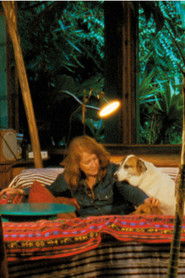
Vivian's Garden
Presented at Documenta 14 in Athens.Year:
2017

Electrical Gaza
In Electrical Gaza, Nashashibi combines her footage of Gaza, and the fixer, drivers and translator who accompanied her there, with animated scenes. She presents Gaza as a place from myth; isolated, suspended in time, difficult to access and highly charged. Commissioned by the Trustees of Imperial War Museum.Year:
2015
Carlo's Vision
A man drives through Rome. Film about Pasolini.Year:
2011
Carlo's Vision
A man drives through Rome. Film about Pasolini.Year:
2011
This Quality
Year:
2010
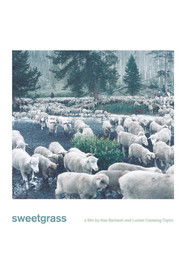
Sweetgrass
An unsentimental elegy to the American West, Sweetgrass follows the last modern-day cowboys to lead their flocks of sheep up into Montana's breathtaking and often dangerous Absaroka-Beartooth mountains for summer pasture, revealing a world in which nature and culture, animals and humans, vulnerability and violence are all intimately meshed.Year:
2009
Pygmalion Event
The simultaneous double projection of The Pygmalion Event is concerned with the topic of metamorphosis and the transitions in the process of cognition. The left hand screen shows the priest of the chapel at the dominican monastery in Vence, France, as he puts on his robes and presents them to the viewer. The chapel in Vence was designed by Henri Matisse as a Gesamtkunstwerk (an untranslatable German term denoting a "total", "complete" artwork), from the windows to the exact liturgical robes the priest is putting on in the film. On the right hand screen, a movie is projected that appears to react, as it were, to the scene on the left hand screen, for its images correspond to the actions of the priest. Colors, landscapes or pictograms are evoked and add a formal commentary to the narrative structure of the film on the screen to the left. Just like two different linguistic systems which read and react to each other, the images change because of their respective counterparts.Year:
2008
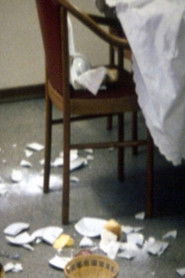
Bachelor Machines Part 1
A short film by Rosalind Nashashibi set on a cargo ship sailing from Southern Italy to Sweden via Portugal, England and Ireland. Commissioned by Chisenhale Gallery, London, and Picture This, Bristol.Year:
2007

Eyeballing
The anthropomorphic city. A series of faces found in architectural facades or in objects around an apartment are juxtaposed with shots of policemen in uniform loitering around their precinct.Year:
2005
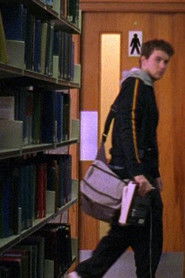
University Library
Shot in Glasgow University Library, this film explores how individuals use a communal space. It comprises interior footage of the library, contrasting deserted aisles and close-ups of shelves of books with shots of students engrossed in studying and using library facilities including computers, keyboards and lifts. By unobtrusively filming students and editing the film rhythmically like a piece of music, Nashashibi highlights the routines and patterns behind our everyday activities, which would usually go unnoticed. The film runs to around seven minutes long and has no dialogue or music, only background noise. - Nationalgalleries.orgYear:
2004
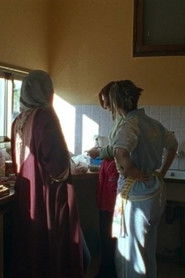
Hreash House
One family as an entire community Hreash House shows an extended Palestinian family living a collective existence in a concrete block in Nazareth. It shows a feast and its aftermath during Ramadan.Year:
2004
Stone and Tablet
The shadow of a human being, passes over timeless and indifferent objects at three frames per second.Year:
2004

Juniper Set
A film loop of train seats with patterned upholstery, echoing the absent bodies, like sculptures of human beings side by side, with a corner of suburbia showing through the train window.Year:
2004
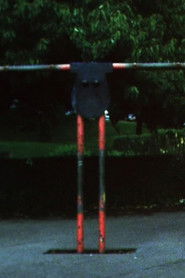
Park Ambassador
The Park Ambassador is a figure of abstract authority. A totemic presence, he remains rooted while people pass and light changes dramatically around him. He seems to affect these changes by his powerful presence.Year:
2004
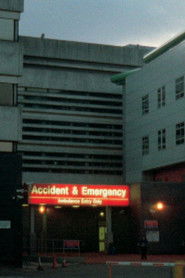
Humaniora
'Humaniora is about that least popular kind of enforced rest: treatment and convalescence. It's a vision of hospitals, not as sites of trauma, but as a kind of pregnant pause in the headlong rush. Sunlight reflects off a tower, a pigeon roosts on a rooftop, and that precise moment of transition from night to day is captured when an illuminated sign suddenly switches off. Airy, Victorian glasshouses contrast with shadowy concrete alleyways as Nashashibi portrays different attitudes to sickness in different eras.' Rosalind Nashashibi's films span many boundaries, from Nazareth in Israel to the America Mid West. She has said of her work: 'The films observe what I suppose people would call 'real life', but I think they're about vacation away from life, about inactivity or rest, whether it be chosen or forced. I go into public areas with my camera and really observe how people are moving in their spaces, how they are using their neighbourhood.' - Moira Jeffrey in the Herald:Year:
2003
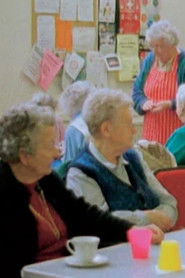
Blood and Fire
"Several old ladies and one man share a meal with bright, plastic beakers and much laughter at the Salvation Army in Portobello, a seaside town by Edinburgh, Scotland." - LUX.org.ukYear:
2003
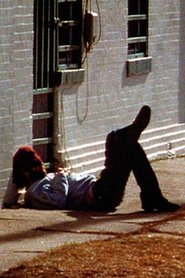
Midwest
"Made during an artist residency project in Omaha, Nebraska, ‘Midwest’ captures aspects of the daily lives of the town’s residents. Passing from day to night, the film shows groups of people loitering on the street and sitting in a café, while images of run-down houses and cars suggest a neglected urban environment. Within this record of ordinary life, the artist brings out the melancholic side of a community which seems to be both drifting along and waiting for something to happen. Nashashibi is interested in how people use the space around them. The film is a companion to ‘Midwest Field’, which shows how the town’s residents spend their time in the green spaces outside the city." - NationalGalleries.orgYear:
2002
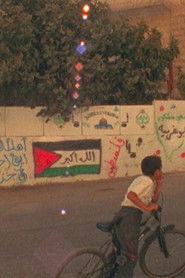
Dahiet Al Bareed, District of the Post Office
One slow, hot afternoon in a neighbourhood built to be a utopian suburb for employees of the Palestinian Post Office; now becomes a lawless no-man’s-land between occupied East Jerusalem and Ramallah.Year:
2002
Open Day
Six scenes in London set to different pieces of music that add a fictional screen or act as counterpoint to the action.Year:
2001

The House of Mirth
In early 20th century New York City, an impoverished socialite desperately seeks a suitable husband as she gradually finds herself betrayed by her friends and exiled from high society.Year:
2000
The States of Things
"The States of Things" is a B&W film of a Salvation Army jumble sale that is set to an old Egyptian love song by Um Kolthoum. Elderly ladies rummage through jumble at a sale held by the Salvation Army in Glasgow. 'Jumble sales aren't part of the normal capitalist system, so it doesn’t look quite like a Western Europe in the 21st century. And the music also makes the viewer unsure when or where this is.’Year:
2000
The States of Things
"The States of Things" is a B&W film of a Salvation Army jumble sale that is set to an old Egyptian love song by Um Kolthoum. Elderly ladies rummage through jumble at a sale held by the Salvation Army in Glasgow. 'Jumble sales aren't part of the normal capitalist system, so it doesn’t look quite like a Western Europe in the 21st century. And the music also makes the viewer unsure when or where this is.’Year:
2000
