

Gilberto Macedo
Director
-
Birthday
-
Zodiac Sign
-
Genres
0
Total Films
Also known as (male)
Place of Birth
-
Birthday
-
Zodiac Sign
-
Genres
0
Total Films
-
Also Known As (male)
-
Place of Birth
-
Birthday
-
Zodiac Sign
-
Genres
0
Total Films
Also known as (male)
Place of Birth
-
Birthday
-
Zodiac Sign
-
Genres
0
Total Films
-
Also Known As (male)
-
Place of Birth
actor
0 Works
producer
0 Works
director
17 Works
writer
1 Works
other
14 Works

Perros de la ley
Two corrupt policemen, who abuse their power by extorting money and killing those who get in their way, take charge of the investigation into the murder of a very rich man, the main suspect being his wife.Year:
1993

Como una pintura nos iremos borrando
In this film, the renowned muralist Juan O'Gorman bequeaths us his vision of art and life, as well as aspects of his professional career. In the last year of his life, O'Gorman tells the camera all the reasons for his lucid pessimism, in relation to environmental disasters, consumerism in art, and the causes of war.Year:
1987

When Pizarro, Cortés and Orellana were friends
An anthropological fable surrounding the clash of two cultures in the conquest of America.Year:
1979
When Pizarro, Cortés and Orellana were friends
An anthropological fable surrounding the clash of two cultures in the conquest of America.Year:
1979
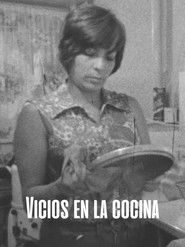
Vicios en la cocina, las papas silban
Beatriz Mira, a Brazilian filmmaker living in Mexico, films the housework carried out by women at the end of a decade marked by numerous political and social movements, including feminist groups that disputed the fact that women had been banished from the public sphere, and thus confined to the household. In their fights and debates, they wielded the motto ‘what’s personal is political’.Year:
1978
Vicios en la cocina, las papas silban
Beatriz Mira, a Brazilian filmmaker living in Mexico, films the housework carried out by women at the end of a decade marked by numerous political and social movements, including feminist groups that disputed the fact that women had been banished from the public sphere, and thus confined to the household. In their fights and debates, they wielded the motto ‘what’s personal is political’.Year:
1978

La Bicicleta
As a funeral procession advances through a dusty town in the Paraguana peninsula, a young man rides his bicycle through the crowd. A beautiful woman stands apart from the crowd and gazes in wonder as the young man rides away. A child, the town's fool and the woman go after the Bicycle, each character with his own motivation. Enraged with indignation, the men also follow the cyclist through the town and onto the desert seeking to kill him.Year:
1975

The Demiurge
A colorful feature film that mixes exile with the figure of the poet Rimbaud and the feminist revolution. "It's super-intellectual. A fable-musical-philosophical-chanchada", Mautner says. He also affirms that the work focuses a lot on the longing for Brazil, on the will that the exiled had to return to their homeland. The idea came from conversations between the musician and his old father, "always talking about the pre-Socratics", he recalls. Glauber Rocha states that "The Demiurge" is the best film "of" and "about" exile.Year:
1972
Crazy Love
Bressane's second London film, shot in six days in his apartment. "I had seen the French avant-garde films of the 1920's and naturally the title cites Breton. But underneath it can also be read in many ways. It is a cinema that is invented on the spur of the moment, like you invent an instrument to play music and then abandon it. This film came out like an improvisation, a total risk. It is a deconstruction of meaning but not in the analytical, intellectual sense. I have always tried to lose myself with my films. There is no trace of American or French underground cinema. If anything, it is the idea of home movies, there were many ideas for digital films long before digital film existed. This film made itself, it was like a jazz improvisation. Amor Louco is a lost object, it doesn't speak any language, it has no signs, no letters, no captions. And in the scene where the cataract is cut with the razor blade, it was the adventure of the film itself that was put to the test".Year:
1971
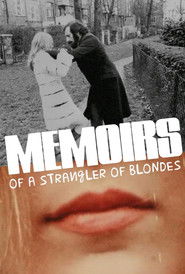
Memoirs of a Strangler of Blondes
First film by Julio Bressane shot in exile, "Memoirs" is a film about a man who repeatedly kills the same type of woman in same places, the same way. Filmed on the streets of London.Year:
1971

Copacabana Fools Me
Marquinhos is in his early 20s and lives in Copacabana with his petits bourgeois parents and older brother. He doesn't have a job, he doesn't go to school, he just lives on the spur of the moment, watches TV, plays soccer on the beach by day and goes out with his mates by night. He meets Irene, a 40 year-old woman and they have a love affair that is going to change his life - for a while.Year:
1969

Nelson Cavaquinho
A short film of lovely poetic, observational elements and interviews with the famed samba singer/songwriter Nelson Antônio da Silva, whose adopted last name ‘Cavaquinho’ refers to the small guitar-like instrument that he played and used to compose his songs.Year:
1969
Dramática Popular
Year:
1969

Desesperato
Directed by Sérgio Bernardes Filho, "Desesperato" tells the story of a writer (Raul Cortez) who leaves his home to carry out literary research in the country's most obscure settings. Unhappy with the current national situation, the historian joins a guerrilla force with serious consequences.Year:
1968

A Public Opinion
Documentary about middle-class people in Rio de Janeiro, in the 1960s, when Brazil was going through a hard period in its history, with the military coup and the following dictatorship. Interviews with people in the street disclose their fears, aspirations and political alienation.Year:
1967
Heleno
Year:
1967
Heleno
Year:
1967